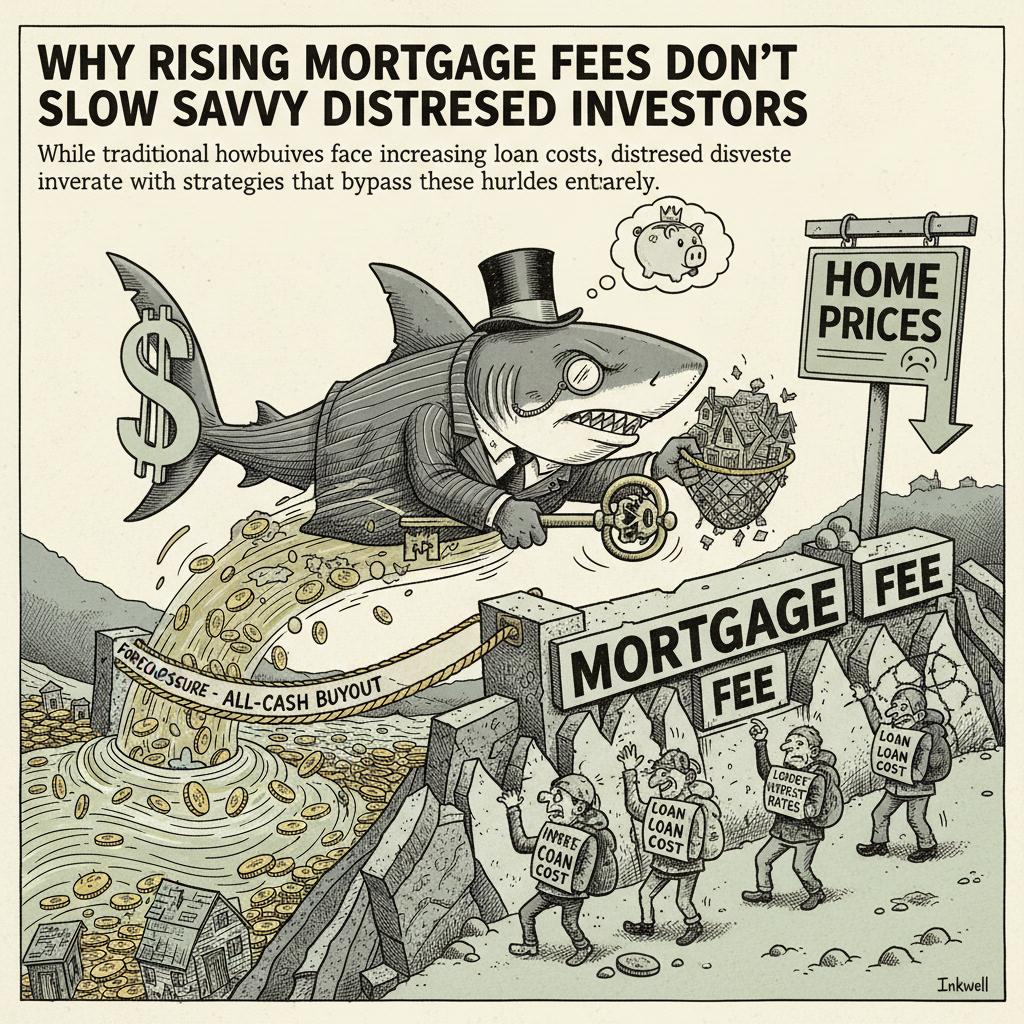
Recent reports highlight a subtle but growing friction point for homebuyers: rising credit report fees. Though a small component of overall closing costs, these increases, driven by inflation and vendor costs, add to the financial burden of securing a mortgage. For the average buyer, every dollar counts, and these incremental hikes reflect a broader trend of tightening credit markets and increasing lender scrutiny.
However, for investors focused on distressed real estate, these shifts in conventional mortgage lending are largely irrelevant. Our business model often operates outside the traditional bank financing system, particularly in the acquisition phase. When you're acquiring properties in pre-foreclosure, at auction, or directly from motivated sellers, speed and cash are king. Sellers facing foreclosure often need immediate solutions, not a 30-60 day closing process contingent on a buyer's credit score and mortgage approval.
"The beauty of distressed acquisition is its independence from retail lending," notes Sarah Jenkins, a 15-year veteran real estate investor specializing in foreclosures. "We're solving problems for sellers, not competing for the lowest interest rate. Our capital comes from private lenders, hard money, or our own cash, which means credit report fees and loan origination costs for the *acquisition* are often non-factors."
This distinction is crucial. While a retail buyer is navigating an increasingly expensive and complex mortgage landscape, a distressed investor is focused on the property's equity, the seller's motivation, and the potential for a profitable exit. The Wilder Blueprint's Charlie 6 framework, for instance, helps investors quickly qualify a deal based on property fundamentals and seller distress, not the intricacies of mortgage credit.
Ultimately, market inefficiencies, like rising mortgage fees, only reinforce the strategic advantage of distressed real estate. When traditional paths become more cumbersome, alternative, cash-backed approaches shine. This focus on direct acquisition and problem-solving allows investors to capitalize on opportunities that traditional buyers simply cannot touch.