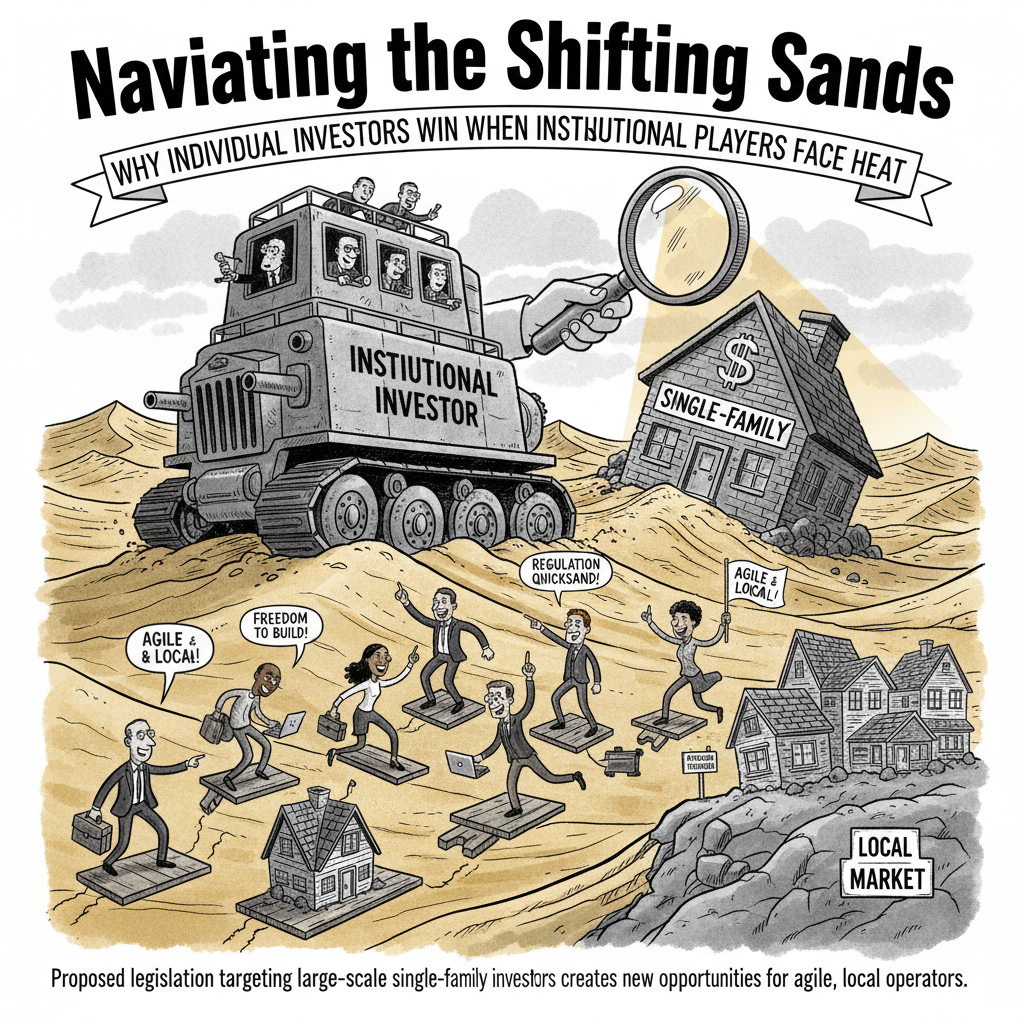
Recent legislative proposals, like Senator Elizabeth Warren's bill to penalize investors owning 50 or more single-family homes, signal a growing political appetite to curb institutional involvement in the housing market. While these discussions often spark concern, for the independent distressed real estate investor, they present a strategic advantage.
Institutional funds thrive on scale and predictable, low-risk returns. They often struggle with the nuanced, labor-intensive work required for truly distressed properties—the kind that needs a personal touch, local market expertise, and a willingness to solve complex seller problems. As regulatory pressure increases, these larger entities may find their investment models less viable, potentially leading them to divest or slow their acquisitions of single-family assets.
This creates a vacuum that the individual investor is perfectly positioned to fill. "The best deals are often found off-market, through direct outreach to homeowners facing foreclosure or other financial distress," notes Sarah Chen, a seasoned real estate analyst specializing in market dynamics. "That's a relationship business, not a spreadsheet business, and it's where individual operators excel."
Focusing on pre-foreclosure, auction, and bank-owned properties allows individual investors to acquire assets at significant discounts. While institutions chase volume, you can focus on quality, using frameworks like The Wilder Blueprint's Charlie 6 to rapidly qualify deals and identify true profit potential. This agility, combined with a deep understanding of local market needs and the ability to build rapport with distressed sellers, is your competitive edge. As the institutional giants face new hurdles, the path clears for those who understand how to operate effectively at the local level.