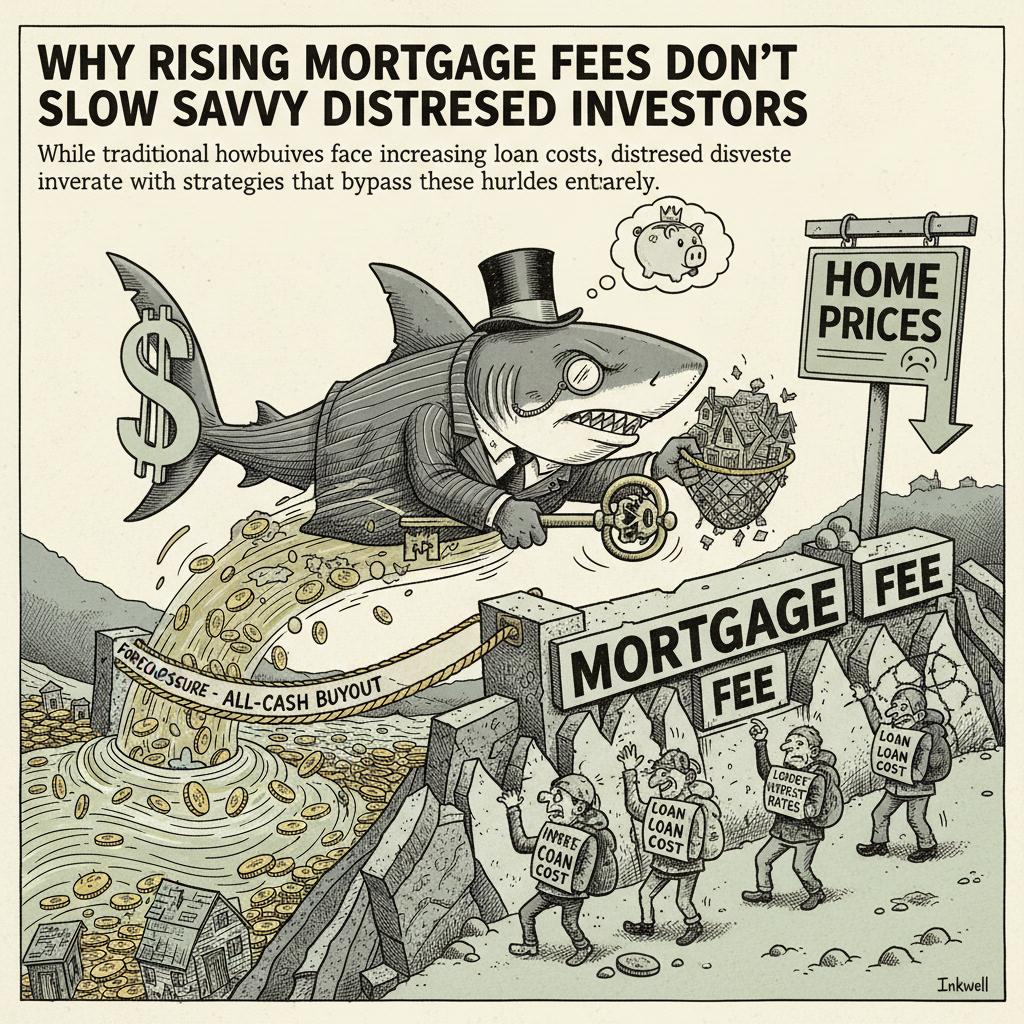
The recent dip in 30-year refinance rates, even a modest 4 basis points to 6.44%, might offer a glimmer of hope for some homeowners. However, for serious distressed real estate investors, these minor fluctuations are less about refinancing and more about market sentiment. They signal continued volatility, which often translates into increased opportunity.
While traditional buyers and sellers might pause or adjust their strategies based on a 0.04% rate change, the distressed market operates on different fundamentals. Foreclosures, pre-foreclosures, and bank-owned properties are driven by life events and financial distress, not solely by interest rates. A homeowner facing job loss or medical bills isn't waiting for rates to drop; they need a solution now. This creates a consistent supply of motivated sellers, regardless of the prevailing mortgage environment.
Savvy investors understand that the real leverage in distressed deals comes from acquiring properties significantly below market value. Whether you're wholesaling, flipping, or holding, the profit margin is built into the acquisition price, not just the financing terms. A 6.44% rate, while higher than historical lows, is still manageable for a well-qualified flip or a cash acquisition. For those leveraging private money or hard money, the focus remains on the deal's intrinsic value and rapid turnover.
Adam Wilder often emphasizes that the market's noise can be a distraction. While monitoring rates is prudent, the core of distressed investing lies in identifying properties with deep equity, understanding the seller's motivation, and applying a consistent deal qualification framework like the Charlie 6. When others are paralyzed by rate uncertainty, you can be actively securing assets at advantageous prices.
This kind of market environment rewards decisive action and a clear understanding of asset value, making it an ideal landscape for building significant wealth through distressed real estate.