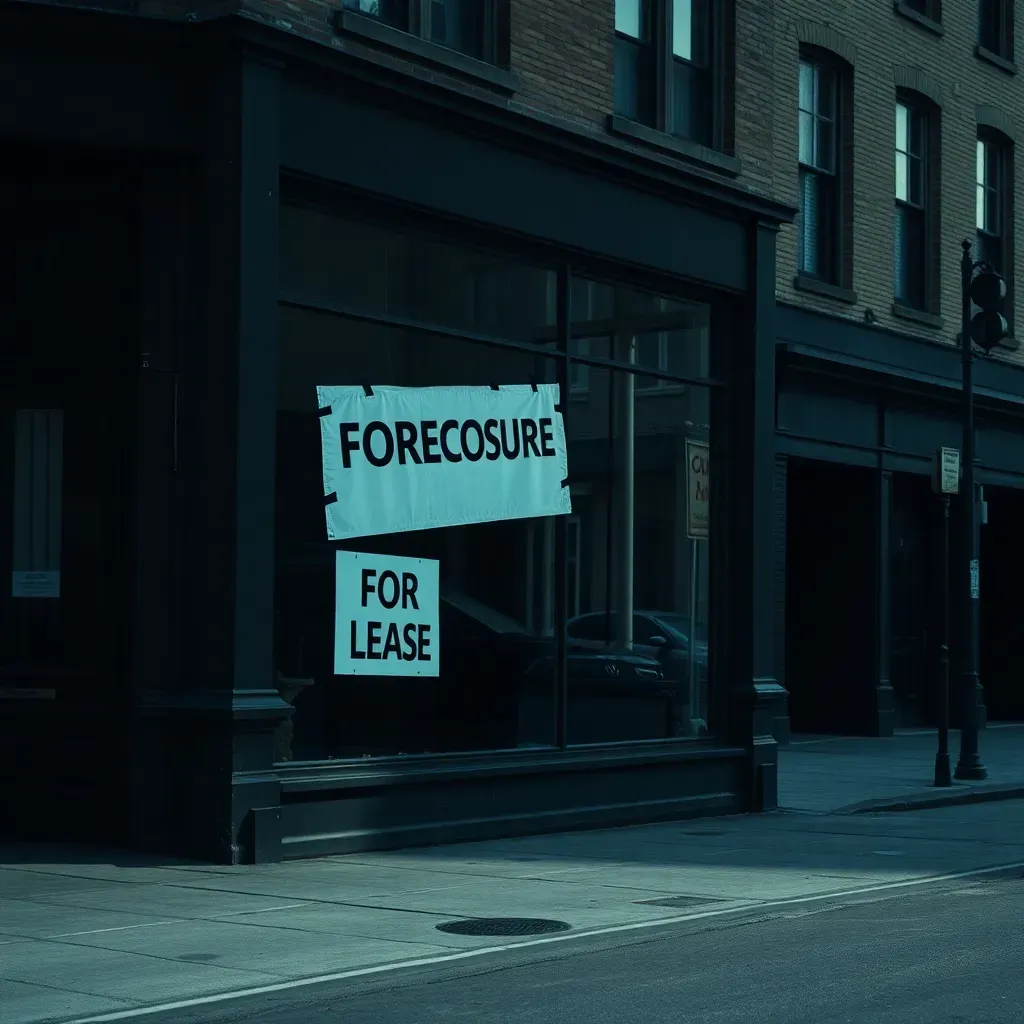
The news recently reported on a Dubuque County candidate facing home foreclosure after the closure of his business. This isn't just a local headline; it's a stark reminder of a fundamental truth many entrepreneurs learn the hard way: the lines between business and personal financial health are often far too blurred. When your primary income stream dries up, the assets you thought were secure can quickly become liabilities.
This scenario plays out constantly, not just for political hopefuls, but for small business owners, contractors, and even high-income professionals. A downturn in their industry, a shift in market demand, or a personal health crisis can evaporate income, making mortgage payments an impossible burden. The emotional and financial toll is immense, often leading to a forced sale or, as in this case, foreclosure. It's a painful lesson in vulnerability, one that underscores the importance of strategic asset protection and diversified income streams.
For those of us operating in distressed real estate, this isn't just a cautionary tale; it's a direct insight into the motivations and circumstances of the homeowners we aim to help. When you encounter a homeowner in pre-foreclosure, understand that their situation is rarely isolated. It's often the culmination of a series of events – job loss, medical emergency, divorce, or, critically, a failed business venture. They aren't just losing a house; they're often losing a sense of stability, identity, and control. Approaching them with empathy, understanding the full scope of their predicament, allows you to offer genuine solutions, not just a quick deal.
This is where the disciplined operator shines. While others might see only a distressed property, you see a distressed situation that requires a strategic approach. Your goal isn't to exploit their misfortune but to provide a clear, structured path to resolution. This often means understanding the nuances of their financial picture, not just the property's condition. Are there other assets? Is there a way to salvage some equity? What are their immediate priorities?
"Many investors focus solely on the property's ARV and repair costs," notes Sarah Chen, a veteran real estate analyst. "But the real opportunity, and the real service, lies in understanding the homeowner's financial distress. That's where you find the flexibility for creative solutions."
Building resilience in your own financial life, and in your business, means learning from these situations. It means structuring your deals and your personal finances to withstand shocks. Diversifying your investments, maintaining emergency reserves, and understanding legal entity structures are not optional; they are foundational. This business isn't just about finding deals; it's about building a robust operating system that can weather economic shifts and personal challenges. The Charlie 6, for instance, isn't just about qualifying a property; it's about qualifying the entire situation, including the homeowner's position and the various resolution paths available.
"The most successful operators I've seen aren't just good at finding properties; they're good at finding solutions for people in tough spots," says Mark Jensen, a multi-state investor specializing in complex pre-foreclosures. "They understand that a business failure can be the trigger for a homeowner's most difficult decision, and they approach it with respect and competence."
Ultimately, this news story is a reminder that the world of distressed real estate is deeply intertwined with the broader economic currents and personal struggles. Your ability to operate effectively in this space hinges on your capacity to not only analyze a property but to understand the human and financial dynamics driving the situation. This insight allows you to be more prepared, more strategic, and ultimately, more valuable.
Start with the foundations at [The Wilder Blueprint](https://wilderblueprint.com/foundations-registration/) — the entry point for serious distressed property operators.