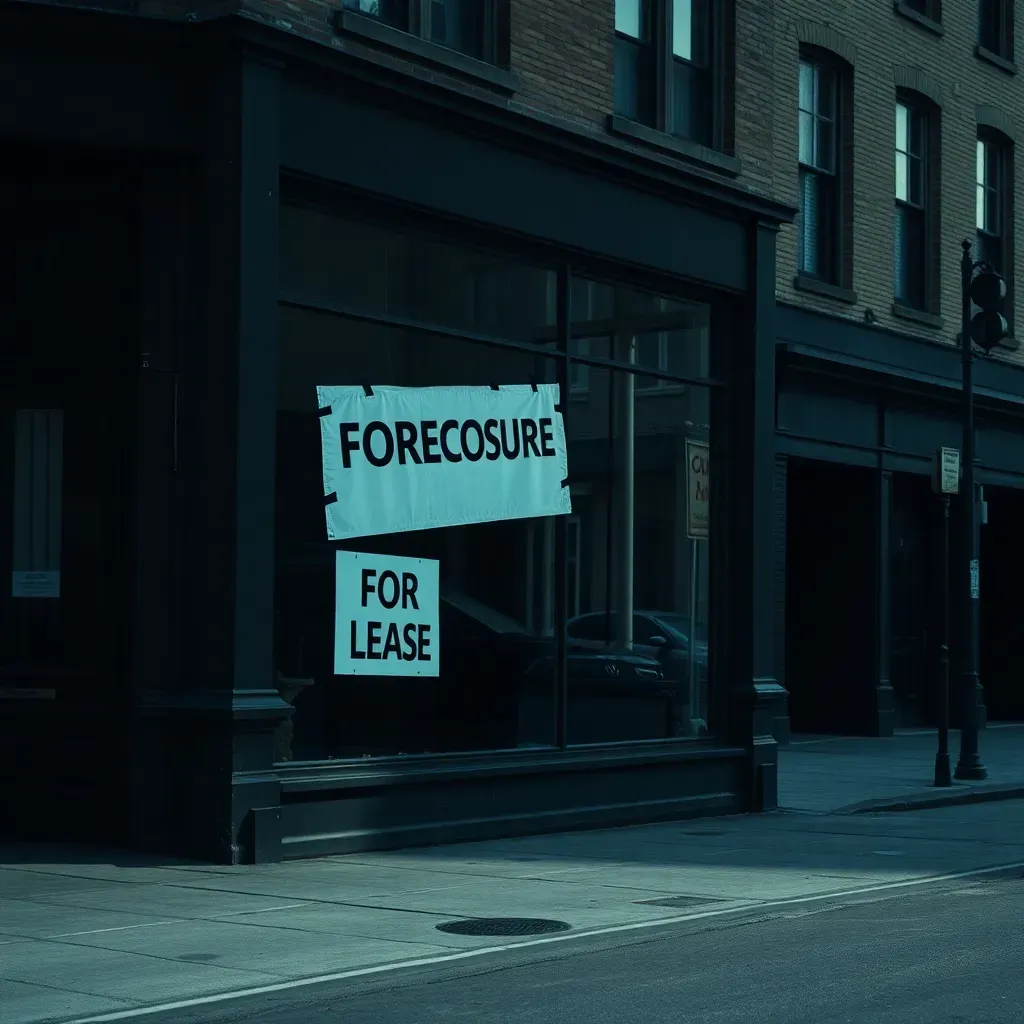
A recent headline about a major apartment tower, The Peach, facing foreclosure is a stark reminder: no asset is too big, no investor too sophisticated, to escape the consequences of poor deal structure or market shifts. This isn't just a story about institutional money; it's a mirror reflecting the core principles that dictate success or failure in any distressed asset play, whether you're dealing with a single-family home or a multi-unit complex.
The news highlights a common scenario: a property acquired with significant debt, facing rising interest rates and potentially softer market conditions. When the numbers stop making sense, lenders move. It’s a cold, hard truth that applies across the board. For the operator paying attention, this isn't just market news; it's a case study in what happens when you ignore the fundamentals of property acquisition and management.
What does a multi-million dollar commercial foreclosure have to do with your pre-foreclosure strategy for single-family homes? Everything. The mechanics are the same. High leverage, an inability to service debt, and a lender unwilling to extend terms. The scale changes, but the underlying problem – a distressed asset – remains constant. Your job, whether you're looking at a $100,000 house or a $100 million tower, is to understand the distress, identify the leverage points, and offer a solution.
"The market doesn't care about your projections if the cash flow isn't there," notes Sarah Jenkins, a veteran distressed asset analyst. "Institutional players often get caught in the same trap as smaller investors: over-leveraging based on optimistic growth that never materializes. The only difference is the number of zeros on the balance sheet."
The key takeaway for operators like us is to focus on what you can control. While you might not be buying apartment towers, the principles of identifying distressed sellers, understanding their motivations, and structuring win-win solutions are identical. The Peach Tower’s situation underscores the importance of conservative underwriting, maintaining adequate reserves, and having a clear exit strategy from day one. When you approach a homeowner in pre-foreclosure, you’re not just buying a house; you’re solving a problem rooted in similar financial pressures.
This is where discipline comes in. We teach a structured approach to pre-foreclosures because the market rewards clarity and execution. You need to qualify deals quickly, understand the homeowner's true situation, and present options without sounding desperate or like you're reading from a script you found online. The Charlie 6, for instance, is designed to let you diagnose a deal in minutes, regardless of the property type, by focusing on the critical data points that reveal the true opportunity and risk.
Consider the implications of rising interest rates and tighter lending on the broader market. This isn't just affecting large commercial deals; it's putting pressure on homeowners who refinanced at low rates and are now facing higher payments, or those with adjustable-rate mortgages. This creates a fertile ground for pre-foreclosure opportunities, but only for those who understand how to navigate the landscape with precision and empathy.
"Every foreclosure, big or small, is a story of misaligned expectations or unforeseen circumstances," states Mark Peterson, a real estate investment fund manager. "Our job as investors is to step into that gap, provide a clear path forward, and extract value through smart acquisition and efficient resolution."
Your strategy should always center on providing solutions. For the Peach Tower, the solution will likely involve a new owner, a recapitalization, or a forced sale. For the homeowner you speak with, it might be a quick cash offer, a short sale, or a lease-option. The Five Solutions framework helps you tailor your approach to the specific needs of the distressed seller, ensuring you're always operating from a position of strength and service.
This kind of market news isn't just noise; it's a signal. It tells you where the pressure points are, where the opportunities will emerge, and why a structured, disciplined approach to distressed assets is more critical than ever.
See the full system at [The Wilder Blueprint](https://wilderblueprint.com/get-the-blueprint/).