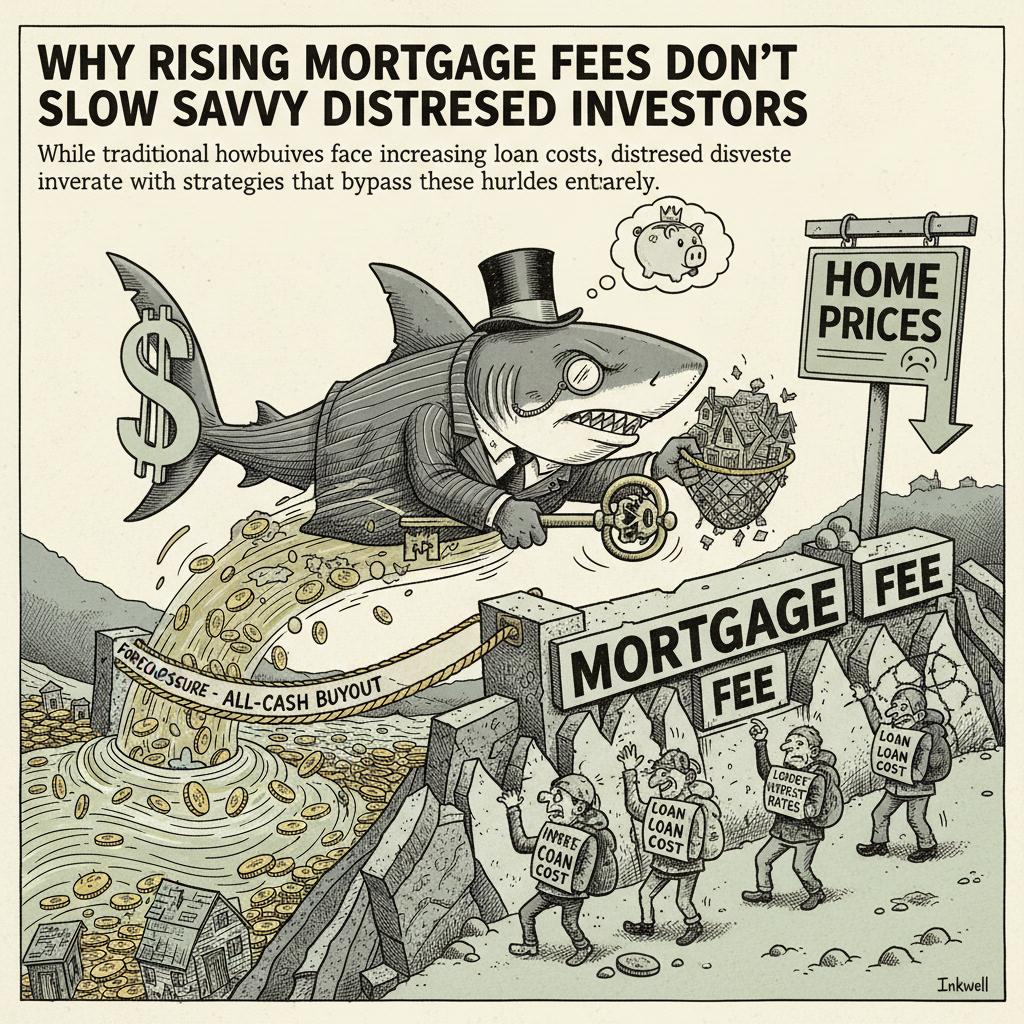
The recent jump in mortgage rates, fueled by geopolitical events and their impact on oil prices and Treasury yields, is sending ripples through the broader housing market. While higher rates can cool buyer demand for traditional listings, for the savvy distressed real estate investor, this shift isn't a setback—it's a strategic opening.
Rising rates directly impact affordability, pushing more homeowners into financial distress as their adjustable-rate mortgages reset or their ability to refinance dwindles. This increases the pool of potential pre-foreclosures and short sales. Furthermore, a slower retail market means less competition for these distressed properties, allowing investors to secure deals at more favorable acquisition costs.
“Every market shift creates winners and losers,” notes Sarah Chen, a market strategist specializing in housing finance. “When conventional buyers pull back, the investor with capital and a clear acquisition strategy steps in to fill the void.” The Wilder Blueprint’s Charlie 6 framework becomes even more critical in these conditions, allowing investors to quickly identify deals with sufficient equity and a clear path to profit, even with higher holding costs.
This environment favors those who understand how to navigate the pre-foreclosure process, negotiate with homeowners, and structure creative solutions. As Adam Wilder often emphasizes, the goal isn't to compete on price in a hot market, but to solve problems for distressed sellers in any market. Higher rates simply amplify those problems, making your solutions more valuable.
This is a time for precision and strategy, not panic. The opportunities are shifting, not disappearing. Learn how to capitalize on these market dynamics.