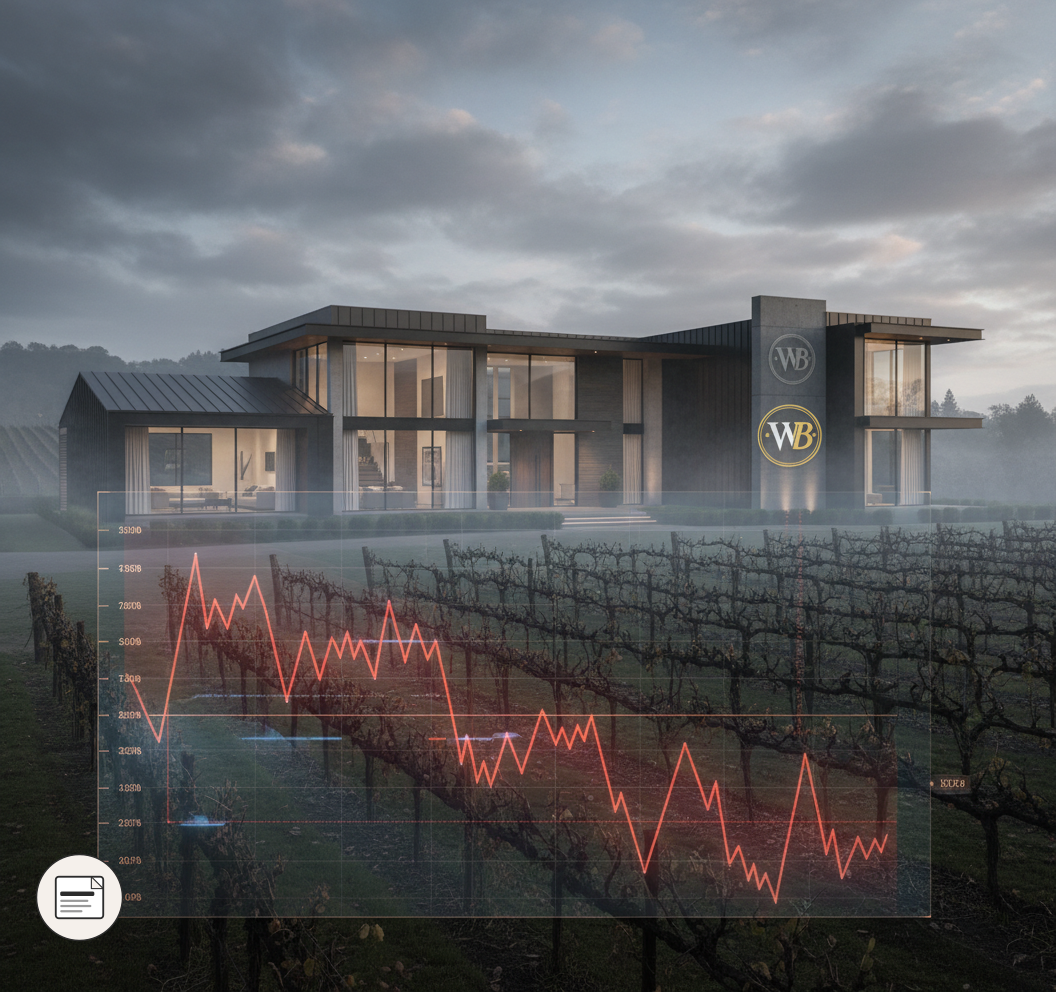
The recent training exercises for seasonal firefighters at Cal Fire’s academy in Napa Valley, while critical for public safety, serve as a stark reminder for real estate investors: wildfire risk is no longer a peripheral concern but a central factor in property valuation and investment strategy across vulnerable regions.
For seasoned investors who've navigated multiple market cycles, understanding and adapting to evolving environmental risks is paramount. The increasing frequency and intensity of wildfires, particularly in states like California, are fundamentally altering the economics of property ownership and development in affected areas.
**The Shifting Calculus of Property Value**
Historically, areas like Napa Valley have commanded premium prices due to their natural beauty, agricultural prestige, and proximity to major economic centers. However, the escalating threat of wildfires introduces a new layer of complexity to these valuations. "We're seeing a bifurcation in the market," notes Elena Petrova, a veteran real estate analyst specializing in Western states. "Properties with robust fire-hardening measures, defensible space, or located in less exposed micro-climates are retaining value, while others in high-risk zones are experiencing significant downward pressure, often exacerbated by insurance woes."
Investors must move beyond traditional comps and integrate wildfire risk assessments into their due diligence. This means scrutinizing fire hazard maps, understanding local building codes related to fire resistance, and evaluating the long-term cost of ownership, not just the purchase price.
**The Insurance Conundrum: A Growing Barrier to Entry**
Perhaps the most immediate and impactful consequence of heightened wildfire risk is the dramatic shift in property insurance. Carriers are increasingly pulling out of high-risk areas, raising premiums exponentially, or imposing stringent requirements that make coverage prohibitively expensive or impossible to obtain. A property that once had an annual premium of $3,000 might now face $15,000 or more, or be relegated to the California FAIR Plan, which offers less comprehensive coverage at higher rates.
"The insurance market has become the silent deal killer in many high-risk areas," states David Chen, an investor who has completed over 30 short sales in California. "We recently walked away from a pre-foreclosure in Sonoma County where the insurance quote alone added 18% to the projected annual holding costs, making our flip model unworkable. You can't underwrite a deal without a clear, affordable insurance pathway."
For investors eyeing foreclosure or pre-foreclosure opportunities in these regions, securing an insurance binder *before* committing to a purchase is no longer optional; it's a critical step in the due diligence process. The inability to obtain affordable insurance can render a property unfinanceable, regardless of its ARV.
**Investment Strategies for a Fiery Future**
Despite the challenges, opportunities still exist for astute investors. Here are a few actionable strategies:
1. **Focus on Fire-Hardened Properties:** Seek out homes built or retrofitted with fire-resistant materials (e.g., stucco, metal roofs, dual-pane windows) and ample defensible space. These properties will command a premium but offer greater long-term stability and easier insurability. 2. **Explore Mitigation Investments:** Consider properties that are undervalued precisely because of their high-risk profile, but where significant fire mitigation (tree removal, brush clearing, sprinkler systems) can be implemented to improve insurability and future value. 3. **Understand Local and State Programs:** Research government programs designed to assist homeowners with fire hardening, as these can provide capital for necessary upgrades. 4. **Long-Term Hold with Rental Income:** In some areas, the rental market remains strong, even if the sales market is volatile. A well-insured, fire-hardened rental property could generate consistent cash flow, provided the insurance costs are factored accurately into your NOI calculations.
The increasing professionalism and training of firefighters, as seen in Napa Valley, are vital. However, investors must recognize that the landscape of real estate risk has fundamentally shifted. Integrating wildfire risk into every facet of deal analysis—from acquisition to disposition—is no longer a niche concern but a core competency for success in today's market.
*Mastering complex market dynamics and identifying overlooked opportunities is key to profitable real estate investing. Learn how to adapt your strategies to evolving risks and capitalize on market shifts with The Wilder Blueprint's advanced training programs.*