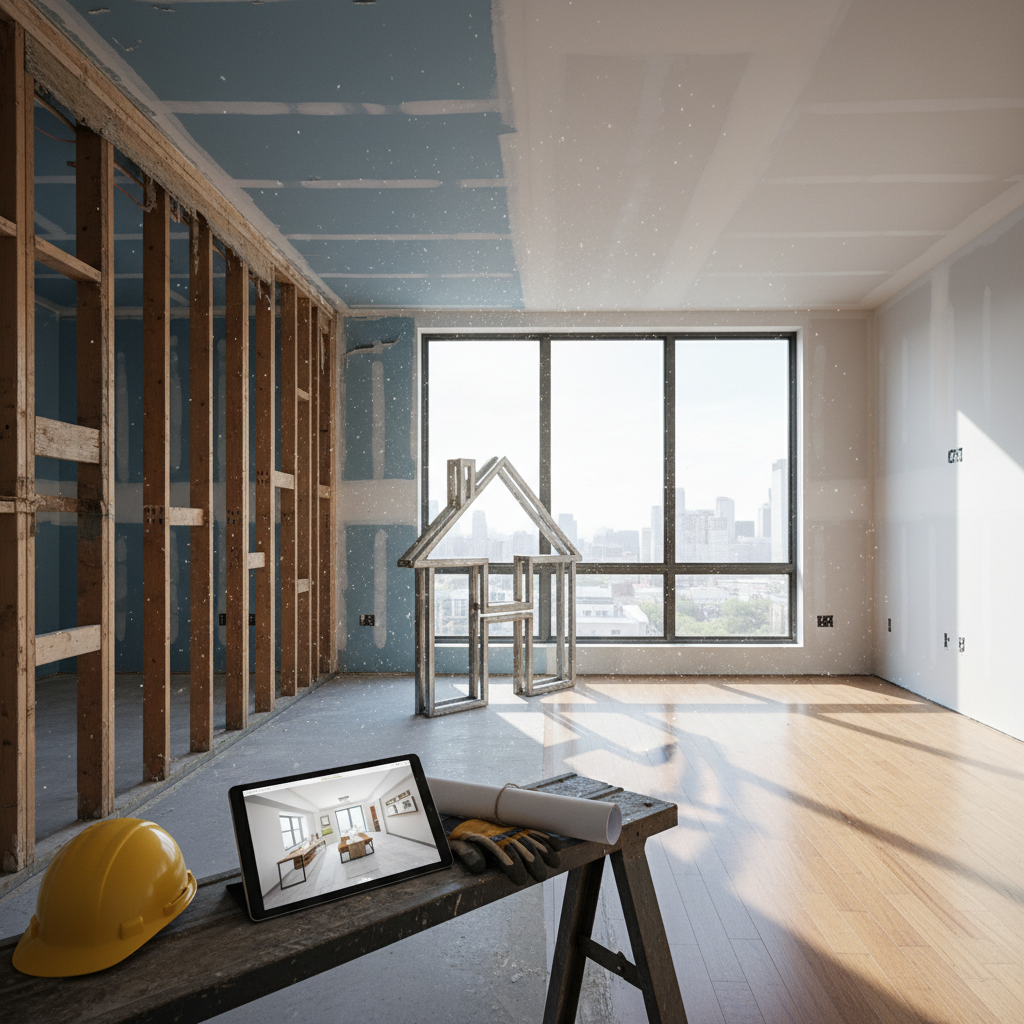
While homeowners debate the financial and emotional costs of remodeling versus moving, distressed real estate investors see a clear signal: opportunity. The very factors that make this decision difficult for a homeowner—rising construction costs, market uncertainty, or the sheer inconvenience of a renovation—are precisely what can drive them to sell quickly, often below market value.
For a homeowner, a major renovation means navigating contractors, permits, and months of disruption, often with an uncertain return on investment. As investor Sarah Jenkins, founder of Cornerstone Acquisitions, notes, "When a homeowner tells me they're tired of their outdated kitchen but can't stomach the thought of living through a remodel, that's my cue. They're often ready for a clean, fast exit."
This is where the distressed investor steps in. Instead of viewing a dated property as a problem, it's seen as a value-add proposition. The Wilder Blueprint’s Charlie 6 framework helps investors quickly assess the potential of such properties, identifying those with significant equity and motivated sellers. These are not always foreclosures; they can be properties where the owner simply lacks the capital, time, or desire to undertake necessary repairs or upgrades.
By offering a swift, cash purchase, investors provide a compelling alternative to the 'remodel or move' conundrum. They solve the homeowner's immediate pain point, allowing them to move on without the hassle, while securing a property with built-in equity for a profitable flip or rental. Understanding this homeowner psychology is key to sourcing off-market deals. Adam Wilder covers this process across 12 modules in The Wilder Blueprint.