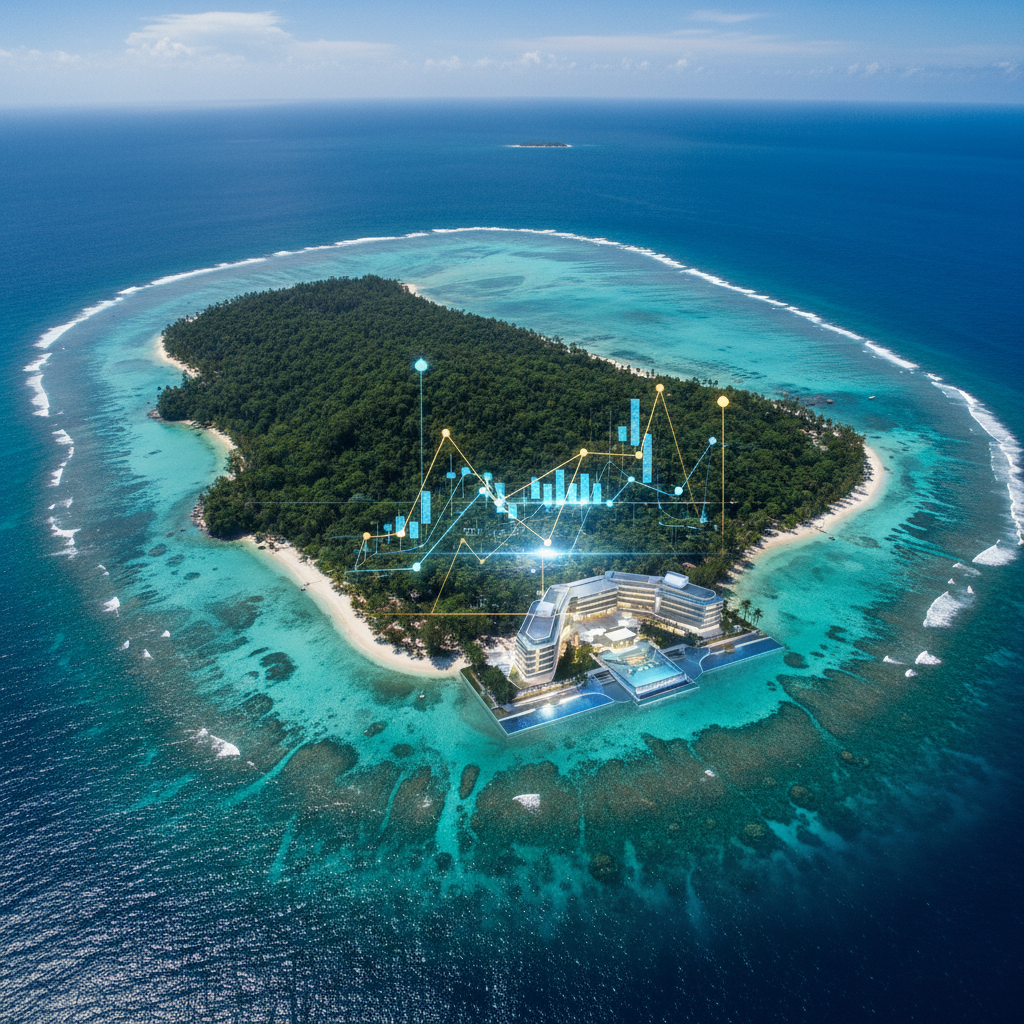
The recent spotlight on Kasasa Island in Japan, with its mere seven residents and geopolitical significance, offers a unique lens through which to examine a niche but potent real estate investing strategy: identifying value in remote, under-utilized properties. While Kasasa's fate is tied to international relations, the underlying principle – finding assets with low current utility but high potential – is a cornerstone of successful, contrarian investing.
For the discerning investor, such islands, or even remote mainland parcels, represent potential goldmines. They often come with significantly lower acquisition costs due to perceived lack of infrastructure or immediate demand. "We've seen similar patterns in distressed coastal towns or forgotten rural tracts here in the States," notes Sarah Chen, a veteran investor with 300+ deals under her belt. "The key is to look beyond the current state and envision the future utility, whether it's for eco-tourism, specialized agriculture, or even strategic data centers."
Consider a hypothetical scenario: an investor acquires a 5-acre parcel on a less-developed island for $50,000, a fraction of mainland prices. With a strategic vision, this land could be subdivided, developed into off-grid luxury cabins for a burgeoning eco-tourism market, or even leased for aquaculture. The ARV (After Repair Value) of such a project, with proper permitting and development, could easily reach $500,000 or more, yielding a substantial ROI. The challenge lies in navigating local regulations, understanding environmental impact, and securing financing for non-traditional assets.
Financing for such unique opportunities often requires creative solutions. Traditional lenders may balk at properties without established comparables. This is where private money, hard money, or even seller financing becomes crucial. "Don't expect a conventional bank to fund your vision for a remote island retreat," advises Mark Jensen, a real estate analyst specializing in alternative assets. "You need to present a bulletproof business plan and demonstrate a clear path to profitability to attract capital that understands the long game."
Identifying these opportunities demands meticulous due diligence. Investors must research zoning laws, environmental protections, access to utilities (or plans for self-sufficiency), and potential for infrastructure development. The 'abandoned' nature of some properties can also lead to pre-foreclosure or tax lien opportunities, offering even deeper discounts for those willing to navigate the complexities.
While Kasasa Island's story is about sovereignty, the investor's takeaway is about vision. The ability to see value where others see only isolation is a hallmark of truly successful real estate investing.
Ready to uncover hidden value in overlooked markets? The Wilder Blueprint offers advanced strategies for identifying and capitalizing on unique real estate opportunities, from distressed assets to strategic land acquisitions.