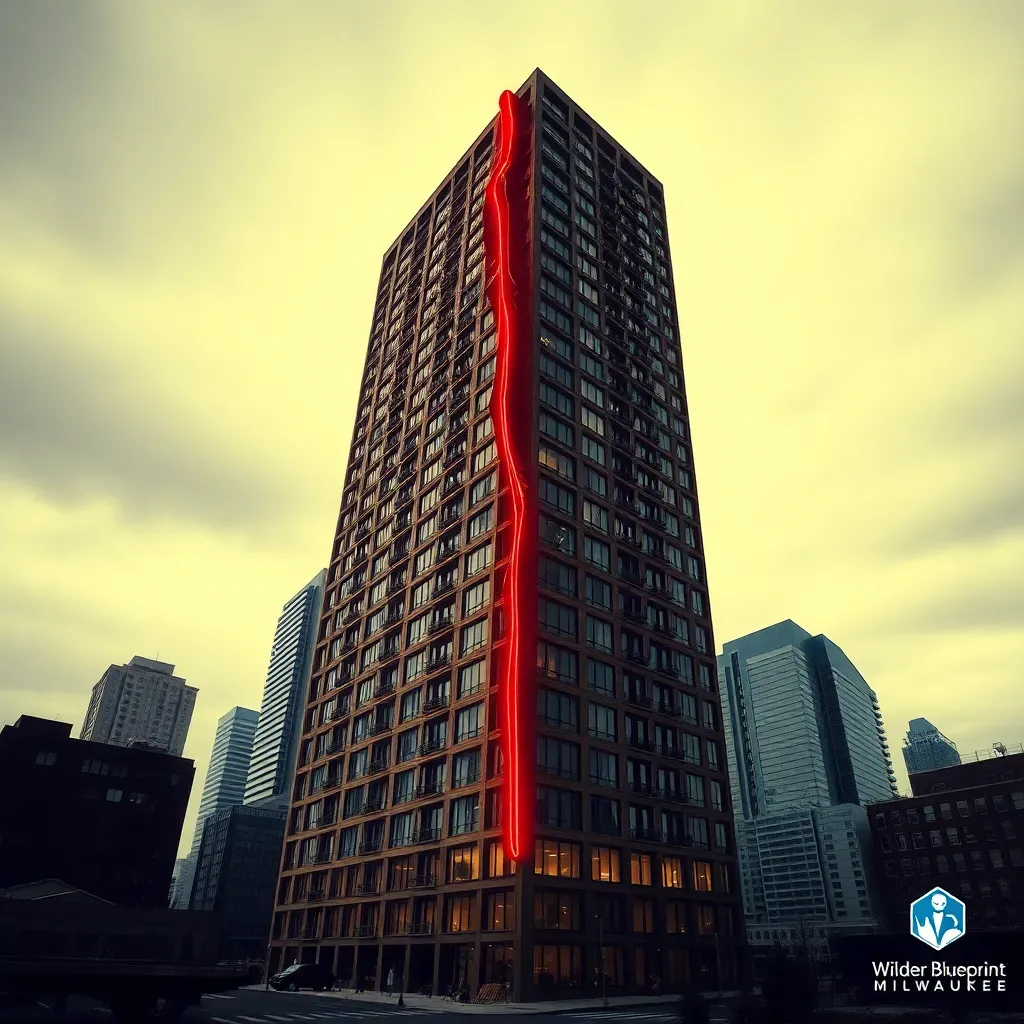
You see the headlines: 'Nation's Tallest Mass Timber Project Faces Foreclosure.' It's easy to dismiss these as big-money problems, far removed from the single-family homes or smaller multi-units most operators focus on. But that's a mistake. The principles that lead to a multi-million-dollar commercial foreclosure are often the same ones that unravel a residential deal, just scaled up. And for the operator who pays attention, these high-profile failures offer invaluable lessons.
This Milwaukee project, once a beacon of innovation and sustainable building, is now reportedly in distress. It highlights a critical truth: no project, no matter how ambitious or well-intentioned, is immune to financial headwinds or missteps. Whether it's rising interest rates, construction cost overruns, tenant vacancies, or simply a miscalculation of market demand, the outcome is the same: a lender needs to get paid. And when they don't, the property becomes a distressed asset.
For the distressed real estate operator, this isn't a story of failure; it's a case study in opportunity. While you might not be buying a skyscraper tomorrow, the underlying mechanisms of commercial foreclosure are crucial to understand. Commercial foreclosures often involve more complex debt structures, multiple lien holders, and longer resolution timelines than residential. This complexity can deter many, but for the disciplined operator, it creates a less competitive playing field.
"Commercial foreclosures often move slower, but the stakes are higher and the research required is more intensive," notes Sarah Jenkins, a commercial real estate analyst. "You're not just evaluating a property; you're evaluating a business model, its cash flow, and the market forces impacting it."
Identifying these opportunities requires a different kind of diligence. You're looking for the same core indicators of distress – missed payments, public notices of default, lender actions – but you're also digging into the property's income statements, lease agreements, and market comparables for similar commercial properties. The Charlie 6, our framework for rapid deal qualification, still applies, but you're expanding your data points to include metrics like Net Operating Income (NOI), Cap Rates, and tenant solvency.
"The biggest mistake I see operators make with commercial distress is assuming it's just a bigger version of residential," says Mark Thompson, a veteran commercial asset manager. "It's a different beast. You need to understand the covenants, the environmental reports, and the specific market's absorption rates for that asset class. But the payoff, when done right, can be substantial."
Your advantage in these situations is often not just capital, but knowledge and speed. While large institutions move slowly, bogged down by committees and bureaucracy, a focused operator can identify the core problem, propose a viable solution, and execute. This might mean stepping in as a junior lien holder, acquiring the defaulted note, or negotiating directly with the borrower or lender to take over the asset. The Five Solutions – our framework for working with distressed homeowners – can be adapted here, focusing on how you can solve the *lender's* problem, not just the borrower's.
This Milwaukee example is a stark reminder that even the most ambitious projects can falter. But for those who understand the mechanics of distress, these moments aren't just news; they're signals of where the next wave of opportunity will break.
See the full system at [The Wilder Blueprint](https://wilderblueprint.com/get-the-blueprint/).