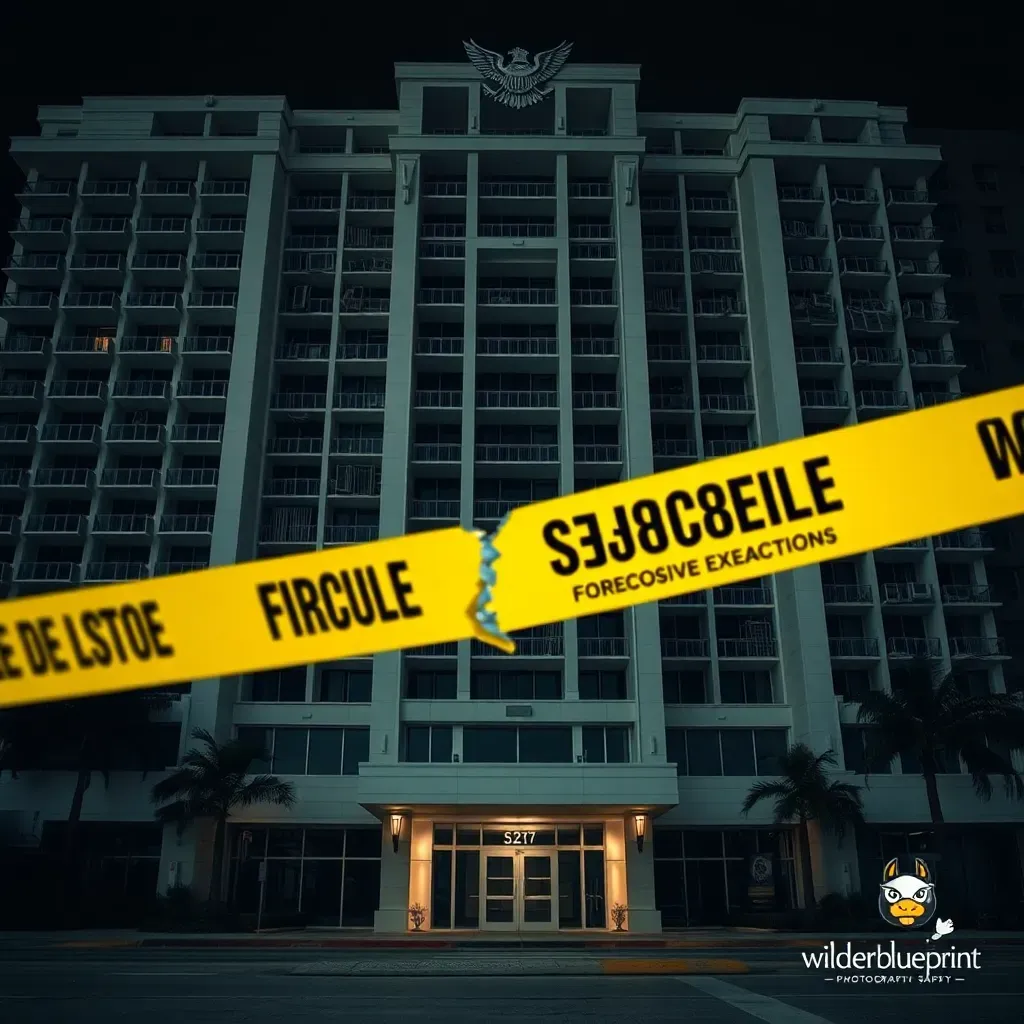
You might have seen the headlines: a prominent apartment tower, the Peach, is facing foreclosure. We’re talking about a multi-million dollar asset, a significant player in the commercial real estate landscape, now caught in the gears of financial distress. For many, this is just another news story about big money problems. For us, it's a clear signal, a case study in plain sight, that the principles of distressed investing apply across the board—from a single-family home to a high-rise.
This isn't about celebrating someone else's misfortune. It's about understanding the mechanics of distress. When a large-scale project like an apartment tower, backed by significant capital and sophisticated players, hits the wall, it tells you something critical about the market, about leverage, and about the unforgiving nature of debt. It highlights that even the most seemingly robust deals can unravel, often due to factors beyond a single operator's control—interest rate hikes, shifting market dynamics, or simply over-leveraging on initial projections that didn't pan out. This isn't a new phenomenon; it's a cyclical reality.
So, what does a commercial foreclosure like the Peach Tower mean for you, the operator focused on residential pre-foreclosures and foreclosures? It means the tide is shifting. Commercial distress often precedes or accompanies residential distress. When institutional investors and developers face liquidity issues or loan defaults, it tightens capital markets, slows new development, and can put pressure on the broader housing market. It's a ripple effect. "We're seeing a recalibration across all asset classes," notes Sarah Jenkins, a veteran real estate analyst. "The commercial sector's pain today can often be a leading indicator for residential opportunities tomorrow."
Your job isn't to chase apartment towers. Your job is to recognize the systemic forces at play. The same pressures that lead to a commercial foreclosure—rising interest rates, tighter lending, economic uncertainty—are the same pressures that push homeowners into pre-foreclosure. This is why understanding the macro environment is crucial, even when your focus is micro. You need to be disciplined, not desperate. You need to be prepared for when these ripples hit your local market, creating more inventory of distressed residential properties.
This is where your structured approach comes in. While the Peach Tower deal is complex, the underlying principles of identifying distress, understanding the seller's motivation (or the lender's motivation, in this case), and offering a viable solution remain constant. You're looking for homeowners who need a way out, just as a lender is looking for a resolution on a defaulted commercial loan. "The core problem in distressed real estate is always a mismatch between asset value, debt, and liquidity," explains David Chen, a distressed asset strategist. "Whether it's a $200,000 house or a $200 million tower, the solution requires a clear-eyed assessment and a path to resolution."
Focus on your lane: pre-foreclosures. The increase in commercial distress indicates a broader environment where homeowners are also feeling the squeeze. This means more opportunities for you to step in with the Five Solutions, providing a structured, empathetic, and effective path for homeowners facing their own version of financial pressure. Don't get distracted by the scale of the commercial deals; learn from their existence. They confirm that the market is moving, and those prepared with systems will be positioned to act.
The full deal qualification system is inside The Wilder Blueprint Core — six modules built for operators who are ready to move.