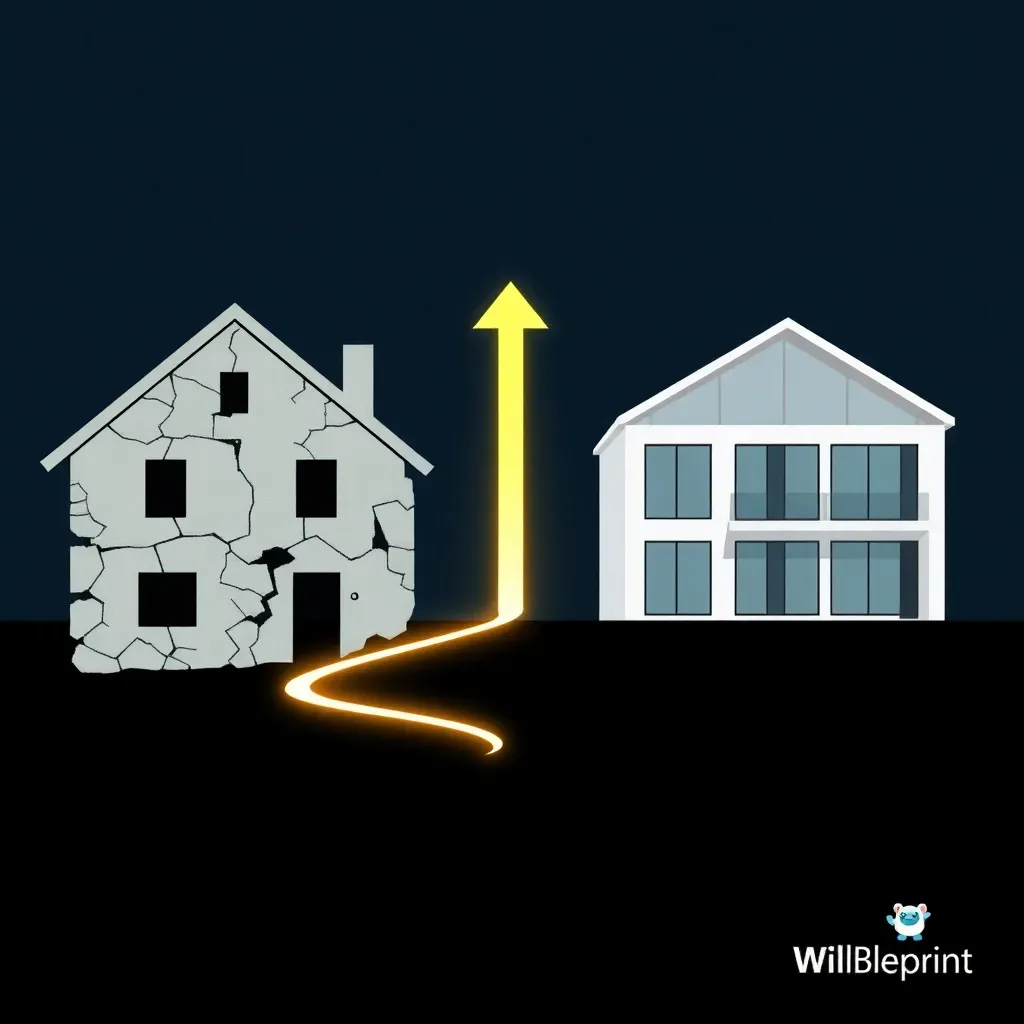
The story of an investor losing over $100,000 on their first 'entitlement deal' is a stark reminder that ambition without discipline is a fast track to financial pain. It’s easy to get caught up in the potential upside of a complex deal – the vision of transforming raw land or a neglected property into something far more valuable. But the path to that value is paved with regulations, permits, and timelines that can bleed you dry if you don't understand them.
This isn't about shaming anyone for a loss; it's about fixing the frame. This business rewards structure, truth, and execution. When you chase deals based on a vague understanding of 'entitlements' – the zoning changes, permits, and approvals needed to develop or significantly alter a property – you're playing with fire. The potential for profit is high, but so is the potential for delay, unexpected costs, and outright rejection.
For distressed property operators, the allure of an entitlement play can be particularly strong. You see a property with a low basis, perhaps a foreclosed lot or an old commercial building in a residential zone, and your mind immediately jumps to its 'highest and best use.' You envision rezoning it for multi-family, adding units, or converting it to a different commercial purpose. The problem is, the gap between 'vision' and 'reality' in entitlement deals is often measured in years and hundreds of thousands of dollars.
"Many investors underestimate the political and bureaucratic hurdles involved in entitlements," says Maria Rodriguez, a veteran land use attorney. "It's not just about submitting paperwork; it's about navigating public hearings, environmental reviews, and often, local opposition. Each step adds time and cost, and there's no guarantee of approval."
The core issue here is a lack of rigorous due diligence and a misunderstanding of the true risk profile. In distressed real estate, our advantage is often speed and clarity. We identify a problem (distressed homeowner, pre-foreclosure, auction), offer a solution, and execute. Entitlement deals, by their nature, are the opposite. They are slow, opaque, and require deep pockets to sustain the process.
So, what's the lesson for the distressed operator? It's not necessarily to avoid entitlement plays entirely, but to approach them with extreme caution and a modified strategy. First, understand that an entitlement deal is a different beast than a typical pre-foreclosure acquisition. The Charlie 6, our deal qualification system, helps you diagnose a pre-foreclosure in minutes. An entitlement deal requires a 'Charlie 10' – a far more extensive due diligence process that includes:
1. **Zoning & Planning Review:** Don't just read the code; talk to city planners. Understand the political climate for your proposed change. 2. **Feasibility Studies:** Get preliminary architectural and engineering assessments. Can your vision actually be built on this specific parcel? 3. **Cost Projections:** Factor in not just permit fees, but legal costs, consultant fees, holding costs (taxes, insurance) for potentially years, and potential impact fees. 4. **Timeline Analysis:** Be realistic. A simple rezoning can take 6-12 months. A complex PUD (Planned Unit Development) can take 2-3 years, or more. 5. **Exit Strategy Contingency:** What's your plan if the entitlements are denied, or if the process drags on indefinitely? Can you still sell the property as-is without a massive loss?
"The biggest mistake I see is investors tying up capital for too long on speculative entitlement plays," notes David Chen, a commercial real estate analyst. "Cash flow is king, and these deals are cash flow negative for extended periods. You need a deep war chest or a very specific, pre-vetted opportunity."
For most operators, especially those starting out, focusing on deals where the highest and best use is *already permitted* is the smarter play. Find properties where the value add is in renovation, efficient management, or simply buying right in a pre-foreclosure scenario. These are the deals that offer predictable timelines and clearer paths to profit. If you do venture into entitlements, structure your deals to minimize upfront risk – perhaps an option agreement or a very long due diligence period that allows you to secure initial approvals before closing.
This business is about being dangerous in the right way – disciplined, clear, and executing with precision. Don't let the siren song of a 'big score' on an entitlement deal distract you from the structured, repeatable processes that build real wealth.
Start with the foundations at [The Wilder Blueprint](https://wilderblueprint.com/foundations-registration/) — the entry point for serious distressed property operators.