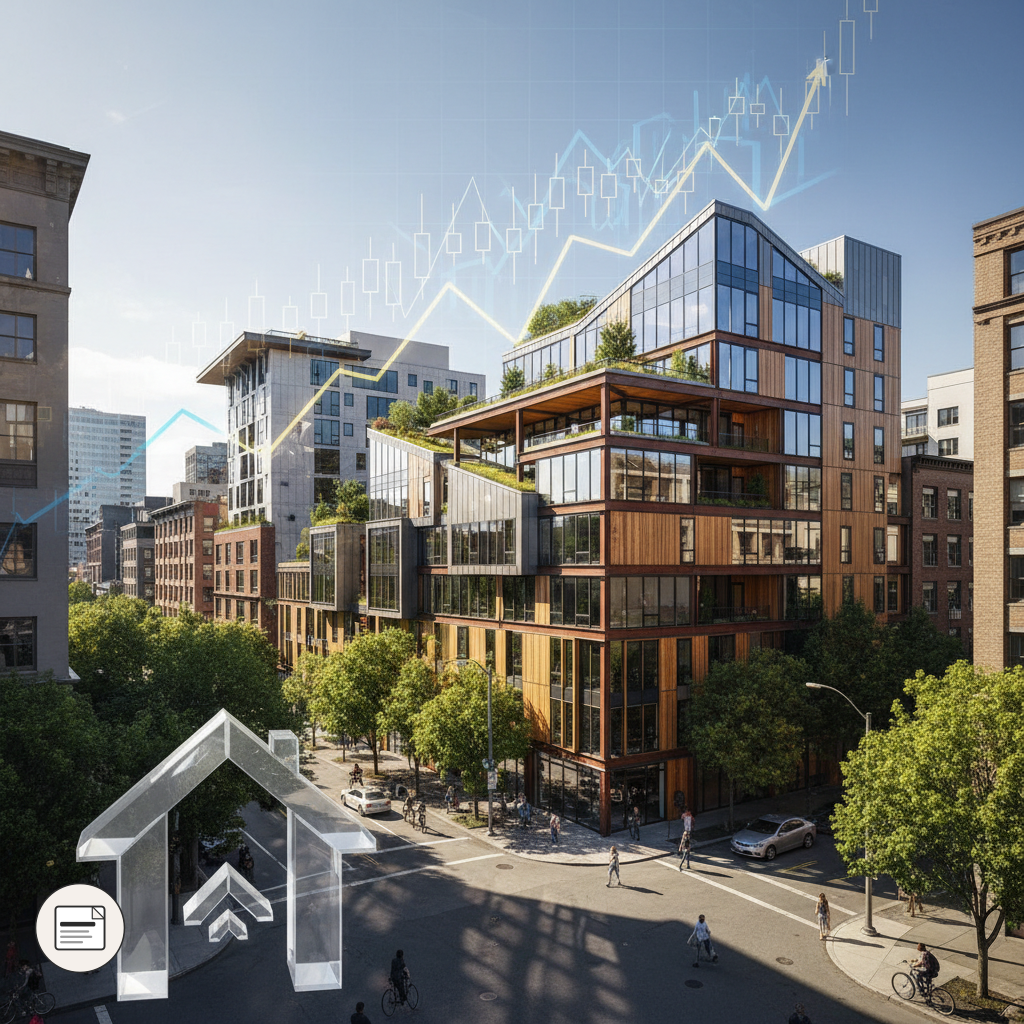
The traditional single-family home flip or buy-and-hold remains a cornerstone of real estate investing, but savvy investors are increasingly looking at niche multi-family development for outsized returns. A recent project in Seattle, where a developer constructed a 35-unit co-housing complex, offers a compelling case study for the strategic deployment of capital into specialized housing solutions.
This isn't about charity; it's about identifying an underserved market segment and building to meet that demand. While the developer's motivation was personal, the underlying principles are pure investment strategy: high-density, community-focused living in an expensive urban core like Seattle presents a significant opportunity for superior rental income and property appreciation.
**The Economics of Niche Multi-Family**
Developing a 35-unit complex, even on a smaller footprint, offers economies of scale that individual single-family homes cannot. Land acquisition costs per unit decrease, and construction efficiencies improve. In a market where average rents for a 1-bedroom apartment can easily exceed $2,000, a well-designed co-housing unit, even with shared amenities, can command competitive rates while offering a unique value proposition to tenants.
Consider a project like this: assuming an average unit size of 400 sq ft (common in co-housing/micro-unit developments) and a conservative rent of $1,500 per unit, that's $52,500 in gross monthly income, or $630,000 annually. Even with a 40% operating expense ratio, the Net Operating Income (NOI) would be $378,000. At a 5.5% cap rate, this project could be valued at nearly $6.9 million post-stabilization. These numbers illustrate the significant cash flow and equity build potential.
"The key isn't just building units; it's building the *right* units for the *right* demographic," notes Sarah Jenkins, a multi-family investment analyst with Cascade Capital Group. "Co-housing, micro-apartments, and purpose-built student housing are all examples of how understanding tenant needs can lead to premium rents and lower vacancy rates, even in a competitive market."
**Navigating Development Challenges**
Developing multi-family, especially in dense urban areas, comes with its own set of hurdles: zoning restrictions, lengthy permitting processes, and higher construction costs. However, these challenges also act as barriers to entry, protecting early movers. Investors must be prepared for longer timelines and more complex financing structures compared to single-family deals. Leveraging local urban planning expertise and having a robust capital stack, potentially including construction loans and equity partners, is crucial.
"We've seen developers successfully navigate these complexities by focusing on infill lots and creative design solutions that maximize density within existing zoning envelopes," states Mark 'The Hammer' Harrison, a veteran developer with 400+ deals under his belt. "The upfront effort is substantial, but the long-term cash flow and appreciation potential often far outweigh the initial headaches."
**Actionable Insight for Investors**
For investors looking beyond traditional strategies, this Seattle case study offers a clear takeaway: research emerging housing trends and demographic shifts in your target markets. Could a micro-unit complex appeal to young professionals? Is there a demand for senior co-living? These specialized niches, while requiring more detailed market analysis and development expertise, can yield exceptional returns and diversify your real estate portfolio.
Understanding the intricacies of multi-family development, from site acquisition and zoning to financing and property management, is paramount. The Wilder Blueprint offers advanced training modules specifically designed to equip investors with the knowledge and tools to identify, analyze, and execute complex multi-family projects, turning niche market demands into profitable ventures.