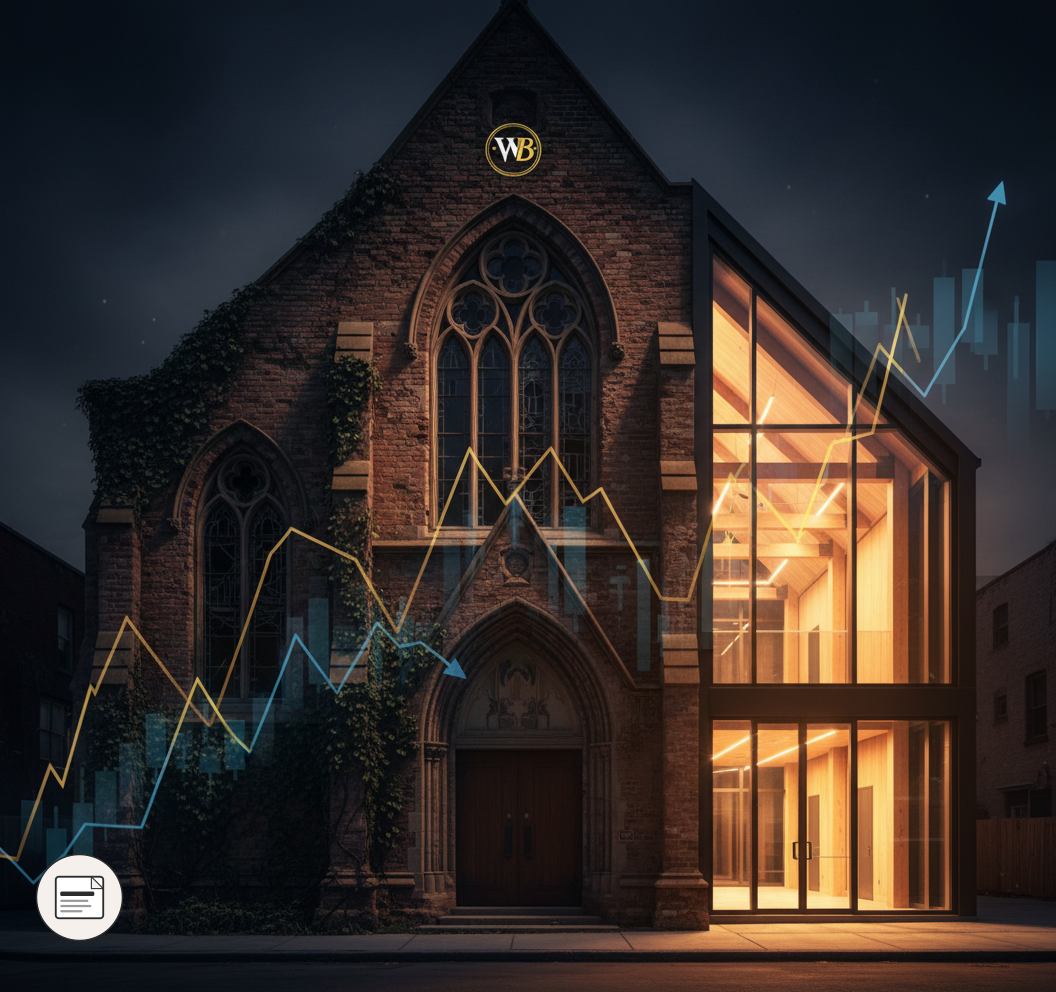
The news out of New Bedford, Massachusetts, regarding the potential demolition of St. Kilian’s Church to make way for housing is a stark reminder of the evolving landscape of urban real estate. While the headlines often focus on the emotional and historical aspects, for the seasoned real estate investor, this scenario immediately triggers a different set of questions: What's the highest and best use? What are the regulatory hurdles? And, most importantly, what's the profit potential?
This isn't just about New Bedford; it's a nationwide trend. As demographics shift and religious institutions face declining attendance and rising maintenance costs, many historic churches, schools, and commercial buildings are becoming distressed assets. These properties, often in prime urban or suburban locations, represent significant untapped value for investors willing to undertake complex adaptive reuse projects.
"The key to these deals is understanding the 'story' of the asset and the community's needs," says Marcus Thorne, a veteran developer with 30 years in urban revitalization. "A 15,000 sq ft church in a residential zone isn't just a building; it's a potential 15-unit apartment complex, a community center, or even micro-retail space, depending on local demand and zoning flexibility. We recently converted a defunct 1920s schoolhouse into 22 affordable housing units, securing 4% LIHTC and achieving a 14% IRR over a 5-year hold." This level of transformation requires deep due diligence and a robust network.
**The Investor's Due Diligence Checklist for Adaptive Reuse:**
1. **Zoning and Permitting:** This is paramount. Is residential conversion even permitted? If not, what's the likelihood and cost of a zoning variance or rezone? Expect community resistance and be prepared to address it with a compelling, benefit-driven proposal. Navigating historical preservation committees can add 6-12 months to a timeline and 10-20% to renovation costs. 2. **Structural Integrity & Environmental Concerns:** Historic buildings often come with unforeseen structural issues, asbestos, lead paint, or even underground oil tanks. A thorough Phase I and Phase II environmental assessment, combined with a detailed structural engineering report, is non-negotiable. Budget 15-25% contingency for unknowns. 3. **Market Demand & Financial Feasibility:** For a project like St. Kilian's, the question is whether the market can absorb new housing units at a price point that justifies the development costs. What's the average rent for a 2-bedroom in New Bedford? What are comparable sales for new construction? A conservative ARV (After Repair Value) calculation is critical, factoring in a 20-30% premium for unique, historically preserved units if applicable. 4. **Financing & Incentives:** Traditional construction loans might be harder to secure for adaptive reuse. Explore historic tax credits (federal and state), New Market Tax Credits, and local economic development grants. These can significantly reduce your equity requirement and boost returns. A typical LTV for such projects might start at 65-70% from conventional lenders, with gap financing often coming from private equity or specialized funds.
"These aren't quick flips," cautions Dr. Evelyn Reed, a real estate economist specializing in urban development. "Adaptive reuse projects often have timelines stretching 18-36 months from acquisition to stabilization. Investors must have the capital stack, the patience, and the political acumen to navigate a multi-faceted approval process. However, the scarcity of such unique assets, coupled with strong housing demand, can lead to outsized returns, often exceeding 20% IRR for well-executed projects."
While the human element of a community losing a landmark is undeniable, the business reality is that properties like St. Kilian's represent significant opportunities. For the astute investor, they are canvases for value creation, transforming underutilized assets into vibrant, income-producing properties that meet critical housing needs.
---
*Ready to dive deeper into complex real estate opportunities? The Wilder Blueprint offers advanced training on identifying, analyzing, and executing high-value adaptive reuse and distressed asset strategies. Learn how to turn challenges into profitable ventures.*