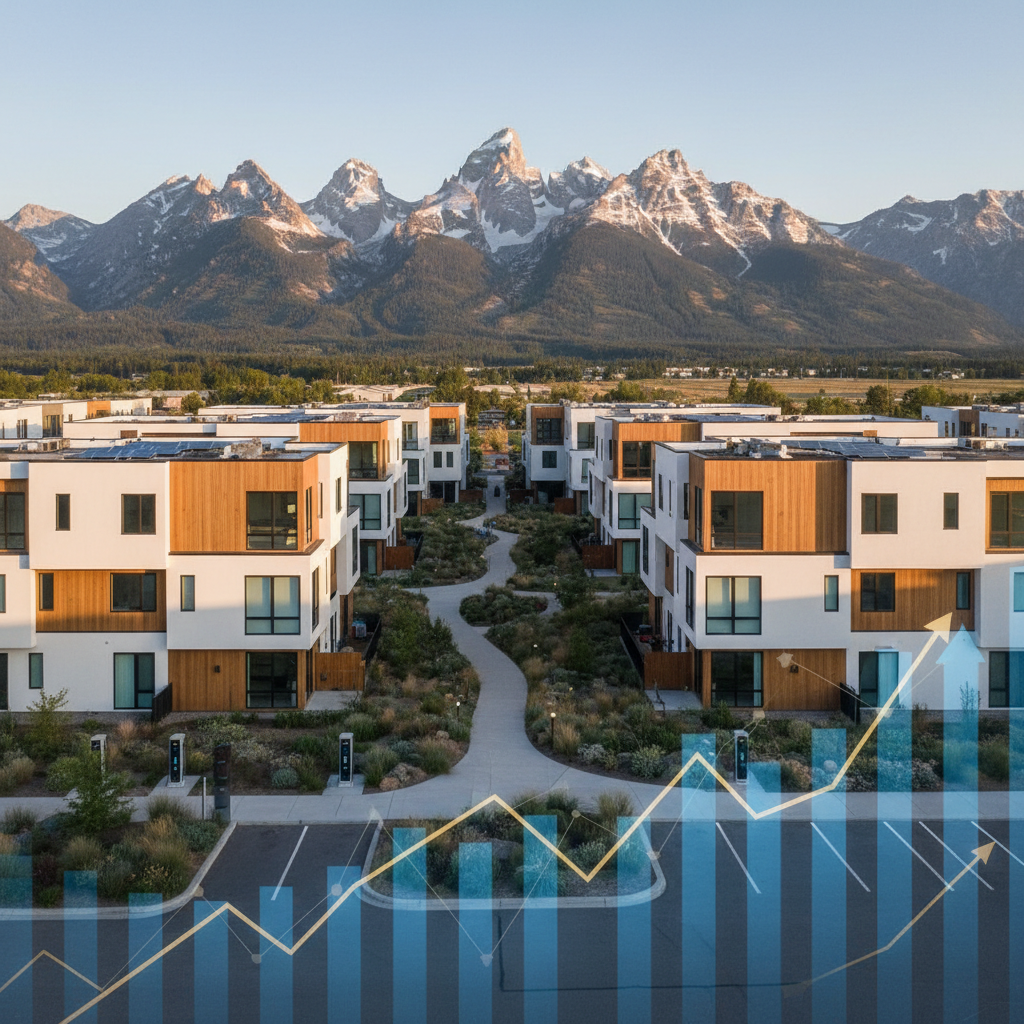
The recent announcement regarding Grand Teton National Park's consideration of workforce housing in Kelly, Wyoming, isn't just a local news item; it's a potent signal for real estate investors nationwide. This initiative, aimed at addressing critical housing shortages for essential workers in a high-cost, low-inventory market like Jackson Hole, underscores a broader investment thesis: the increasing demand for affordable and workforce housing in amenity-rich or employment-centric areas.
For seasoned investors, this scenario presents both challenges and lucrative opportunities. High-demand regions, often characterized by strong job growth and limited developable land, inevitably price out a significant portion of the workforce. This creates a structural imbalance that public and private entities are increasingly compelled to address. Where there's a problem, there's often a profit to be made for those who understand the dynamics.
"We're seeing this play out in resort towns, tech hubs, and even burgeoning industrial zones," notes Sarah Jenkins, a veteran investor with a portfolio spanning multiple states. "Identifying these pressure points – where median incomes don't align with median home prices – is the first step. The second is understanding the local zoning, incentives, and potential public-private partnerships that can de-risk development or acquisition in this niche."
Investors should be actively researching areas with significant employment bases (national parks, major hospitals, large manufacturing plants, tech campuses) where housing costs are disproportionately high relative to local wages. Look for municipalities or large employers exploring or implementing workforce housing programs. These often come with tax abatements, density bonuses, or even direct subsidies that can significantly improve project proformas.
Consider strategies like acquiring underutilized commercial properties suitable for conversion, developing smaller-footprint multi-family units, or rehabilitating distressed properties near employment centers. The key is to provide quality, attainable housing that meets a genuine community need. While the Grand Teton project is government-led, it illuminates a market gap that private capital can often fill more efficiently.
"The margins in workforce housing can be robust, especially when you factor in consistent demand and often lower vacancy rates," states Mark 'The Closer' Peterson, a long-time Wilder Blueprint mentor. "But it requires a deep dive into local politics, understanding tenant profiles, and often navigating slightly different financing structures than traditional market-rate deals. It's not passive income; it's purposeful investing."
Understanding these evolving market dynamics is crucial for investors looking to diversify and find resilient opportunities. The demand for workforce housing is not a temporary trend; it's a fundamental economic reality in many of America's most desirable markets.
Ready to dive deeper into identifying and capitalizing on these emerging market trends? The Wilder Blueprint offers advanced training on navigating complex market conditions and identifying high-potential investment niches.