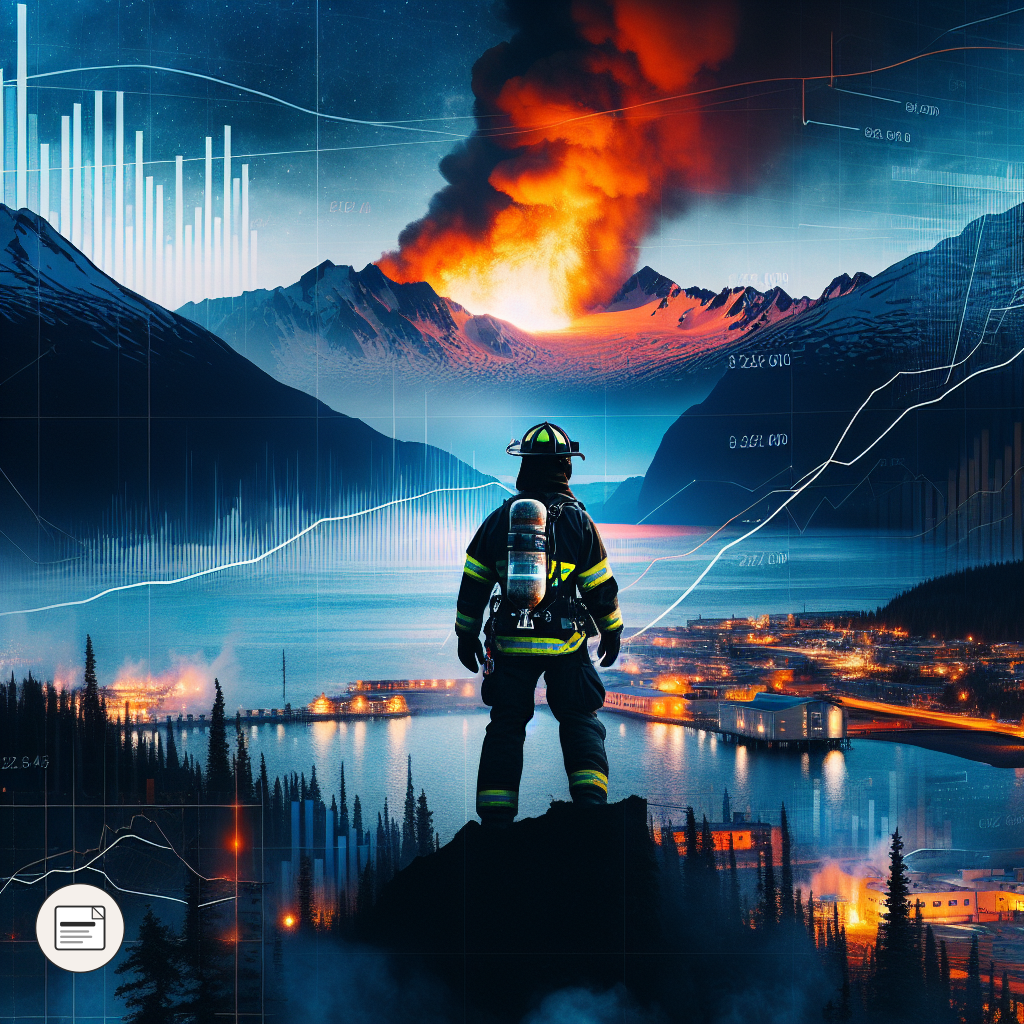
The U.S. Wildland Fire Service's Alaska Smokejumper training, commencing March 23rd, might seem geographically distant from your investment portfolio. However, for seasoned real estate investors, this early-season preparedness is a critical bellwether, signaling the imminent start of wildfire season across broader swaths of the nation. This isn't just about Alaska; it's a stark reminder that wildfire risk is an escalating factor demanding rigorous due diligence in property acquisition and portfolio management.
For investors operating in or considering markets susceptible to wildfires – from California's foothills to the Pacific Northwest, the Mountain West, and even parts of the Southeast – the implications are profound. We're not just talking about direct property damage, though that's the most visible risk. The ripple effects on property values, insurance availability, and community infrastructure can significantly alter a deal's pro forma.
**The Shifting Landscape of Risk Assessment**
Historically, wildfire risk was often a secondary consideration for many investors. Today, it must be front and center. "We've moved beyond simply checking if a property is in a flood zone," states Eleanor Vance, a veteran real estate analyst specializing in climate risk. "Wildfire risk, driven by climate patterns and urban expansion into wildland-urban interfaces (WUI), is now a primary underwriting concern. Ignoring it is financial malpractice."
When evaluating properties, especially those in pre-foreclosure or short sale scenarios where quick decisions are often necessary, investors must factor in:
1. **Insurance Premiums and Availability:** This is often the first and most direct financial impact. Insurers are increasingly non-renewing policies or hiking premiums exponentially in high-risk areas. A property with a high ARV might become cash-flow negative as a rental, or unsellable for a flip, if insurance costs render it unaffordable for buyers or tenants. We've seen annual premiums jump from $2,500 to $15,000+ in some California zip codes, effectively killing deals. 2. **Property Value Depreciation:** Even if a property isn't directly impacted by fire, its value can decline due to proximity to high-risk zones, perceived risk, and reduced buyer pools. Mortgage lenders are also becoming more stringent, often requiring specific fire-hardening measures or higher down payments in these areas. 3. **Community Infrastructure & Services:** Wildfires can devastate local economies, impacting employment, tax bases, and the very fabric of a community. This affects rental demand, property maintenance costs, and long-term appreciation potential. 4. **Regulatory Changes:** Expect more stringent building codes, defensible space requirements, and potential moratoriums on development in high-risk areas. These can add significant costs to rehabs or new construction.
**Actionable Strategies for Investors**
Don't let these risks deter you entirely, but rather inform your strategy. "Foreclosures and pre-foreclosures in fire-prone areas can still present opportunities, but the discount needs to be substantial to offset the elevated risk profile," advises Marcus Thorne, a multi-state investor with 400+ deals under his belt. "Your due diligence must include a deep dive into local fire maps, insurance quotes, and upcoming regulatory changes."
Consider these steps:
* **Leverage Technology:** Utilize tools like FireSafe, Zesty.ai, or local government fire hazard maps to assess specific property risk scores. * **Get Insurance Quotes Early:** Before making an offer, secure at least two binding insurance quotes. This is non-negotiable. * **Factor in Fire-Hardening Costs:** If a property is in a WUI, budget for upgrades like fire-resistant roofing, siding, multi-pane windows, and extensive defensible space landscaping. These aren't optional; they're essential for insurability and long-term value. * **Diversify Your Portfolio:** Reduce concentration risk by investing across different geographic regions with varying risk profiles.
The Alaska smokejumpers are training to protect lives and property. As investors, our training must equip us to protect our capital. The early start to their season is a clear signal: it's time to sharpen your wildfire risk assessment skills.
---
*For advanced strategies on navigating complex market risks and uncovering hidden value in distressed assets, explore The Wilder Blueprint's comprehensive training programs.*