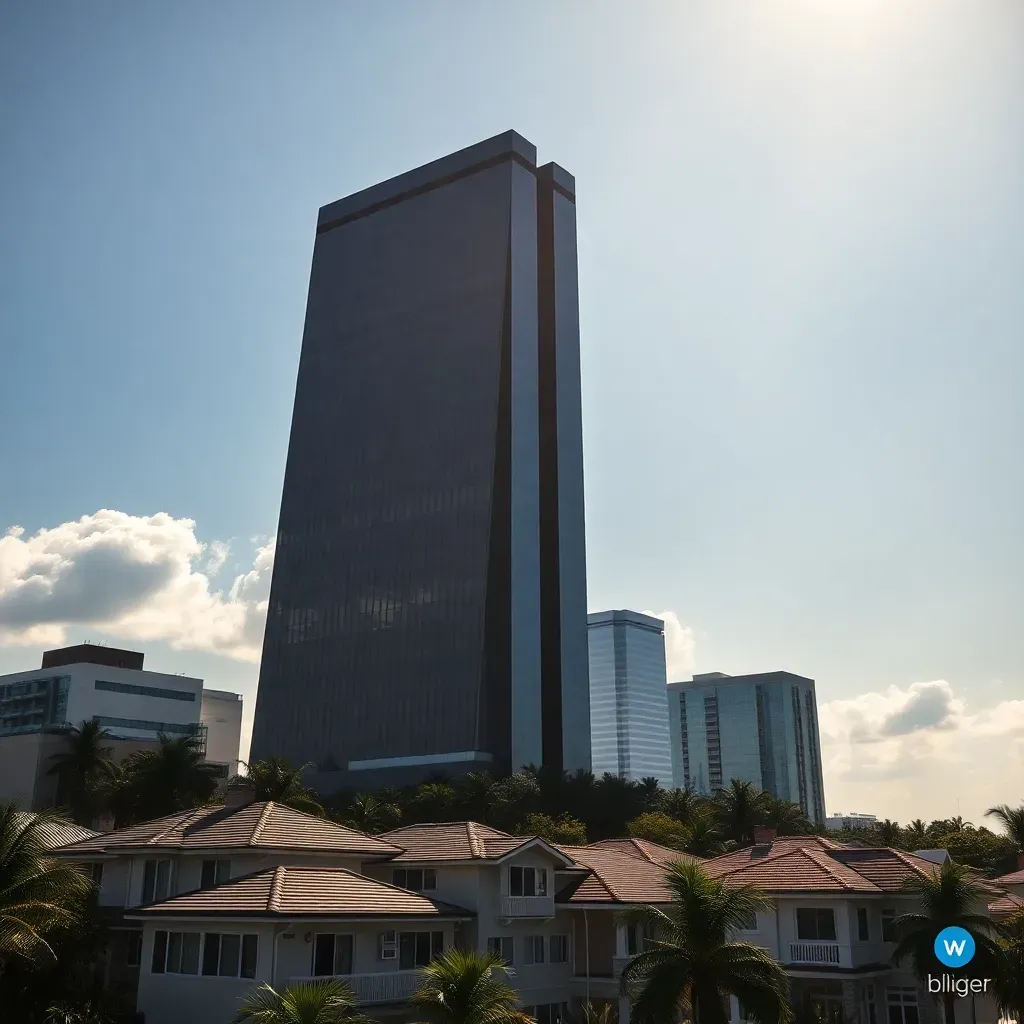
You see headlines about commercial real estate all the time: a bank expands its headquarters, a tech company leases new office space, a retail chain opens another store. Most residential investors glance over these, thinking they’re irrelevant to their focus on single-family homes and small multis. That’s a mistake.
Take Terrabank’s recent 40,000-square-foot lease in Coral Gables. On the surface, it’s a story about a community bank growing, needing more space in a desirable market. But for the operator who understands how markets truly move, this isn't just about office square footage. It's about capital flow, confidence, and the underlying economic currents that eventually ripple down to the residential distressed market you operate in.
When a bank commits to a significant, long-term lease, especially one that includes a ground-floor retail branch, it's a vote of confidence in the local economy. Banks don't make these decisions lightly. They've run their numbers, assessed local business activity, and projected future growth. This isn't just about their own expansion; it's about serving a growing customer base, which implies more residents, more businesses, and more economic activity in that specific area.
What does this mean for the distressed residential investor? It means you need to be paying attention to where capital is flowing, even if it's initially into commercial assets. "Commercial real estate transactions, especially those involving financial institutions, are leading indicators," says Dr. Evelyn Reed, a real estate economist. "They reflect a deeper institutional analysis of market stability and growth potential that individual investors often miss." When banks are investing in their physical footprint in a specific area, it suggests that area is seen as stable, growing, and attractive for long-term investment. This stability and growth, in turn, underpins the value of residential properties.
Your job as a distressed operator isn't just to find properties with equity; it's to understand the *market* where those properties sit. A bank expanding its presence in Coral Gables, for example, tells you that the fundamentals in that submarket are strong. This is crucial for your exit strategy. If you're acquiring pre-foreclosures, managing the Resolution Path, and potentially rehabbing, you want to know that the underlying demand for housing in that area is robust. Strong commercial activity translates to jobs, which translates to residents, which translates to demand for housing – both for sale and for rent.
Furthermore, consider the broader implications. Banks are often the first to feel the tremors of economic shifts, both positive and negative. Their expansion signals a period of perceived stability or growth. In a healthy market, even distressed properties can be acquired and repositioned more effectively because there's a clearer path to a profitable exit, whether that's a retail sale or a long-term rental. The Charlie 6, our deal qualification system, doesn't just look at property specifics; it implicitly relies on understanding the market's health to project ARV and absorption rates. A strong local economy, signaled by commercial investment, makes those projections more reliable.
This isn't to say you should start investing in commercial real estate. Your focus remains on distressed residential assets. But you should be using these commercial headlines as a form of market intelligence. Where are the big players putting their money? Where are they expanding? Those are the areas where the long-term value of your residential flips and rentals is likely to be more secure. It’s about building a portfolio that’s not just opportunistic but strategically sound.
Understanding these broader market signals is part of operating with discipline and clarity. It's about seeing the full picture, not just the house in front of you. The full deal qualification system is inside The Wilder Blueprint Core — six modules built for operators who are ready to move.