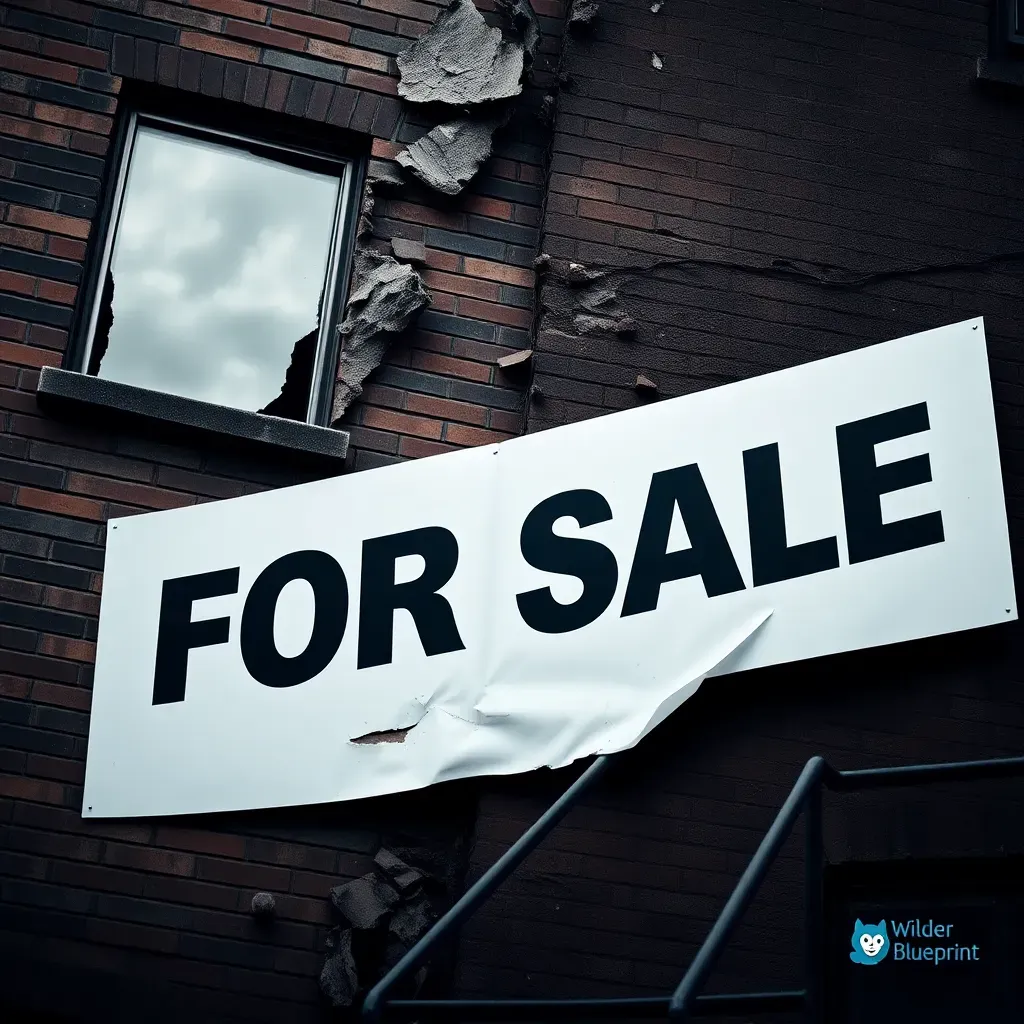
The news often highlights the challenges of co-op ownership, where shareholders are on the hook for building-wide repairs, even when they didn't cause the issue. It's a reminder that property ownership isn't just about the four walls of your unit; it's about the structural integrity, the plumbing, the roof, and the compliance with local codes. When a co-op board drags its feet on essential maintenance, the problem doesn't disappear; it compounds, eventually hitting every owner's wallet with special assessments or plummeting property values.
This isn't just a co-op problem. It's a universal truth in real estate, amplified in the distressed market. Every property you evaluate, especially a pre-foreclosure or an abandoned asset, carries a hidden ledger of deferred maintenance. That leaky faucet in unit 3B might seem minor, but it's a symptom of a larger issue. The cracked foundation, the outdated electrical, the roof that's seen better decades – these aren't just repair items; they're liabilities that erode equity and make a property unsellable at market rates. As an operator, your job isn't just to find a deal; it's to accurately diagnose the true condition and cost of bringing that asset back to health.
"Many new investors get fixated on the purchase price," says Sarah Chen, a veteran real estate analyst specializing in urban redevelopment. "They forget that the 'deal' is often made or broken by what you *don't* see during the initial walk-through. Deferred maintenance isn't just a cost; it's a risk multiplier. An accurate budget for repairs is non-negotiable."
When we talk about pre-foreclosures, you're often stepping into situations where homeowners have been struggling financially for years. Maintenance is usually the first thing to go. They can't afford the mortgage, let alone a new HVAC system or roof. This creates an opportunity for operators who understand how to accurately assess and price these hidden costs. The Charlie 6 system, for instance, isn't just about the numbers on paper; it forces you to consider the physical condition of the asset, the neighborhood, and the potential for value add through smart, targeted repairs, not just cosmetic fixes.
Your ability to accurately estimate repair costs, understand local code requirements, and project a realistic timeline for renovation is what separates a disciplined operator from someone just chasing a 'good deal.' This isn't about getting the lowest bid; it's about getting the *right* bid from reliable contractors who understand the scope of work. You need to identify the critical path items – those repairs that, if ignored, will tank your project or lead to endless change orders. Think structural integrity, major systems (HVAC, plumbing, electrical), and weatherproofing.
"I've seen too many investors get burned by underestimating the cost of bringing a neglected property up to standard," notes David Miller, a construction manager with two decades in rehabs. "It's not just the materials and labor; it's the permits, the inspections, and the unexpected issues that always pop up when you start tearing into an old house. You need a contingency, and you need to know what you're looking for from day one."
This is where the discipline comes in. You're not just buying a house; you're buying a project. And every project has a budget and a timeline. The co-op news story is a micro-example of a macro problem: neglect always catches up. As a distressed property operator, you're not just fixing houses; you're fixing problems that others couldn't or wouldn't address. That requires a clear process for evaluating condition, estimating costs, and executing the repairs efficiently. Without it, you're just gambling.
Start with the foundations at [The Wilder Blueprint](https://wilderblueprint.com/foundations-registration/) — the entry point for serious distressed property operators.