
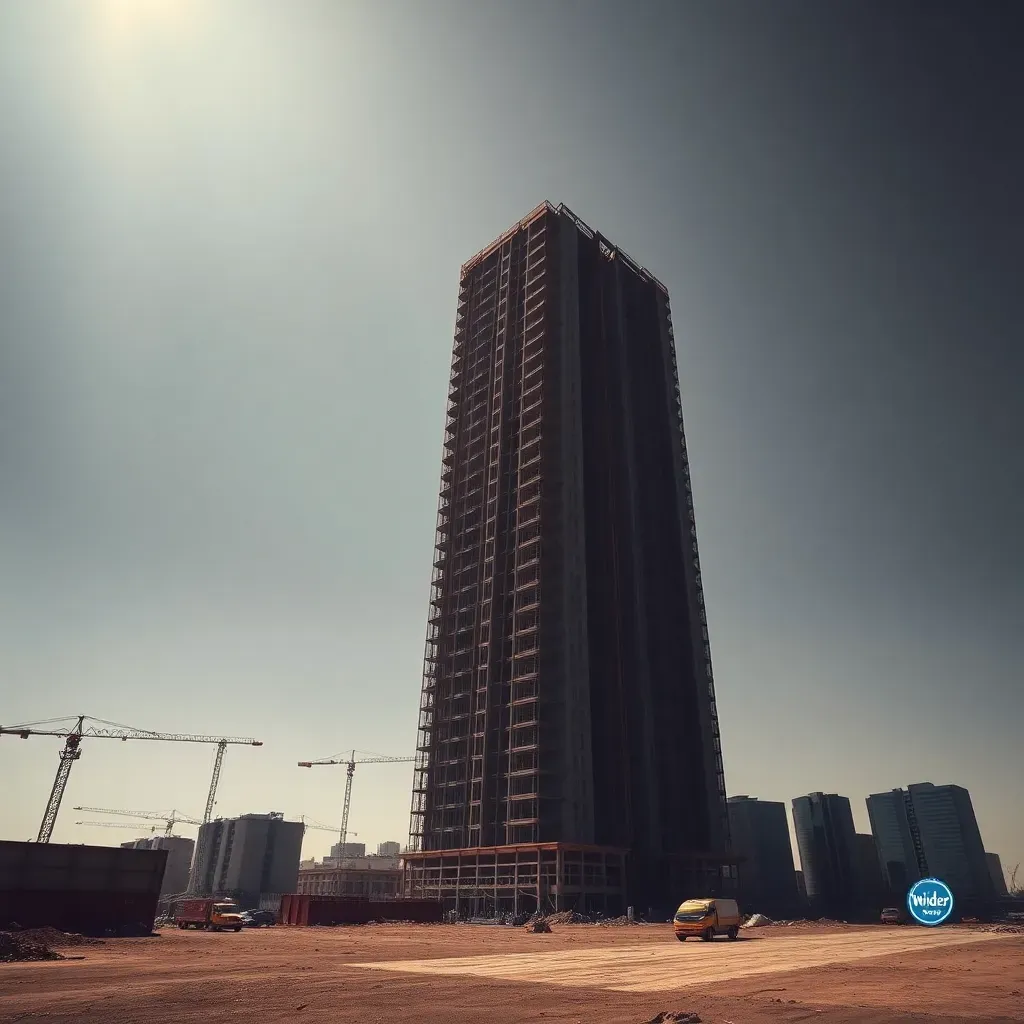
You see headlines about multi-million dollar projects going sideways, like the recent news of Everest Group's 24-story Centra project in Surrey facing foreclosure with $44M owed. For many, it's just another piece of market noise. For the disciplined operator, it's a case study. It's a stark reminder that even large-scale, well-funded developments are not immune to the forces that create distressed opportunities.
This isn't about celebrating someone else's misfortune. It's about understanding the mechanics of how assets, regardless of size, enter distress. Whether it’s a single-family home or a towering commercial complex, the underlying principles of financial strain, missed payments, and lender action remain consistent. The scale changes, but the game doesn't. Your job as an operator is to recognize these patterns and position yourself where others see only problems.
### The Anatomy of a Large-Scale Foreclosure
When a project like the Centra development hits the wall, it's usually a confluence of factors: rising interest rates, construction cost overruns, permitting delays, or a shift in market demand. The $44 million debt isn't just a number; it represents a complex capital stack, likely involving multiple lenders, mezzanine financing, and equity partners all vying for position. This creates a highly complex, yet potentially lucrative, environment for those who understand how to navigate it.
“Large commercial foreclosures often signal a broader market shift or specific project mismanagement,” notes Sarah Chen, a veteran commercial real estate analyst. “The challenge is dissecting the layers of debt and understanding the true value proposition once the dust settles.”
For the residential distressed real estate operator, this might seem far removed from your typical pre-foreclosure lead. But the lesson is universal: distress creates leverage. A lender with $44 million on the line isn't looking for a quick flip; they're looking for a resolution. They want to minimize their losses, and that often means being open to creative solutions from capable partners. While you might not be buying a 24-story tower, the principles of negotiation, due diligence, and understanding lender motivation are identical.
### Translating Big Lessons to Your Deals
Think about what happens when a developer owes $44 million. The lender, whether it's a bank, a private equity firm, or a construction loan provider, is now in a reactive position. They have an asset that isn't performing, and they need to recover capital. This is where your understanding of the foreclosure process becomes critical. Whether it's a Notice of Default (NOD) on a residential property or a complex commercial foreclosure filing, the lender's goal is to mitigate loss.
This is why understanding the Charlie 6 — our deal qualification system — isn't just for single-family homes. It's about rapidly assessing the financial health of a property, the motivation of the seller (or in this case, the developer/lender), and the potential resolution paths. You're looking for the same things: What's the true debt? What's the property worth in its current state? What's the cost to bring it to market? And most importantly, what's the timeframe for action?
“The same principles of identifying motivated sellers and understanding their pain points apply across the board,” says David Lee, a long-time distressed asset investor. “A bank holding a non-performing loan on a commercial tower is just a larger version of a homeowner facing an NOD. Both want a solution.”
Your advantage isn't necessarily having $44 million to buy out a project. Your advantage is understanding the process, identifying the leverage points, and being able to offer a viable solution. This could mean acquiring a smaller, related asset, or simply using the broader market context to sharpen your negotiation skills on your next residential pre-foreclosure. The market is always speaking; are you listening?
### The Operator's Edge
Don't get distracted by the scale of these headlines. Instead, extract the core lessons. Every foreclosure, big or small, represents a failure of execution or a shift in market conditions that creates an opportunity for someone else. Your job is to be that someone else. It means being disciplined in your approach, understanding the numbers, and having a clear system for identifying and resolving distressed situations.
The full deal qualification system is inside [The Wilder Blueprint Core](https://wilderblueprint.com/core-registration/) — six modules built for operators who are ready to move.
