In today's evolving real estate landscape, the discerning investor isn't just looking at square footage and comps; they're analyzing market trends that drive long-term value. A recent development in Houston, where Jubilee homes earned WELL Residence Certification, highlights a significant shift: health and wellness are becoming tangible assets in residential real estate. For the astute foreclosure investor, this isn't just a niche; it's an emerging opportunity.
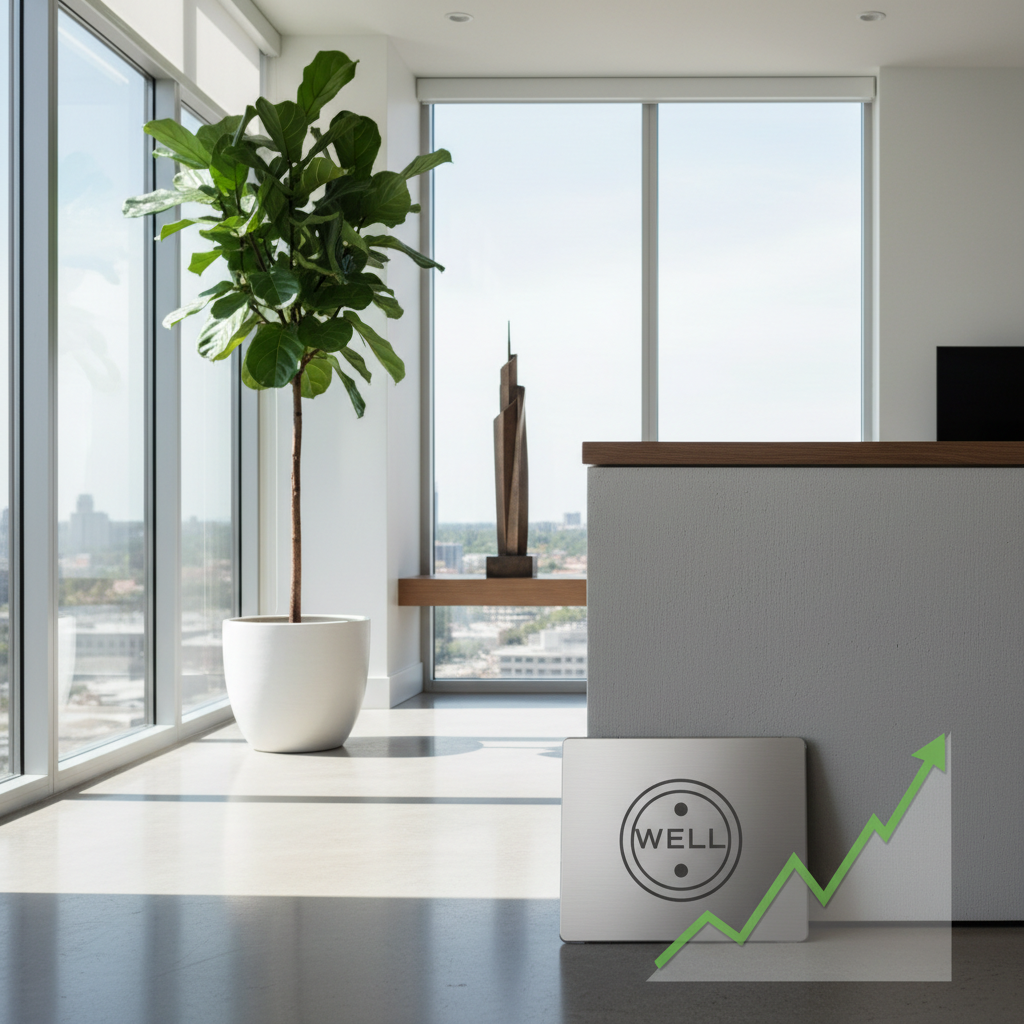
The WELL Building Standard, administered by the International WELL Building Institute (IWBI), focuses on seven core concepts: Air, Water, Nourishment, Light, Fitness, Comfort, and Mind. Achieving this certification signifies a property's commitment to enhancing occupant health and well-being through design, construction, and operational strategies. While historically associated with commercial spaces, its expansion into residential properties, as seen with Jubilee homes, signals a growing consumer expectation.
From a flipping perspective, integrating WELL-aligned features into a rehab can significantly differentiate a property in a competitive market. Imagine a foreclosure acquisition in a desirable neighborhood, purchased at 60-70% of its ARV. Instead of standard upgrades, a savvy investor might allocate an additional 5-10% of their rehab budget (e.g., an extra $15,000-$25,000 on a $250,000 rehab) towards enhanced air filtration systems, low-VOC materials, smart lighting for circadian rhythm support, or advanced water purification. This isn't about full certification, which can be costly, but about adopting key principles.
"We're seeing a clear premium for homes that can articulate a health benefit," states Eleanor Vance, a seasoned real estate analyst specializing in market trends. "Buyers, especially in the $500,000+ range, are increasingly willing to pay an extra 3-5% for features that promise better air quality or reduced toxins. For a flipper, that translates to higher ARV and potentially a 20-30% faster sales cycle."
For rental property investors, the implications are equally compelling. Properties marketed with 'wellness features' can command higher rents and attract more stable, long-term tenants. A 2-3% rental premium on a $2,500/month property adds $600-$900 annually to your NOI, significantly boosting your capitalization rate over time. Furthermore, lower tenant turnover due to increased satisfaction reduces vacancy costs and re-leasing expenses.
Consider a pre-foreclosure scenario where a homeowner is struggling. An investor offering a short sale solution could highlight planned wellness upgrades as a key selling point to the end buyer, making the deal more attractive. This foresight allows for a more robust marketing strategy even before the property is fully acquired.
"The market is always shifting, and the smart money follows the consumer," advises Marcus Thorne, a multi-state investor with over 350 deals under his belt. "Five years ago, smart home tech was the differentiator. Today, it's health. Investors who can incorporate these elements into their rehabs, even if it's just a few key features, are going to see superior returns and quicker exits. It's about building value that resonates deeply with modern buyers."
While full WELL certification may be cost-prohibitive for many foreclosure flips, understanding its principles allows investors to strategically implement high-impact, cost-effective features. This proactive approach to value creation ensures your investments are not just renovated, but future-proofed against evolving market demands.
Mastering these forward-thinking strategies is crucial for sustained success. Learn how to identify, acquire, and optimize properties for maximum profitability by exploring The Wilder Blueprint's advanced training programs.