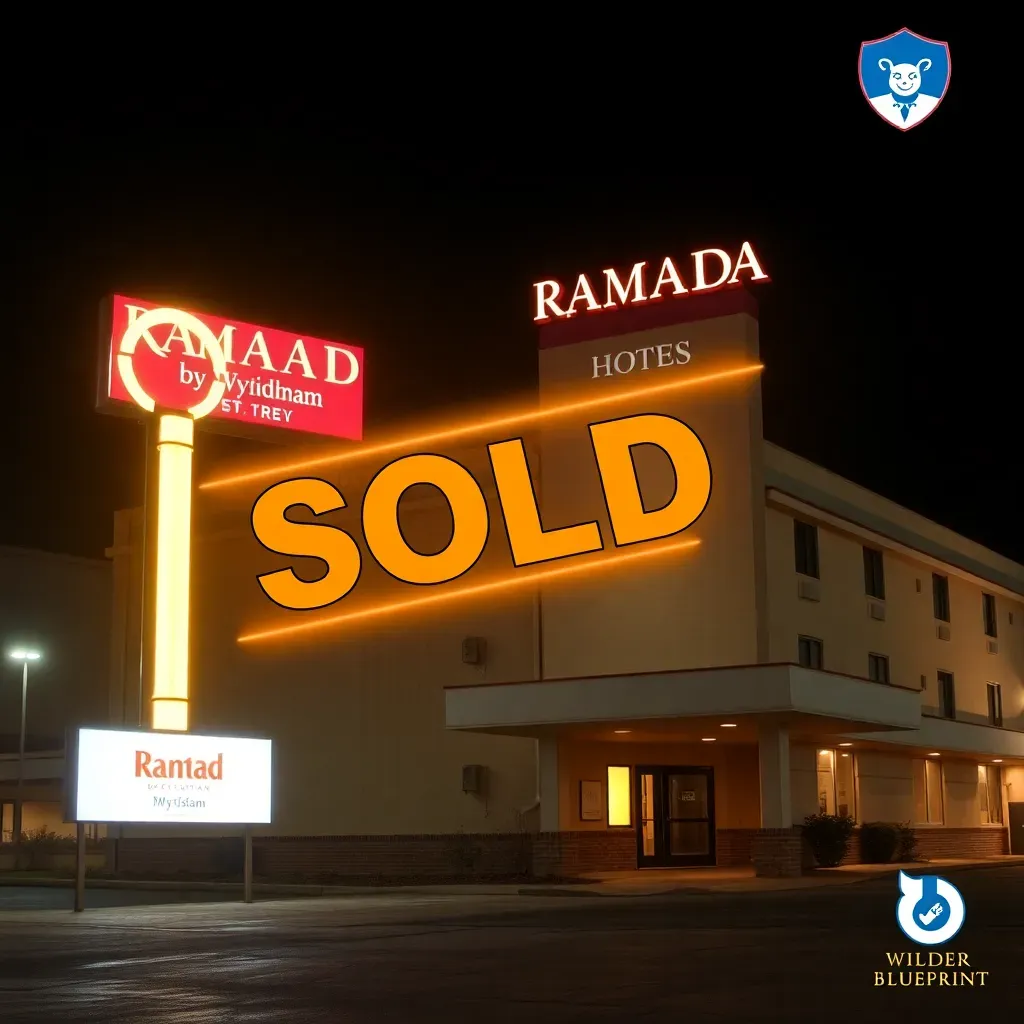
When you see headlines about a bank-owned hotel hitting the market, like the recent news regarding a Ramada by Wyndham in Burkburnett, Texas, most people see a struggling business. They see a failure. But an operator with discipline and clarity sees something else entirely: a specific, often undervalued, distressed asset. This isn't about chasing every 'deal' you find online; it’s about recognizing the signals in the market and having the structure to act on them.
Banks are not in the hospitality business. They are lenders. When a property like a hotel goes into default and becomes Real Estate Owned (REO), the bank’s primary objective shifts from collecting interest to offloading the asset. This isn't personal; it's a balance sheet entry. This fundamental truth about a bank's motivation creates a unique window for investors who know how to approach these situations without sounding desperate, pushy, or like they just discovered YouTube. They are looking for a clean, efficient exit, and a prepared operator can provide that.
Commercial REO, especially hospitality assets, demands a different level of due diligence and strategic thinking than residential properties. You’re not just looking at comparable sales; you’re diving into operating statements, occupancy rates, average daily rates (ADR), revenue per available room (RevPAR), and deferred maintenance schedules. You're analyzing the specific sub-market, local economic drivers, and potential for rebranding or repositioning. As Sarah Chen, a veteran commercial real estate analyst, notes, "The bank's urgency to sell doesn't translate to a fire sale for the unprepared. They still expect professionalism and a clear path to closing, which is where many opportunistic buyers stumble."
Your strategy for a bank-owned commercial asset should align with the 'Three Buckets' framework: Keep, Exit, or Walk. If you 'Keep' the asset, what's your plan for turning it around? Is it a value-add play through renovations, improved management, or a franchise change? If you 'Exit,' who is the likely buyer, and what will make it attractive to them? And if you 'Walk,' what metrics did you establish that tell you this isn't the right deal, regardless of the price? The Charlie 6 deal qualification system, while often applied to residential, provides the core diagnostic rigor needed to assess risk and potential in any distressed asset.
The key differentiator for a successful operator in the commercial REO space is not just capital, but competence. You need to present clear, well-researched offers that address the bank’s need for certainty and speed. Understand their disposition process, which often involves an asset manager tasked with moving a portfolio, not maximizing every single dollar. Leverage local market intelligence and build relationships with the brokers handling these properties. They are often inundated with unqualified inquiries and will prioritize serious buyers. "Many think commercial REO is about beating down a price," states David Vance, a distressed asset manager with two decades of experience. "It's actually about presenting a credible, executable plan that solves the bank's problem efficiently."
This business rewards structure, truth, and execution. The bank-owned Ramada in Texas is a single data point, but it's part of a larger trend of opportunity for those who are prepared. Don't chase deals; understand the landscape, build your systems, and be ready to execute when the right opportunity presents itself.
The complete 12-module system, including the Charlie 6 and all three operator tracks, is inside [The Wilder Vault](https://wilderblueprint.com/the-vault-registration/).