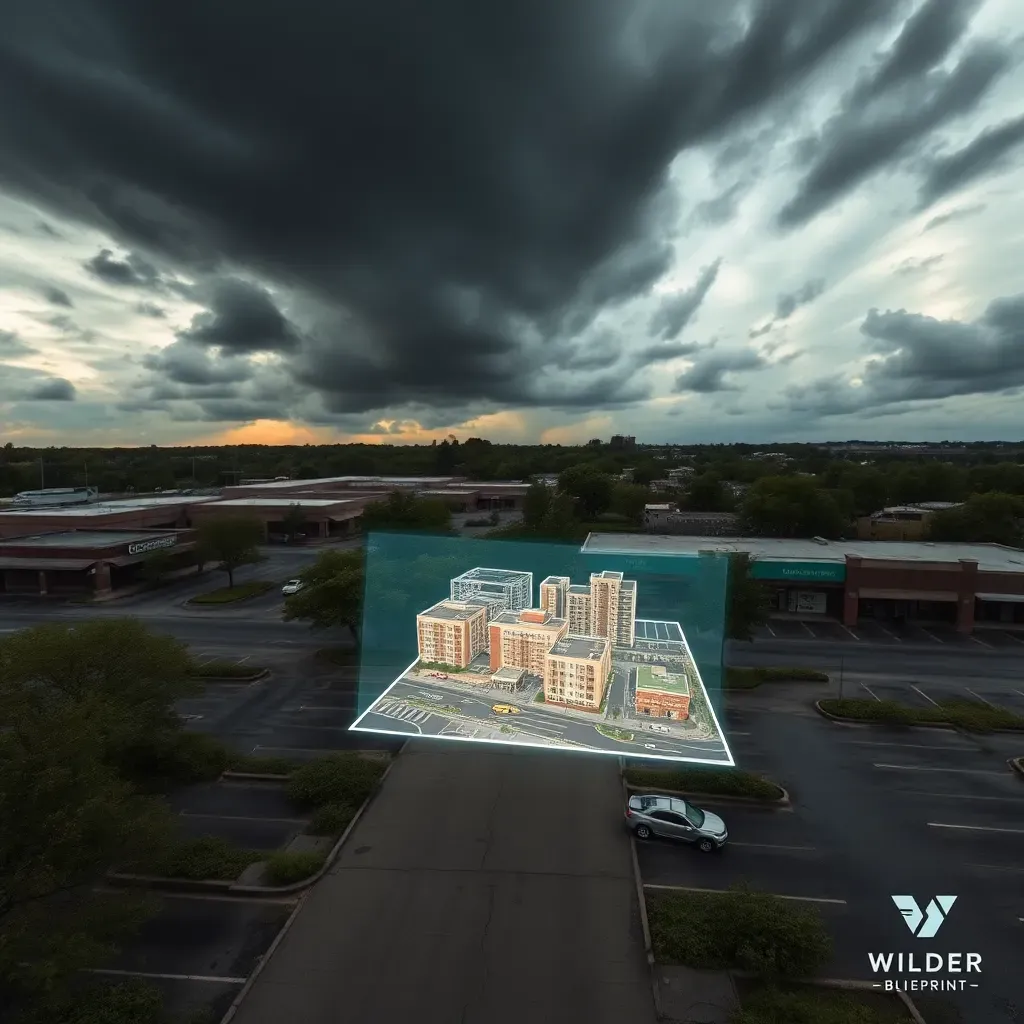
The news out of Seattle isn't isolated. Across the country, we're seeing a fundamental shift in how commercial real estate performs. Empty strip malls, struggling big-box stores, and underutilized office parks are no longer just eyesores; they're becoming a new frontier for distressed asset investing. The market is speaking, and it's telling us that the demand for housing, particularly affordable housing, is eclipsing the need for more retail space.
For the operator paying attention, this isn't a problem to bemoan; it's a signal. It means capital is flowing away from traditional retail and towards solutions that address the housing crisis. This isn't about chasing fads; it's about understanding macro-economic shifts and positioning yourself to provide a solution where there's clear demand. The old models are breaking down, and that creates opportunities for those who can adapt and execute.
### Identifying the Next Wave of Distressed Assets
Just as residential pre-foreclosures offer a window into a homeowner's distress, underperforming commercial properties often signal their own form of pre-foreclosure. Owners are burdened by high vacancies, declining rents, increasing operating costs, and often, debt structures that no longer make sense. These properties might not have a formal Notice of Default filed, but their financial distress is palpable. They represent a different kind of motivated seller, one who is often exhausted by the struggle and open to creative solutions.
"The smart money isn't just looking at residential anymore," says Sarah Jenkins, a commercial real estate analyst based in Dallas. "We're seeing a significant uptick in investors exploring adaptive reuse, especially converting retail to residential. The economics often make more sense than new construction, and the demand is undeniable."
Your job as an operator is to identify these properties before they hit the market as full-blown foreclosures. Look for signs: extended vacancies, deferred maintenance, 'for lease' signs that never change, or even local news reports about struggling businesses in a particular center. These are your early warning signals. Just like with residential, the earliest conversations are often the most productive.
### The Conversion Play: More Than Just a Rehab
Converting a commercial property to residential isn't a simple paint-and-carpet flip. It's a complex undertaking that requires a different set of skills and a deeper understanding of zoning, permitting, and construction. However, the potential upside can be substantial. You're not just renovating; you're fundamentally changing the highest and best use of the property, unlocking significant value.
"We've seen successful conversions where the per-square-foot valuation jumped by 200% after re-zoning and redevelopment," notes Mark Thompson, a veteran developer specializing in adaptive reuse. "It's not for the faint of heart, but the returns can be exceptional if you manage the process effectively."
This is where your ability to diagnose a deal, much like the Charlie 6 for residential, becomes critical. You need to understand the local zoning ordinances, the cost of structural changes, and the market demand for the type of residential units you plan to create. Will it be apartments? Condos? Micro-units? Each has different implications for design, cost, and eventual profitability. You're moving beyond simple ARV calculations and into a more sophisticated analysis of development potential.
### Building Your Commercial Distressed Strategy
For operators who are already proficient in residential pre-foreclosures, expanding into commercial distressed assets is a natural progression. The core principles remain the same: identify distress, connect with motivated sellers, and provide viable solutions. The scale and complexity increase, but so does the potential for profit.
Start by understanding your local market's zoning and planning departments. Build relationships with commercial brokers who specialize in underperforming assets. Learn to read commercial leases and understand the intricacies of commercial financing. This isn't about abandoning your residential focus; it's about recognizing a new, powerful current in the market and learning how to swim with it.
This business rewards structure, truth, and execution. The shift from retail to residential is a truth shaping our markets, and those who execute on this truth will find new avenues for wealth creation. The full deal qualification system is inside The Wilder Blueprint Core — six modules built for operators who are ready to move.