
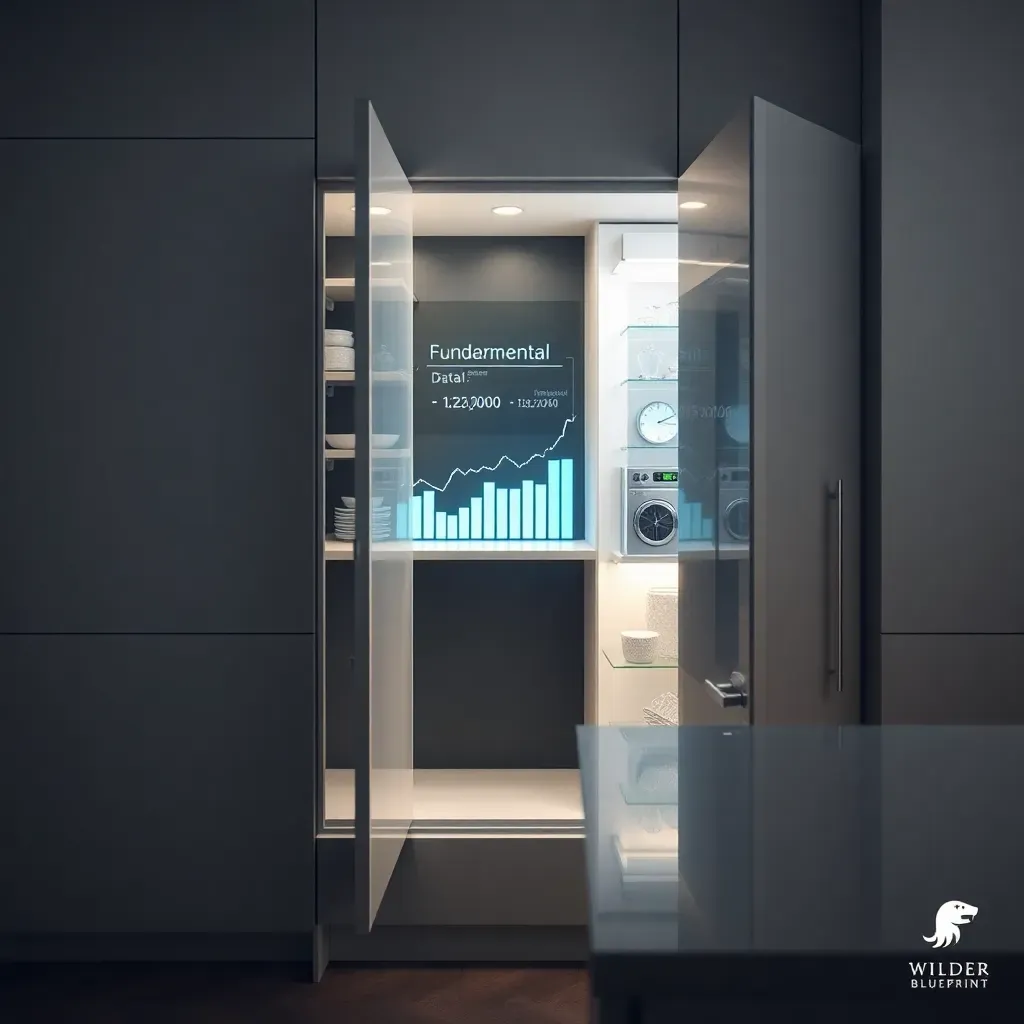
You see the headlines: "Designer Storage Spaces Are the New Must-Have." The real estate and home improvement media are buzzing about turning mundane pantries into showpieces, complete with custom shelving, integrated lighting, and even beverage centers. It’s a trend, and it speaks to a certain segment of the market focused on luxury and aesthetics.
But for operators who understand the mechanics of distressed real estate, this kind of news is less about inspiration and more about calibration. While a beautiful pantry might sway a retail buyer at the top of the market, it's rarely the leverage point in a pre-foreclosure negotiation or the primary driver of value in a deep discount acquisition. Our business isn't about chasing trends; it's about uncovering inherent value, solving problems, and executing with precision.
When we look at a property, especially one in distress, we're not asking if the pantry has custom pull-outs. We're asking fundamental questions: What is the true market value of this property *as is*? What is the cost to bring it to a baseline, competitive standard? What is the *real* demand in this specific submarket? These are the questions that determine whether a deal is viable, not the latest design fad.
"The market always rewards fundamentals," notes Sarah Jenkins, a seasoned real estate analyst based in Phoenix. "A property with good bones, a solid location, and a functional layout will always outperform one with superficial upgrades but underlying issues. Distressed assets force you to focus on those fundamentals, which is where the real opportunity lies."
Consider the Charlie 6, our rapid deal qualification system. It’s designed to cut through the noise and get to the core financial viability of a property in minutes. You won't find a line item for "designer pantry potential" in there. Instead, we're evaluating location, condition, estimated repair costs, and exit strategies. These are the levers that move the needle on profit, not decorative shelving.
When you're acquiring a pre-foreclosure, the homeowner isn't thinking about a designer pantry; they're thinking about avoiding a public auction and preserving their credit. Your ability to offer a swift, clear, and respectful solution – one of our Five Solutions – is what matters. Leading with an understanding of their situation, not a pitch about renovating their kitchen, builds trust and opens doors.
"Many new investors get caught up in the cosmetic appeal, trying to 'add value' with expensive finishes that don't always translate to a dollar-for-dollar return," says Mark Thompson, a veteran investor specializing in probate properties. "The real skill is knowing which improvements are essential for marketability and which are just icing. Often, the best 'upgrade' is simply making the home safe, clean, and functional."
Our focus is on creating a solid, marketable product that appeals to the broadest possible buyer pool, or on securing a deep enough discount to make even a basic renovation highly profitable. This means understanding the difference between a necessary repair – like a new roof or updated electrical – and a discretionary upgrade like a designer pantry. One protects your investment and ensures habitability; the other is a luxury that may or may not pay for itself.
This business rewards structure, truth, and execution. While others are chasing aesthetic trends, we're focused on the underlying mechanics of value creation and problem-solving in distressed assets. That’s where the consistent, repeatable profits are built.
See the full system at [The Wilder Blueprint](https://wilderblueprint.com/get-the-blueprint/).
