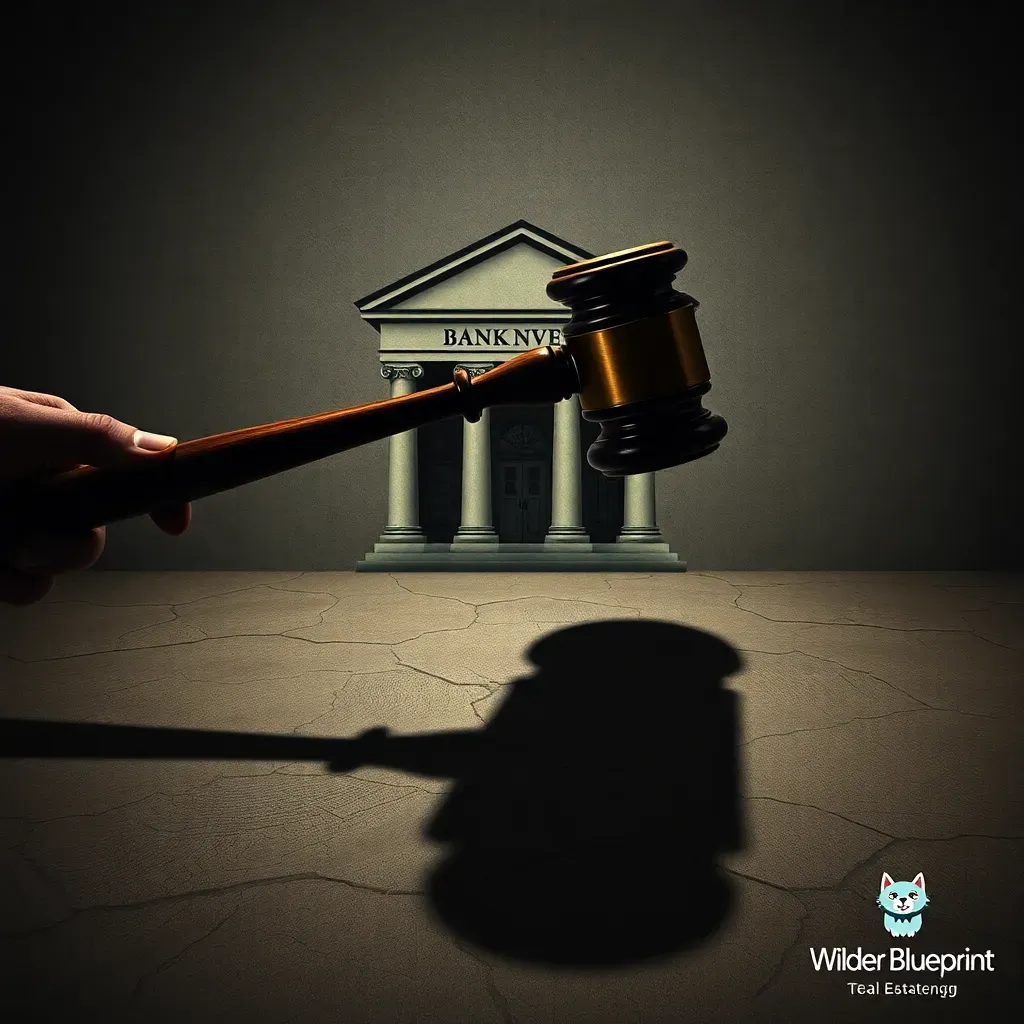
When you hear headlines about "systematic fraud" by big banks in foreclosure auctions, as recently reported out of New York, it's easy to get sidetracked by the outrage. But for serious operators, this isn't a moral debate; it's a data point. It’s a reminder that the foreclosure process, while structured, is also a human system, and humans — and the institutions they build — will always find leverage.
These accusations suggest that some major financial institutions are manipulating the auction process, potentially suppressing bids or otherwise controlling outcomes to their advantage. Whether it’s through coordinated bidding, information asymmetry, or other tactics, the goal is often the same: acquire properties at a lower cost or control the disposition process. For the individual investor, this isn't just about fairness; it's about understanding the environment you're operating in and adjusting your strategy accordingly.
"The big players have always had an advantage, whether it's capital or information," says Sarah Chen, a distressed asset analyst based in Chicago. "What these allegations highlight is the extent to which some are willing to push the boundaries of what's legal to maintain that edge in the auction market."
This isn't an invitation to despair or to throw your hands up. It's a call to discipline. If the auction market is being influenced by institutional tactics, your focus shifts. You need to be even more precise in your pre-auction due diligence and, crucially, understand that the auction is often the *last* resort for acquisition, not the first.
Your most potent advantage in distressed real estate isn't outbidding everyone at the courthouse steps. It's in identifying and engaging with homeowners *before* the property ever reaches that point. This is the pre-foreclosure window, where the homeowner still has options, and you can offer one of the Five Solutions – a direct purchase, a short sale, a lease option, a subject-to deal, or even just guidance to help them sell on the open market. This approach sidesteps the manipulated auction altogether, allowing you to negotiate directly, often with less competition and a clearer path to a win-win outcome.
"The real money is made in the quiet conversations, not the public spectacle," notes David Miller, a veteran investor in Florida. "If you're waiting for the auction, you're competing against everyone, including those who play by different rules. Get in early, solve a problem, and you control the deal."
Even if you do pursue auctions, this news underscores the need for extreme caution. You must have your numbers locked down. The Charlie 6, our deal qualification system, becomes even more critical here. You need to know your maximum allowable offer (MAO) cold, factoring in every possible variable, because you might be bidding against entities with deeper pockets and different motivations. Never overpay out of emotion or a fear of missing out. The market will always present another deal.
Ultimately, this isn't about the banks; it's about your operational discipline. It reinforces the truth that the most effective way to acquire distressed properties is often off-market, through direct homeowner engagement. It’s about building a reputation as a problem-solver, not just another bidder. When you fix the frame this way, accusations of systematic fraud become less about injustice and more about refining your acquisition strategy to where the competition is weakest and your value proposition is strongest.
Start with the foundations at [The Wilder Blueprint](https://wilderblueprint.com/foundations-registration/) — the entry point for serious distressed property operators.