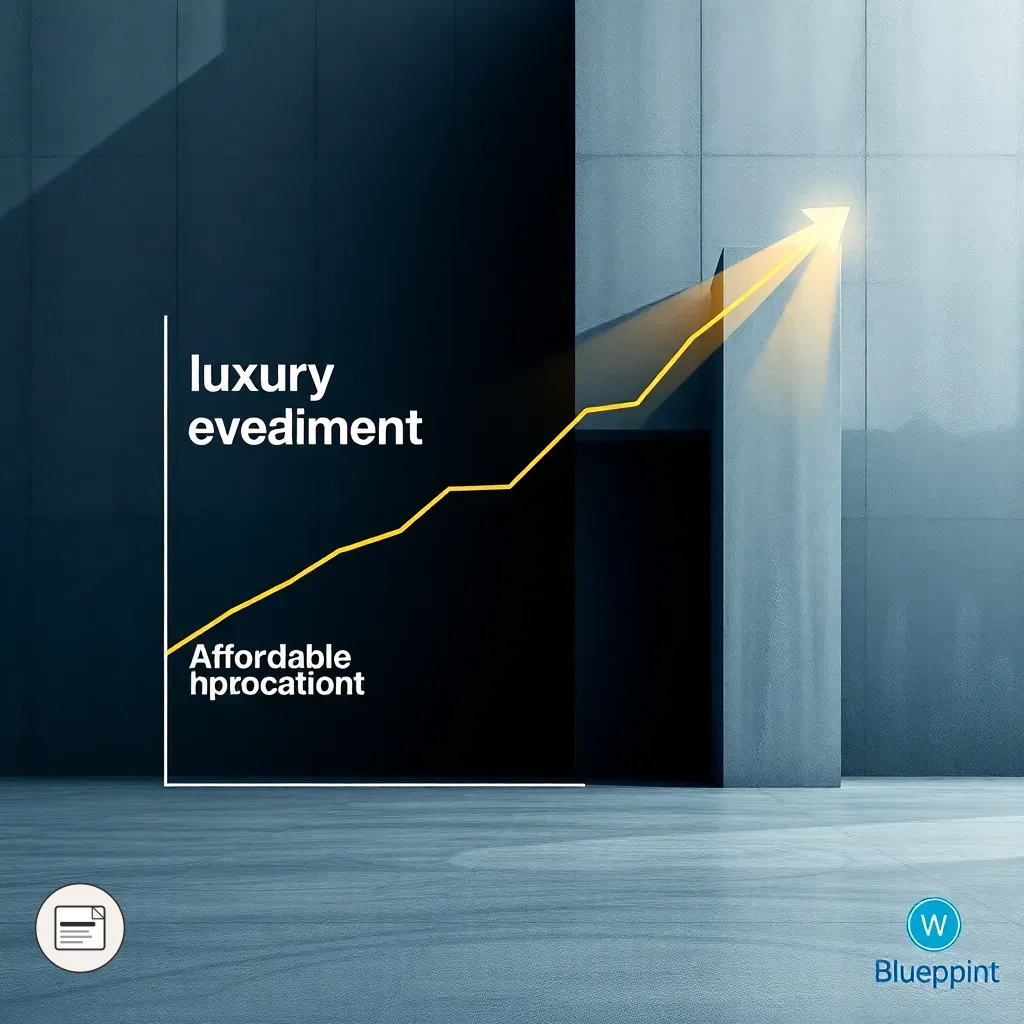
You're seeing the headlines. "SWFL urgently needs affordable housing, so why isn't more being built?" It's not just Southwest Florida; it's a narrative playing out in markets across the country. The demand for housing is there, particularly at price points accessible to the working class, but the supply isn't keeping up. Developers, often driven by the highest possible return on new construction, tend to focus on luxury builds, leaving a significant gap in the middle and lower tiers of the market.
This isn't just a social problem; it's a market inefficiency. And where there's inefficiency, there's opportunity for the disciplined operator. While the big builders are chasing the next high-end condo tower, they're overlooking the foundational need for housing that people can actually afford. This creates a critical frame for how you should be looking at distressed properties. The market isn't failing; it's simply misallocating resources, and that's where you step in.
"The disconnect between what people need and what's being built is stark," notes Maria Rodriguez, a long-time real estate analyst specializing in Florida markets. "It's not that the capital isn't there, it's that the incentives are skewed towards high-margin, high-end projects. This leaves a massive void for value-add investors to fill, especially in the pre-foreclosure space."
Your advantage as a distressed property investor is that you're not building from scratch. You're acquiring existing assets, often at a discount, and bringing them back to market. This allows you to bypass the escalating costs of new construction, the lengthy permitting processes, and the land acquisition challenges that push new builds into the luxury segment. When you acquire a pre-foreclosure, you're not just getting a property; you're getting a head start on solving a real market need.
Consider a scenario where a family in a market like Naples, Florida, is facing foreclosure. They might own a three-bedroom, two-bath home built in the 1980s. It needs work – a new roof, updated kitchen, maybe some cosmetic repairs. A traditional developer wouldn't touch it; the margins aren't there for a ground-up build. But for you, this is a prime target. You can acquire it, often below market value, complete the necessary renovations efficiently, and then either resell it to a family looking for an affordable home or rent it out, providing much-needed inventory.
This isn't about being a savior; it's about being a smart operator. By focusing on properties that others overlook, you're tapping into a demand curve that's underserved. The "Charlie 6" deal qualification system, for example, helps you quickly identify these opportunities. It's about looking past the deferred maintenance and seeing the inherent value and the market's unmet need. You're not just flipping houses; you're recycling housing stock, making it available to the segment of the population that's being ignored by the mainstream development.
"The most impactful investments often come from solving problems that others deem too small or too complex," says David Chen, a veteran investor specializing in workforce housing. "Distressed properties, when approached with a clear strategy, are a direct solution to the affordable housing crisis, one property at a time."
This approach aligns with the core principles of distressed investing: finding value where others see only problems. When you fix up a property and sell it at a reasonable price, you're not just making a profit; you're providing a solution. You're contributing to the housing stock in a way that the large-scale developers aren't, directly addressing the very problem highlighted in those news headlines. This business rewards structure, truth, and execution, and the truth is, there's a massive, unmet demand for housing that you can fill.
The full deal qualification system is inside [The Wilder Blueprint Core](https://wilderblueprint.com/core-registration/) — six modules built for operators who are ready to move.