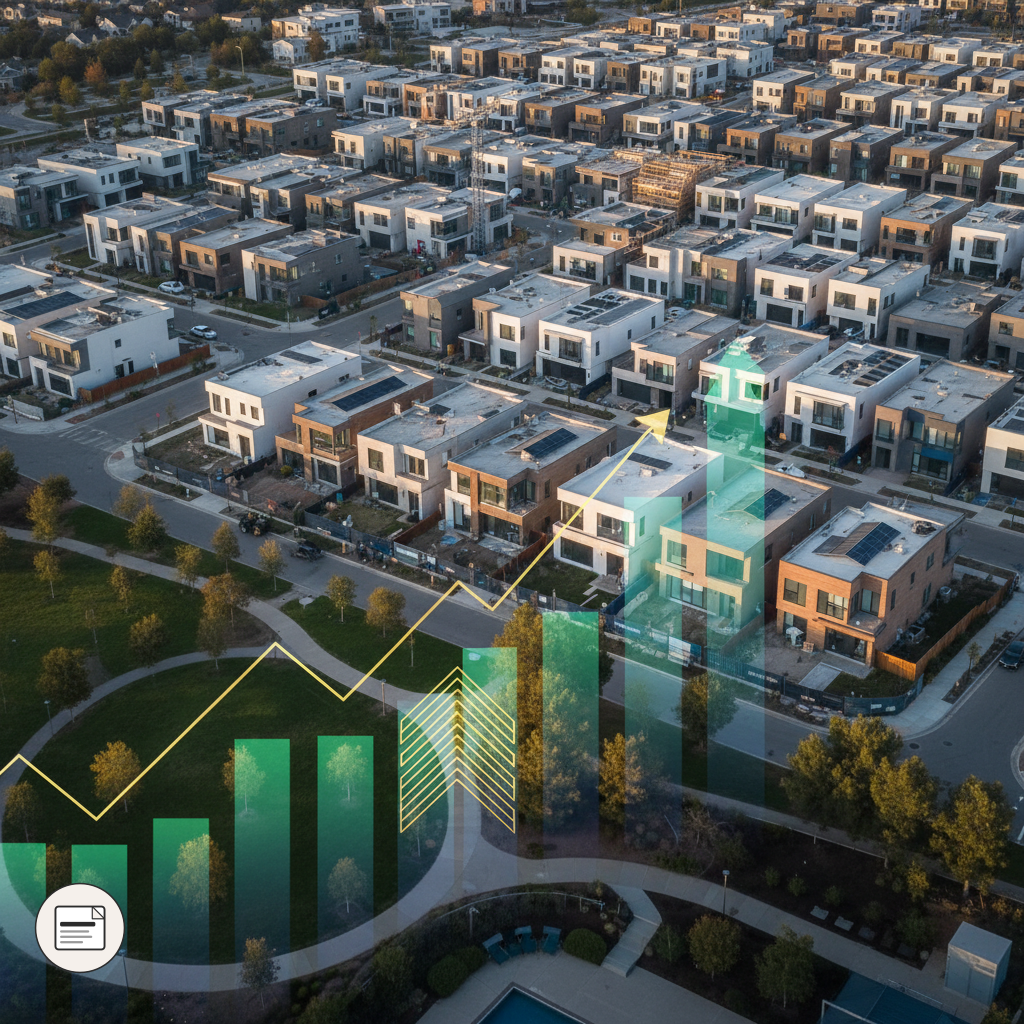
The perennial debate around housing supply and its impact on property values continues to shape market sentiment. A recent article from Fig City News highlighted the perspective that increased housing won't necessarily hurt existing home values. For foreclosure investors, this isn't just an academic discussion; it's a critical factor in deal analysis, risk assessment, and long-term strategy.
Conventional wisdom often suggests that more supply equates to lower prices. While this holds true in a vacuum, the reality of the housing market is far more nuanced. Demand, driven by population growth, job creation, and household formation, frequently outpaces new construction in desirable areas. When new housing comes online, especially in areas with chronic shortages, it can alleviate pressure on the entire market, potentially preventing unsustainable price bubbles and creating a more predictable environment for investors.
For those specializing in foreclosures and pre-foreclosures, a stable or moderately appreciating market is generally preferable to a volatile one. Rapid price declines, often triggered by oversupply or economic downturns, can quickly erode equity, making it harder to execute a flip or secure favorable refinancing for a rental. Conversely, a market with healthy, albeit increasing, supply can lead to more predictable ARVs (After Repair Values) and a clearer exit strategy.
"We've seen firsthand how a lack of inventory can artificially inflate prices, making it tough to find distressed properties with enough margin," says Brenda Chen, a veteran real estate analyst with 15 years in market forecasting. "When new construction adds to the pipeline, it can cool off bidding wars on entry-level and mid-tier homes, which are often our target for rehabilitation. It doesn't 'crash' the market; it recalibrates it."
Consider a scenario in a growing metropolitan area. If new housing developments focus on higher-end single-family homes or luxury condos, they might not directly compete with the distressed, often older, properties a foreclosure investor targets. Instead, they can attract buyers who might otherwise have competed for existing inventory, indirectly freeing up more affordable options. This can lead to a more balanced market where distressed properties can be acquired at a more reasonable basis, allowing for a healthy 20-25% profit margin on a flip, even after renovation costs and holding expenses.
Moreover, increased supply can sometimes signal robust economic health and population influx, which are positive indicators for long-term rental income and property appreciation. Investors focusing on buy-and-hold strategies should look for areas where new housing is accompanied by job growth and infrastructure development. A 1% increase in population growth, for instance, can often absorb a significant amount of new housing without negatively impacting rental yields, especially if the new housing stock is not directly comparable to your existing portfolio.
"The key isn't just 'more housing,' it's 'appropriate housing' in the right locations," explains Marcus Thorne, a real estate developer and investor who has navigated multiple market cycles. "For foreclosure investors, this means analyzing where the new supply is coming from, what price points it addresses, and how it aligns with local demand. Don't fear supply; understand its composition."
Actionable takeaway: Don't automatically view new housing starts as a threat. Instead, analyze the specifics: what type of housing, where, and for whom? This data-driven approach will help you identify markets where new supply stabilizes rather than depresses values, creating more predictable and profitable foreclosure opportunities.
To master these advanced analytical techniques and identify profitable foreclosure deals in any market condition, explore The Wilder Blueprint's advanced training programs. Our curriculum is designed to equip you with the tools and strategies to thrive, regardless of market shifts.