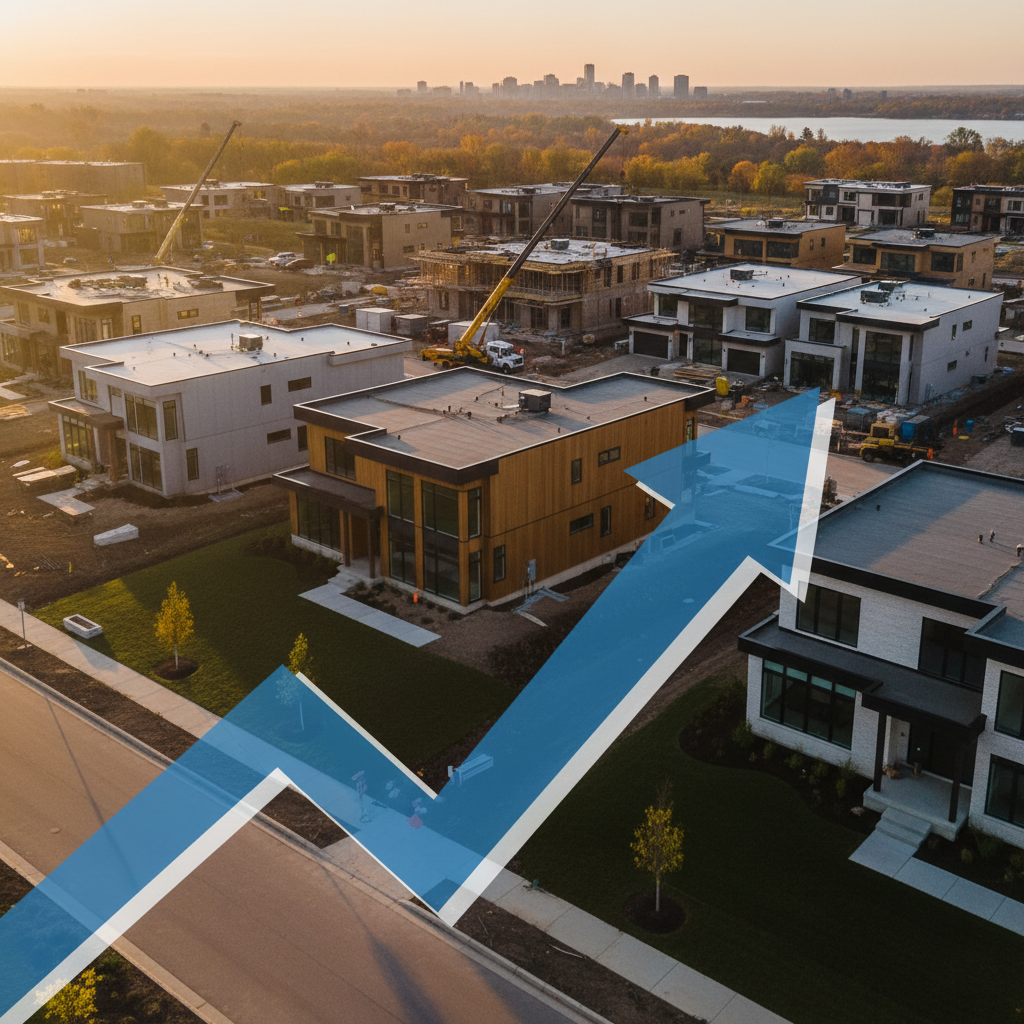
The recent spotlight on Sun Prairie's burgeoning housing market, underscored by a high-profile tour of the Meadow Crossing development, offers a crucial lens for real estate investors examining Wisconsin's evolving landscape. While the political attention focuses on affordability and supply, seasoned investors should be analyzing the underlying economic drivers and long-term implications for their portfolios.
Meadow Crossing, a 280-unit project featuring a mix of apartments and townhomes, represents a significant injection of supply into a market grappling with sustained demand. For investors, this isn't just about new units; it's about the demographic shifts and economic expansion attracting developers. Sun Prairie's proximity to Madison, coupled with its own robust job growth, makes it a prime candidate for rental income strategies and value-add plays in existing housing stock.
“New construction, especially in high-demand corridors like Sun Prairie, can initially seem like competition,” notes Eleanor Vance, a veteran Wisconsin real estate analyst. “But it also validates the market's strength, attracting more residents and businesses, which ultimately drives up property values and rental rates across the board. The key is identifying submarkets where demand still outstrips this new supply, or where older properties offer significant renovation upside.”
Investors should be tracking absorption rates for these new developments. A healthy absorption rate indicates strong underlying demand, suggesting that even with increased supply, the market can support rent growth and property appreciation. Conversely, slow absorption could signal oversupply, impacting rental yields and exit strategies for existing properties.
For those focused on pre-foreclosures and short sales, understanding these growth patterns is vital. Areas experiencing rapid development often see increased population churn, which can lead to financial distress for some homeowners, creating opportunities for investors to acquire properties below market value. The influx of new residents also means a larger pool of potential tenants or buyers for flipped properties.
“We're seeing a clear trend: areas with strong economic fundamentals and planned development are more resilient,” states Marcus Thorne, a Madison-based investor with over 30 years in the game. “This isn't just about buying cheap; it’s about buying smart in growth corridors. Look at the infrastructure investments, the school districts, and the job market. That's where your long-term equity builds.”
Understanding these macro trends and their micro-market impact is essential for profitable investing. The Sun Prairie example is a blueprint for analyzing growth markets across the Midwest.
To dive deeper into identifying these growth markets and leveraging opportunities in pre-foreclosures, short sales, and distressed assets, explore The Wilder Blueprint's advanced training modules.