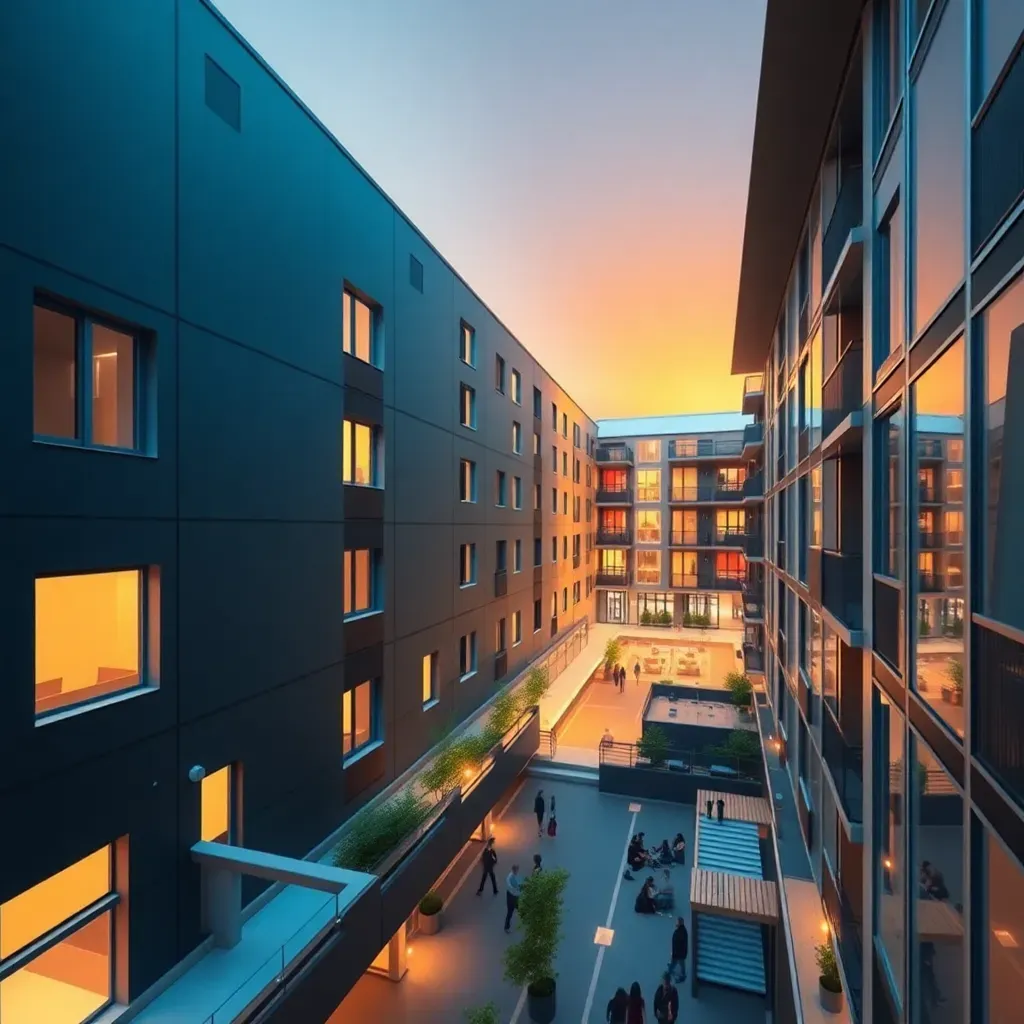
The news from UNC about changing dorm life isn't just a campus conversation; it's a signal for anyone paying attention to the real estate market. Universities, facing evolving student expectations and economic pressures, are constantly re-evaluating their housing models. This isn't just about amenities or room sizes; it's about the fundamental structure of student living. And where there's structural change, there's opportunity for those who can see beyond the immediate headlines.
Traditional student housing, particularly near major universities, has long been considered a stable, almost bulletproof investment. High demand, consistent turnover, and often a captive audience. But 'stable' doesn't mean 'static.' When institutions like UNC start questioning the status quo of their housing, it means the market is adapting. This adaptation isn't a threat; it's an invitation to operators who understand how to identify and capitalize on shifts in demand, especially in the distressed asset space.
Think about it: universities might be exploring more off-campus partnerships, or students themselves might be seeking more independent living situations that offer better value or more privacy than a traditional dorm. This creates a vacuum, a need for housing that sits between the on-campus experience and a standard rental. This is where the informed distressed real estate operator steps in.
"The student housing market isn't just about proximity to campus anymore; it's about offering a specific lifestyle or value proposition," notes Sarah Chen, a real estate analyst specializing in urban development. "When universities pivot, it often creates pockets of under-served demand that smart investors can fill with creative solutions."
Your advantage as a distressed real estate operator lies in your ability to acquire assets below market value and reposition them. While others are chasing new construction or standard rentals, you're looking for the overlooked single-family home or small multi-family property near campus that needs work. A property that, with the right renovation and management, can be transformed into highly desirable student housing.
This isn't about buying a dorm; it's about understanding the *need* that dorms traditionally filled and finding alternative, often superior, ways to meet it. Perhaps it's a 4-bedroom house that can be rented by the room, offering students more space and autonomy than a typical apartment. Or a duplex that can be renovated into two separate, modern units, appealing to graduate students or those seeking a quieter environment. The Charlie 6, our deal qualification system, applies just as much here: is the property distressed enough to offer a significant margin? Is the location within a reasonable commute to campus? What are the local zoning laws regarding student rentals?
"The best opportunities often emerge when a market segment undergoes a re-evaluation," says Mark Jensen, a veteran investor with a portfolio of properties near college towns. "You're not just buying a house; you're buying into a demographic shift and providing a solution that the traditional market isn't yet offering at scale."
Your approach should be disciplined: identify properties in pre-foreclosure or foreclosure that are within a 1-3 mile radius of a university. Understand the local rental rates for student housing, both by the unit and by the room. Calculate your ARV based on a student rental model, not just a standard family home. And most importantly, engage with homeowners who are facing distress, offering them a clear, respectful path forward, without sounding desperate or like you just discovered YouTube.
This isn't just about buying cheap; it's about strategic repositioning. It's about seeing the gap between what's available and what students truly want, and then filling that gap with a well-executed plan. The shifts in university housing aren't a threat to the market; they're a clear signal to operators who are ready to adapt and execute.
See the full system at [The Wilder Blueprint](https://wilderblueprint.com/get-the-blueprint/).