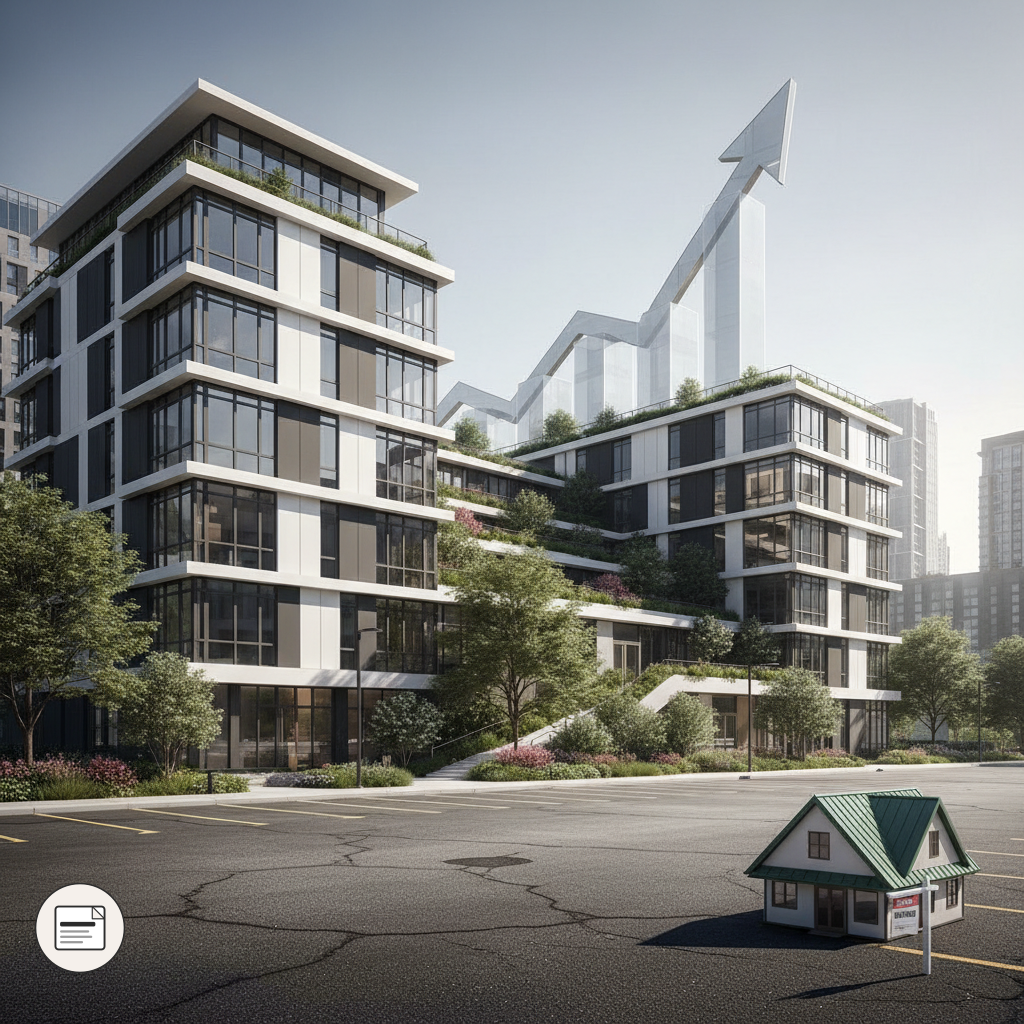
The landscape of urban development is undergoing a significant transformation, driven by evolving transportation patterns and an acute need for affordable housing. A growing trend, particularly in transit-rich areas, involves re-evaluating and repurposing underutilized parking infrastructure into residential developments. For real estate investors, this shift isn't just a policy discussion; it's a strategic opportunity to identify undervalued assets and capitalize on evolving zoning and community needs.
Historically, parking minimums dictated much of urban planning, leading to vast expanses of asphalt that are now often underutilized, especially with the rise of ride-sharing, remote work, and improved public transit. Cities and municipalities are increasingly incentivizing or even mandating the conversion of these spaces, particularly for affordable housing initiatives. This creates a unique niche for investors willing to navigate the complexities of zoning, community engagement, and financing.
**Identifying Opportunity Zones and Distressed Assets**
Investors should focus on areas with strong public transit access and declining parking demand. These are often older commercial districts or suburban nodes built around car-centric models now experiencing revitalization. The opportunity for foreclosure investors lies in properties where the primary business (e.g., a struggling retail center or office building) is failing, but the underlying land, particularly its parking component, holds significant redevelopment potential. A property with a high land-to-building ratio, especially if the existing structure is functionally obsolete, could be an ideal candidate for a parking lot conversion.
"We're seeing a clear trend where the highest and best use for some commercial parcels is no longer their original intent, but rather a residential infill project," notes Sarah Chen, a veteran real estate analyst with 25 years in urban planning. "Investors who can identify these transitional assets, often through pre-foreclosure or distressed sales, are positioned to acquire land at a discount before its true redevelopment value is widely recognized."
**Navigating Zoning and Entitlement Challenges**
The biggest hurdle, and simultaneously the biggest value-add, in these projects is often zoning and entitlements. Many jurisdictions are actively revising their parking minimums or offering density bonuses for affordable housing projects that reduce or eliminate parking. Investors must conduct thorough due diligence on local planning codes, engage with city planners early, and understand the political appetite for such conversions. Securing variances or rezonings can be a lengthy process, often 12-24 months, but the uplift in land value post-entitlement can be substantial.
"The real money in these deals isn't just in the construction, it's in the re-entitlement," states Mark 'The Maverick' Miller, a developer who's completed over 30 adaptive reuse projects. "Buying a commercial parcel with a 5.0 FAR (Floor Area Ratio) that's currently only built to 0.5 FAR, and then getting it rezoned for residential with an affordable housing component, can multiply your land basis significantly before you even break ground."
**Financial Models for Affordable Housing Conversions**
Financing affordable housing can involve a mix of traditional debt, Low-Income Housing Tax Credits (LIHTC), state and local grants, and even Opportunity Zone funds. Investors need to model these complex capital stacks meticulously. The potential for long-term, stable cash flow from affordable housing, often backed by government subsidies, can be attractive, but the development timelines and regulatory compliance are more stringent than market-rate projects.
For investors adept at identifying overlooked assets and navigating regulatory landscapes, the conversion of underutilized parking into much-needed housing represents a compelling frontier. It requires a keen eye for distressed opportunities, a deep understanding of urban policy, and the patience to shepherd complex projects through to fruition.
Ready to dive deeper into identifying and capitalizing on complex real estate opportunities? The Wilder Blueprint offers advanced training on market analysis, distressed asset acquisition, and navigating regulatory hurdles to maximize your investment returns.