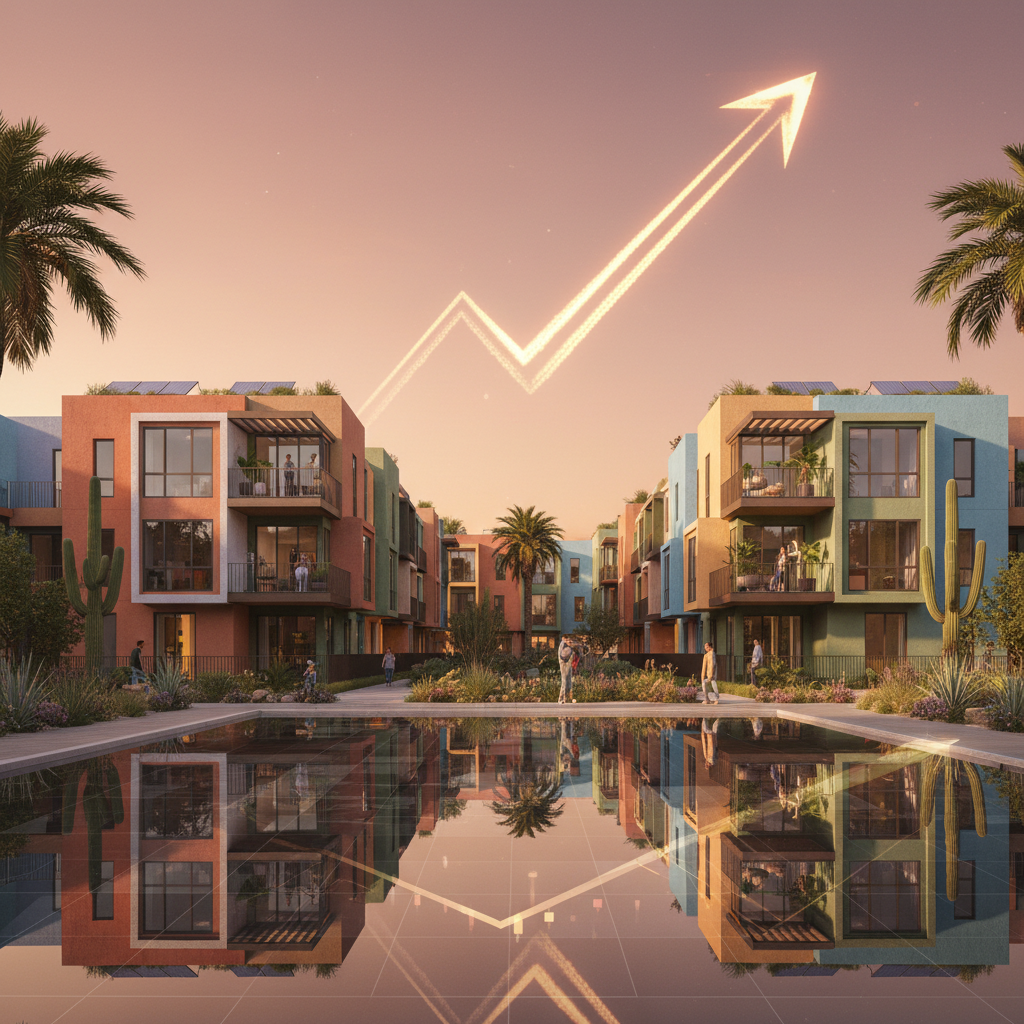
The recent celebration of a completed Habitat for Humanity community in South Phoenix, backed by Maricopa County, highlights a critical trend for real estate investors: the targeted revitalization and stabilization of historically underserved areas. While direct investment in non-profit housing projects isn't typically a for-profit strategy, the underlying forces driving such initiatives—namely, a severe shortage of affordable housing and public-private partnerships—create ripple effects that smart investors can capitalize on.
This development in South Phoenix, a region often characterized by lower property values and higher rental yields than its northern counterparts, underscores a concerted effort to improve infrastructure and community stability. For investors, this translates into potential long-term appreciation in areas previously overlooked. As new, quality housing stock is introduced, it can elevate neighborhood comps, attract new businesses, and improve local amenities, all factors contributing to increased property values and rental demand.
"Public investment in affordable housing is a leading indicator for broader neighborhood uplift," notes Sarah Chen, a Phoenix-based real estate analyst. "We've seen this pattern before: initial community development often precedes significant private investment and appreciation. Investors should be analyzing these areas for early-stage acquisition opportunities, particularly distressed assets that can be repositioned."
For those specializing in foreclosures and pre-foreclosures, these areas become particularly interesting. Properties entering the distress pipeline in improving neighborhoods offer a unique arbitrage opportunity. A bank-owned (REO) or trustee sale property acquired at 60-70% of its projected After Repair Value (ARV) in a neighborhood seeing public investment can yield substantial returns, especially if the investor can execute a value-add strategy through renovation.
"We're actively scouting sub-markets adjacent to these development zones," states Mark 'The Maverick' Jensen, a seasoned investor with over 30 years in the Arizona market. "A 3-bed, 2-bath property that needs a full rehab might trade at $250,000, but with a $75,000 renovation, its ARV could jump to $400,000 in a year or two as the neighborhood matures. That's a 20% cash-on-cash return on a flip, or a solid 8-10% cap rate for a rental, assuming a 70% LTV on refinance."
Understanding these macro trends and how they impact specific micro-markets is crucial. The investment landscape is constantly shifting, and public initiatives, while not direct investment vehicles, often signal where the next wave of private capital will flow.
To learn more about identifying these emerging markets and executing profitable deals, explore The Wilder Blueprint's advanced training programs.