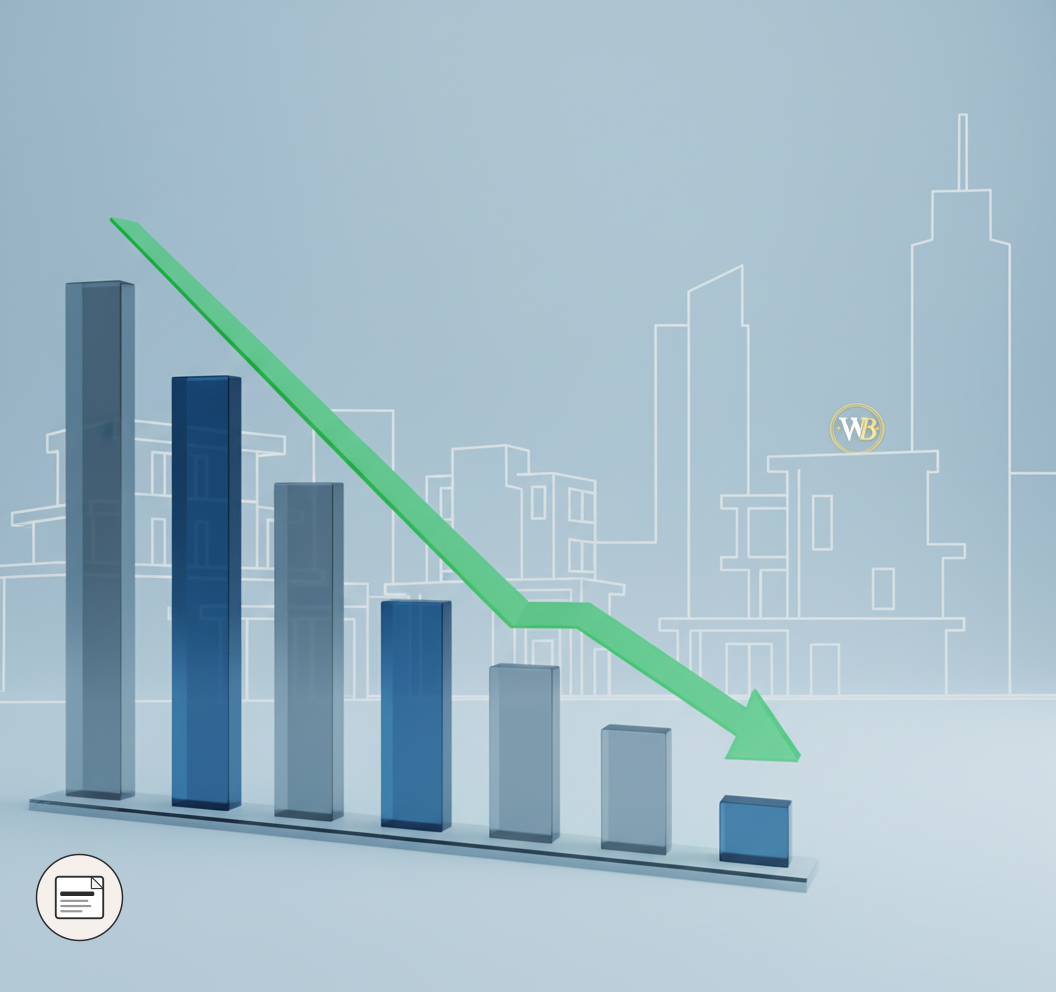
The latest housing market data has sent a clear signal: the landscape is shifting. January saw new home sales plummet to their lowest pace since 2022, a stark decline that defies the narrative of easing interest rates and builder incentives. For seasoned investors, this isn't a cause for alarm, but rather an indicator of emerging opportunities, particularly in the distressed property sector.
According to recent reports, new home sales dropped by 1.5% in January to a seasonally adjusted annual rate of 661,000 units. While superficially a modest dip, the underlying trend points to increasing buyer hesitancy and a potential oversupply in certain new construction segments. This cooling at the top of the market has direct implications for the broader housing ecosystem, creating ripples that can benefit investors focused on pre-foreclosures, short sales, and strategic acquisitions.
**Builder Concessions and Inventory Overhang**
Builders, facing reduced demand and carrying costs, are already ramping up concessions. While these incentives might attract some buyers, they also signal a weakening pricing power. "When new home sales falter, it creates a domino effect," explains Sarah Jenkins, a veteran real estate analyst specializing in market cycles. "Builders with spec homes sitting idle will eventually need to offload inventory, which can put downward pressure on comparable resale values, including those from distressed properties. This is where our acquisition targets become more attractive relative to new builds."
For investors, this means a potential increase in the value proposition of well-located, slightly older homes that can be acquired at a discount, renovated, and resold or rented. The gap between new construction pricing and the cost basis of a strategically acquired distressed property widens, enhancing profit margins.
**Foreclosure Pipeline Implications**
A slowdown in new home sales, coupled with persistent affordability challenges, can indirectly impact the foreclosure pipeline. Homeowners who might have considered selling to upgrade to a new build may now face a more challenging resale environment. This, combined with economic pressures, can push more properties into pre-foreclosure status.
"We're closely watching the 90-day delinquency rates," states Mark Thompson, a multi-state foreclosure investor with over two decades of experience. "Any softening in the broader market makes it harder for struggling homeowners to execute a traditional sale. This increases the likelihood of short sales and pre-foreclosure opportunities where we can step in and provide a solution, often at a significant discount to market value."
**Strategic Adjustments for Investors**
1. **Re-evaluate ARV Projections:** With potential downward pressure on home values, re-evaluate your After Repair Value (ARV) projections for flips. Build in a larger buffer for market fluctuations. 2. **Focus on Value-Add:** In a buyer's market, quality and value are paramount. Focus on renovations that provide tangible benefits and strong ROI, rather than over-improving. 3. **Expand Pre-Foreclosure Outreach:** Increased market uncertainty often leads to more homeowners needing to sell quickly. Intensify your efforts in identifying and engaging with homeowners in pre-foreclosure. 4. **Strengthen Rental Portfolios:** A cooling sales market can mean a robust rental market, as more people opt to rent rather than buy. Consider holding more properties for long-term rental income, especially those acquired at favorable distressed prices.
The dip in new home sales isn't a crisis; it's a recalibration. For investors equipped with the right strategies and market intelligence, this shift presents a fertile ground for acquiring undervalued assets and building sustainable wealth. The Wilder Blueprint provides the advanced frameworks and tactical insights to navigate these market dynamics and capitalize on the opportunities that others miss.