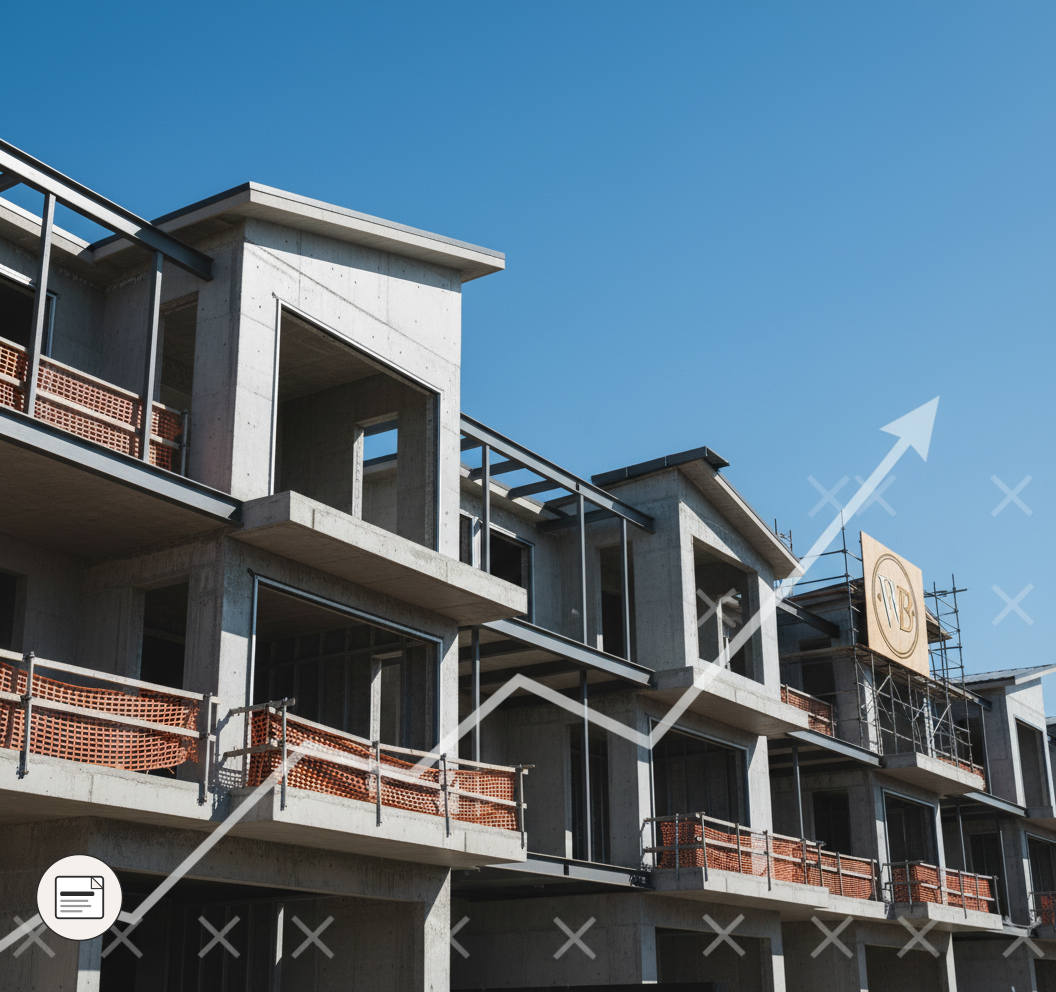
The latest data from the Mortgage Bankers Association (MBA) indicates a nuanced shift in the housing market, with new-home purchase mortgage applications edging up 0.9% in February 2026 compared to the previous year. While the monthly volume saw a slight dip from January, this year-over-year increase, however modest, signals persistent underlying demand that investors must scrutinize.
For seasoned investors operating in the foreclosure and distressed asset space, new construction trends might seem tangential. However, understanding the broader housing supply and demand picture is crucial. A sustained, albeit slow, increase in new-home demand, even against a backdrop of higher interest rates, points to a fundamental shortage of inventory in the resale market. This shortage often pushes buyers towards new builds, indirectly supporting property values across the board and potentially creating a floor for distressed asset ARVs.
"A 0.9% annual increase might seem negligible to the casual observer, but in a tight market, it's a whisper that can turn into a shout," says Marcus Thorne, a veteran real estate investor with over 25 years in the game. "It tells me that despite affordability challenges, people are still buying, and builders are still building. This sustained demand, even at the margins, helps stabilize our exit strategies for flips and underpins rental income projections for buy-and-holds."
What does this mean for your investment strategy? Firstly, it reinforces the value proposition of acquiring distressed properties in areas with strong new construction activity. If new homes are selling, even slowly, it validates the market's desirability and the potential for a robust ARV on your renovated foreclosure. Consider a scenario where a new build in a target submarket is selling for $450,000. If you can acquire a pre-foreclosure for $280,000, invest $70,000 in renovations, your all-in cost is $350,000. A 0.9% increase in new-home demand, while not directly impacting your ARV, suggests the market is absorbing new inventory, reducing the likelihood of a significant price correction that could erode your profit margins.
Secondly, this trend highlights the ongoing supply-demand imbalance. Many markets still face a deficit of housing units, a legacy of underbuilding post-2008. This structural shortage means that even with fluctuating mortgage rates, the underlying need for housing remains. This is particularly relevant for investors focusing on rental properties. Consistent demand for new homes often translates to robust rental demand, allowing for stable NOI and potential rent growth.
"We're not just looking at the headline numbers; we're looking at the 'why,'" explains Dr. Lena Chen, a real estate market analyst specializing in housing cycles. "The 'why' here is a persistent housing deficit. Builders are responding, albeit cautiously, and buyers are still entering the market. This creates a resilient environment for investors who understand how to source value in the distressed sector, where the entry point is significantly lower than new construction."
**Actionable Insight:** Investors should monitor new construction permits and sales data in their target submarkets. A consistent, even if modest, pace of new home sales indicates a healthy underlying demand that can support your exit strategies for flipped foreclosures or provide a strong tenant pool for rental acquisitions. Don't chase new construction directly, but use its performance as a barometer for market strength and ARV confidence in your distressed deals.
Understanding these subtle shifts in the broader market allows you to make more informed decisions, mitigating risk and maximizing returns. For a deeper dive into leveraging market data for profitable foreclosure investments, explore The Wilder Blueprint's advanced training programs.