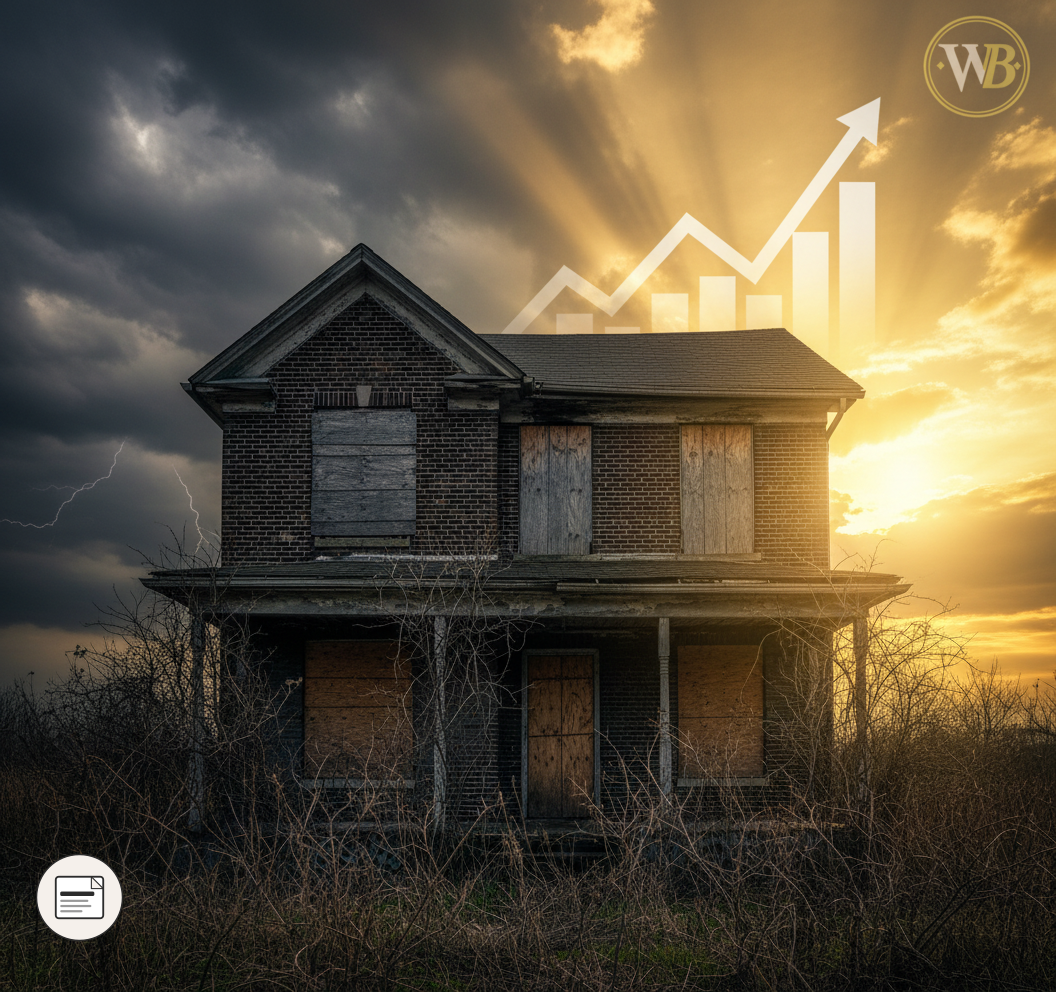
The real estate market, ever-evolving, continually presents new dynamics for investors to master. One such phenomenon, often lurking beneath the surface of official statistics, is the 'zombie foreclosure' – a property where the homeowner has vacated, but the foreclosure process remains incomplete, leaving the asset in a state of limbo. For the astute investor, these properties are not just a problem for lenders and municipalities; they can represent a significant, albeit complex, opportunity.
Zombie foreclosures typically arise when a homeowner, facing insurmountable debt, abandons their property before the bank officially takes possession. This can happen for various reasons, from a misunderstanding of the foreclosure timeline to a strategic decision to cut losses early. The consequence is often a deteriorating asset, vulnerable to vandalism, neglect, and code violations, which can depress neighborhood values.
"Identifying a true zombie foreclosure requires more than just a drive-by," explains Sarah Jenkins, a veteran foreclosure investor with over 300 deals under her belt. "You need to cross-reference public records, court dockets, and local utility shut-off notices. A property that looks abandoned might just be a vacation home, but one with an active foreclosure filing and no utility usage is a strong indicator."
From an investment perspective, the allure of zombie foreclosures lies in their potential for significant equity capture. Because these properties often sit vacant for extended periods, they tend to accumulate deferred maintenance and can be acquired at a steeper discount than occupied foreclosures or traditional market listings. However, the path to profit is fraught with complexities.
One primary challenge is the legal ambiguity. Until the foreclosure is finalized, the original homeowner technically retains ownership, complicating clear title acquisition. Investors must be prepared for potential title issues, including junior liens that may not be cleared by the initial foreclosure sale. Due diligence is paramount, often requiring a deep dive into title reports and court documents.
"Don't underestimate the holding costs and the renovation budget," advises Mark Thompson, a real estate analyst specializing in distressed assets. "A property that's been vacant for 18-24 months will likely have significant damage – burst pipes, mold, structural issues. Your ARV calculation needs to factor in a substantial renovation contingency, often 20-30% higher than a typical flip."
Strategies for acquiring zombie foreclosures include purchasing at auction (though this carries higher risk due to lack of inspection), negotiating directly with the bank (REO departments), or even, in rare cases, working with the original homeowner if they still hold legal title but have no interest in the property. The latter can sometimes lead to a pre-foreclosure or short sale opportunity, allowing for a cleaner title transfer.
For investors eyeing these distressed assets, understanding the local market's foreclosure timeline, the specific state's redemption periods, and the potential for code enforcement fines is critical. While the human element of foreclosure is always present, the zombie foreclosure scenario often means the original homeowner has already moved on, simplifying the ethical considerations of acquisition.
Navigating the intricate world of zombie foreclosures demands a robust understanding of legal processes, meticulous due diligence, and a keen eye for renovation potential. It's not for the faint of heart, but for those prepared to do the work, the rewards can be substantial.
Ready to dive deeper into advanced foreclosure strategies and uncover hidden opportunities? The Wilder Blueprint offers comprehensive training designed to equip you with the knowledge and tools to master complex real estate investments.