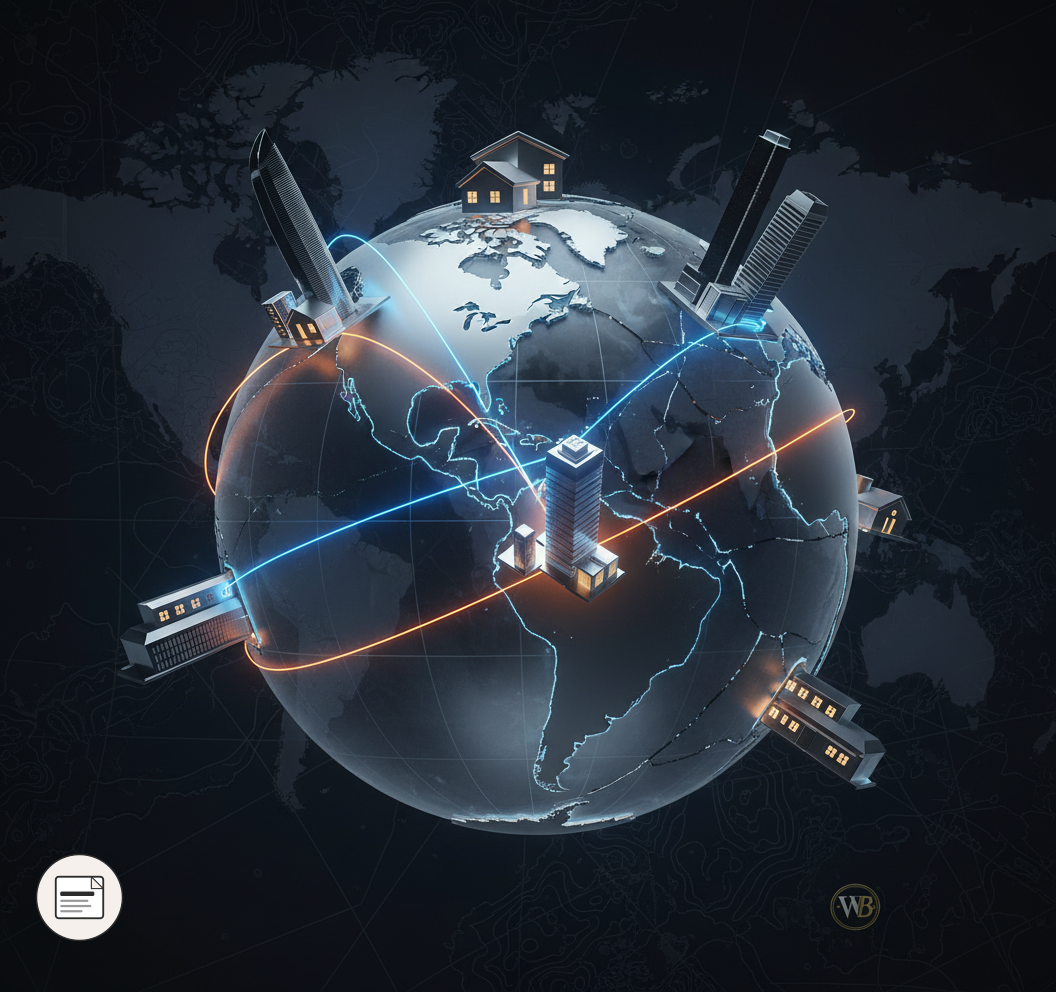
The recent incident in Trujillo, Peru, involving a nightclub explosion, while tragic, serves as a stark reminder for international real estate investors: geopolitical and localized instability can significantly impact property values, market sentiment, and investment timelines. For those eyeing opportunities in emerging markets, a robust risk assessment framework is not just advisable—it's essential.
Peru, like many Latin American nations, offers compelling real estate prospects, particularly in coastal tourism, industrial logistics, and urban residential sectors. However, events that disrupt public safety, even isolated incidents, can trigger immediate shifts in investor confidence and local economic activity. A perceived increase in risk can lead to higher vacancy rates, depressed rental yields, and a slowdown in property transactions, directly impacting your bottom line.
"When evaluating international deals, we don't just look at cap rates and growth projections; we deeply analyze political stability, crime statistics, and social cohesion," states Elena Petrova, a seasoned international real estate investor with 20 years in Latin American markets. "A 10% higher projected yield isn't worth a 50% higher risk of capital loss due to unforeseen instability."
For investors, this means going beyond macro-economic indicators. It requires granular due diligence into local governance, community relations, and historical patterns of unrest. Consider the following:
* **Diversification:** Don't put all your capital into a single region or property type within a politically sensitive market. * **Exit Strategy:** Have a clear, actionable exit strategy that accounts for potential market downturns or instability. * **Local Partnerships:** Partnering with experienced local developers and property managers who understand the nuances of the regional landscape can mitigate risks. * **Insurance:** Ensure comprehensive insurance coverage that explicitly addresses political violence or terrorism, if available and applicable.
"The smart money always factors in a 'stability premium' or 'instability discount' into their pro-formas," notes David Chen, a principal analyst at Global Property Insights. "Ignoring these soft costs can turn a promising deal into a protracted liability. We've seen projects stall for years due to localized issues that were initially dismissed as minor."
Ultimately, while the allure of higher returns in emerging markets is strong, the foundation of any successful investment lies in understanding and mitigating risk. The incident in Trujillo underscores the critical need for investors to maintain vigilance and adapt their strategies to the complex realities of the global landscape.
For a deeper dive into risk assessment frameworks for international real estate investments and navigating volatile markets, explore The Wilder Blueprint's advanced training modules.