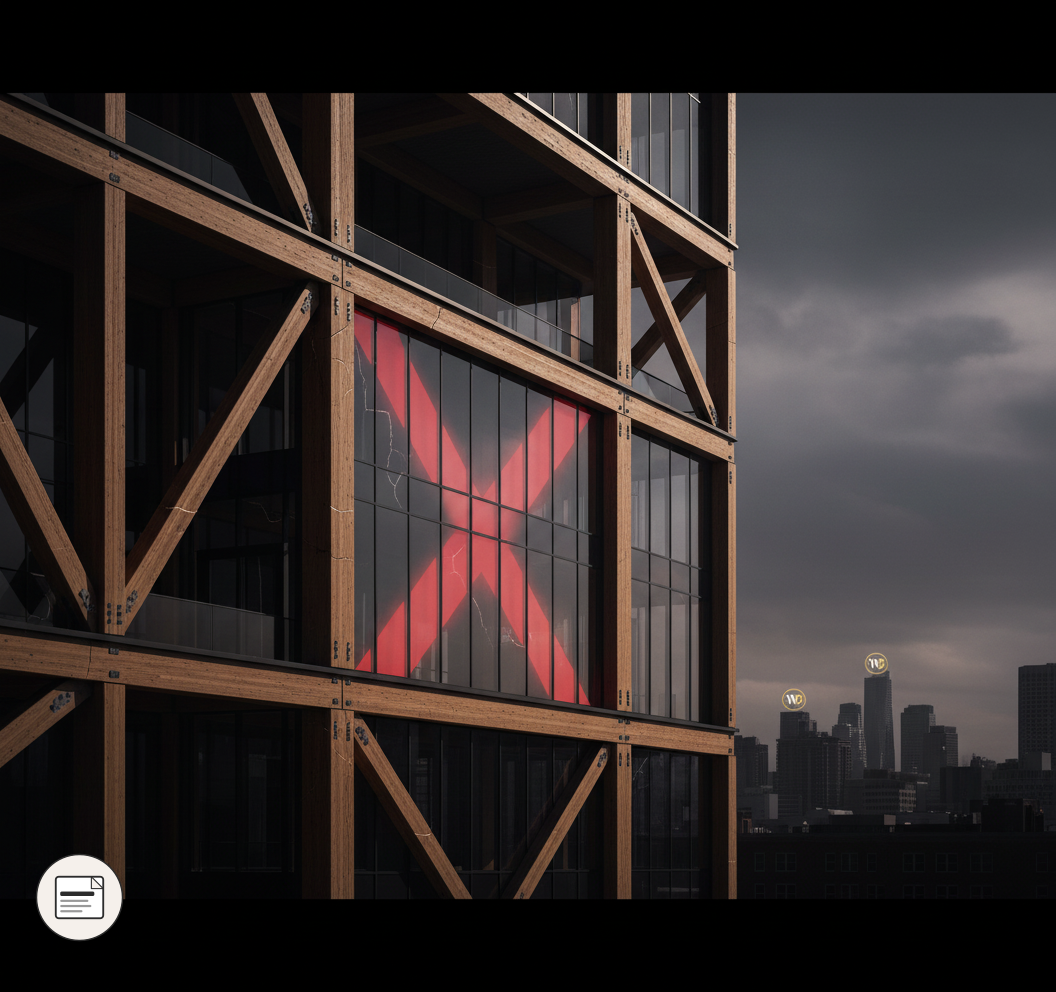
The news out of Milwaukee regarding the Ascent, a 25-story mass timber tower once hailed as the nation's tallest, reportedly facing foreclosure, sends ripples through the multifamily development and investment landscape. While the specifics of the situation are still unfolding, this event offers a stark reminder of the inherent risks, even in projects with significant innovation and market buzz. For seasoned investors, this isn't just a headline; it's a case study in navigating complex capital stacks, construction overruns, and market timing.
At The Wilder Blueprint, we've seen hundreds of deals go sideways, and often, the root causes are familiar: undercapitalization, cost overruns, and a misjudgment of market absorption or interest rate sensitivity. The Ascent project, with its reported $135 million price tag and innovative construction, likely involved a sophisticated financing structure, potentially including construction loans, mezzanine debt, and equity partners. When a project of this magnitude hits a snag, the waterfall of defaults can be swift and brutal.
"Large-scale, specialized construction projects inherently carry elevated risk," notes Marcus Thorne, a veteran real estate analyst specializing in distressed assets. "Innovative materials like mass timber, while promising, can introduce unforeseen challenges in supply chains, labor, and regulatory compliance, all of which impact timelines and budgets. A 10-15% cost overrun on a $100M+ project can quickly deplete contingency funds and trigger loan defaults."
For investors eyeing similar opportunities, particularly in ground-up development or significant rehabs, the Milwaukee situation underscores several actionable insights:
1. **Stress-Test Your Capital Stack:** Assume the worst. What happens if interest rates spike another 100-200 basis points? What if construction costs escalate by 20%? Ensure your financing has sufficient buffers and flexibility. A 75% LTV construction loan might look good on paper, but if your equity is thin, any hiccup can be fatal. 2. **Due Diligence on Specialized Construction:** Mass timber is cutting-edge, but it's also newer to the mainstream. Thoroughly vet your contractors' experience, understand potential delays, and build in robust contingency funds – often 15-20% for complex builds, not the standard 5-10%. 3. **Market Absorption and Exit Strategy:** Even a 'nation's tallest' project needs tenants. What are the current vacancy rates for luxury multifamily in that submarket? What's the projected absorption rate? A project completed into a softening rental market or one with increased inventory can face significant lease-up delays, impacting cash flow and debt service. 4. **Monitor Loan Covenants:** For lenders, this is a clear signal to review their portfolios for similar high-risk, large-scale projects. For borrowers, understand every covenant in your loan agreement. Construction loan draws are often tied to specific milestones and budget adherence. Missing these can trigger default notices.
"The human element in these situations is critical," adds Sarah Chen, a distressed asset investor with 20 years of experience. "While the business side is about capital and risk, a foreclosure means someone's vision, and potentially their financial future, is on the line. As investors, our role is to find value in distress, but always with an understanding of the underlying circumstances."
This isn't an isolated incident; rising interest rates and tighter lending standards are placing pressure on many development projects conceived in a different economic climate. Savvy investors will use these headlines not as fear-mongering, but as educational opportunities to refine their own risk assessment and deal structuring. The distressed market often presents the greatest opportunities for those prepared to navigate its complexities.
---
*Ready to refine your deal analysis and risk mitigation strategies for today's dynamic market? The Wilder Blueprint offers advanced training on identifying, acquiring, and profiting from distressed real estate opportunities. Learn more about our upcoming workshops and online courses.*