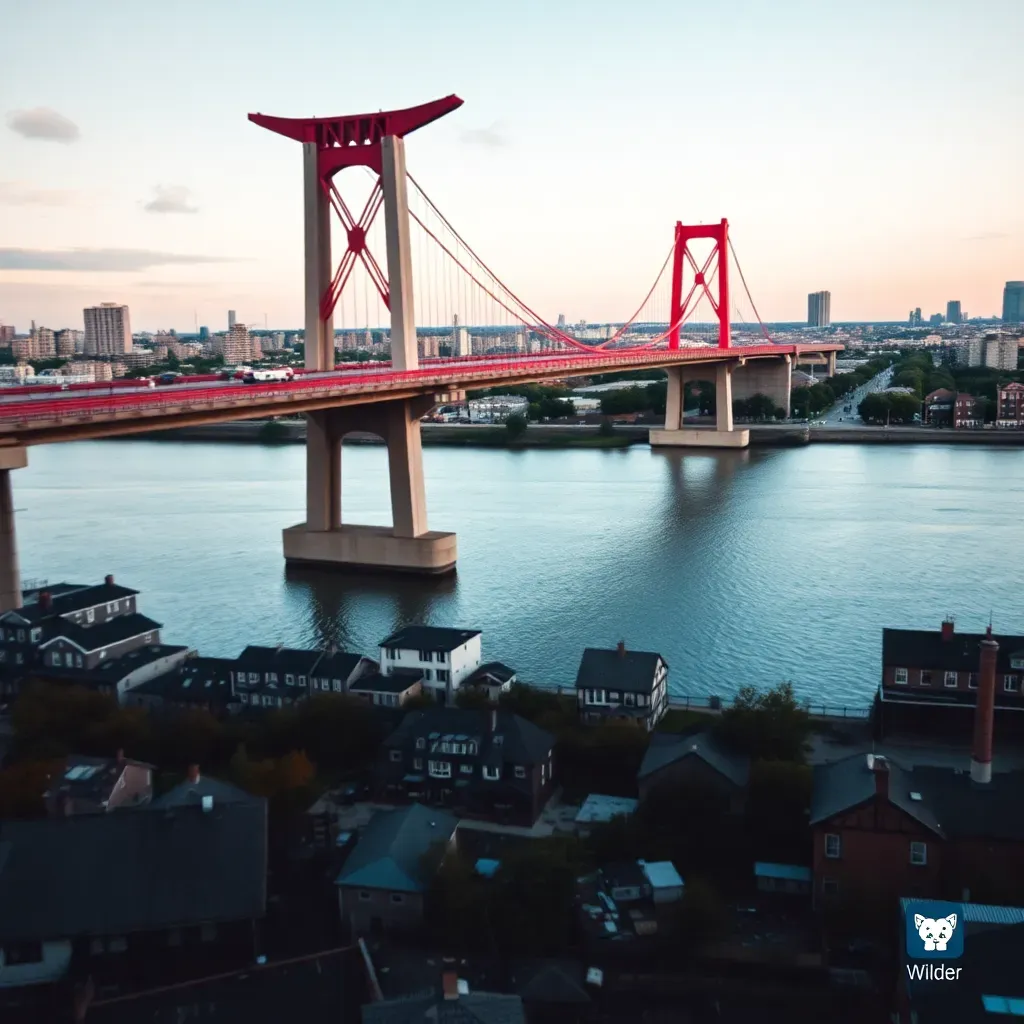
You see the headlines: "Nevada leaders celebrate new bridge, housing opening." It’s the kind of news that gets local politicians and developers excited. New infrastructure, new housing — it paints a picture of progress, growth, and opportunity. And for many, it signals a booming market where every property is a winner.
But for the disciplined operator, these announcements are a signal to look deeper. While new construction is a visible sign of investment, it also creates ripple effects that open doors for those who understand the underlying mechanics of a market in flux. The real opportunity isn't always in the shiny new development; it's in the areas adjacent, the properties overlooked, and the situations created by a shifting landscape.
When a new bridge or major housing project comes online, it changes traffic patterns, commutes, and property values in a wider radius. Areas that were once considered less desirable due to accessibility might suddenly become prime targets. This influx of new residents and improved connectivity can put pressure on existing housing stock, both for sale and rent. However, it also means some homeowners, especially those in older, less updated properties, might find themselves in a new competitive environment they weren't prepared for.
This is where the pre-foreclosure operator thrives. While everyone else is focused on the new, the smart money is looking at the old. These new developments often lead to increased property taxes in the surrounding areas, even for homes that haven't seen an upgrade in decades. For homeowners already struggling, a sudden increase in their tax bill can be the final straw, pushing them closer to default. Their property might not be in the direct path of the new bridge, but its value and their financial stability are absolutely impacted.
Consider the demographics. New housing often attracts a specific type of buyer – perhaps first-time homeowners, or those looking for modern amenities. This can leave a segment of the market, particularly older homes in established neighborhoods, feeling neglected. An owner who has lived in their home for 30 years might not have the capital or the desire to compete with brand-new construction. They might be sitting on significant equity, but also facing deferred maintenance, rising costs, and a desire to simplify their lives. This is a prime candidate for a pre-foreclosure solution, where you can offer a fair cash price, solve their problem, and acquire an asset with significant upside.
“New infrastructure can be a double-edged sword for long-term residents,” notes Sarah Chen, a veteran market analyst focusing on urban development. “While it brings economic benefits, it often accelerates gentrification and increases the cost of living, inadvertently creating distress for those on fixed incomes or with unmanaged properties.”
Your job as an operator isn't to chase the latest ribbon-cutting ceremony. It's to understand the downstream effects. What does a new bridge mean for the properties two miles away that just became 15 minutes closer to a major employment center? What does a new housing development mean for the older, less efficient homes in the next neighborhood over, whose owners are now seeing their property values fluctuate and their tax bills climb?
This isn't about exploiting hardship; it's about providing a solution. You're stepping in when a homeowner is facing a problem they can't solve alone, often exacerbated by broader market shifts like those brought on by new development. You're offering a way out, a fair price, and a streamlined process, without the desperation or pushiness that turns people away. You're buying their problem, and in doing so, you're acquiring an asset with built-in equity and a clear path to profit.
“The real estate market is always in motion, and infrastructure projects are like tectonic shifts,” says Mark Jensen, an investor with 20 years in the game. “The smart money isn’t just riding the wave; it’s anticipating the currents and finding value where others only see disruption.”
The ability to connect macro-level news like infrastructure development to micro-level pre-foreclosure opportunities is a hallmark of a disciplined operator. It requires looking beyond the obvious, understanding human behavior, and having a system to identify and engage with homeowners who need a solution. This business rewards structure, truth, and execution.
See the full system at [The Wilder Blueprint](https://wilderblueprint.com/get-the-blueprint/).