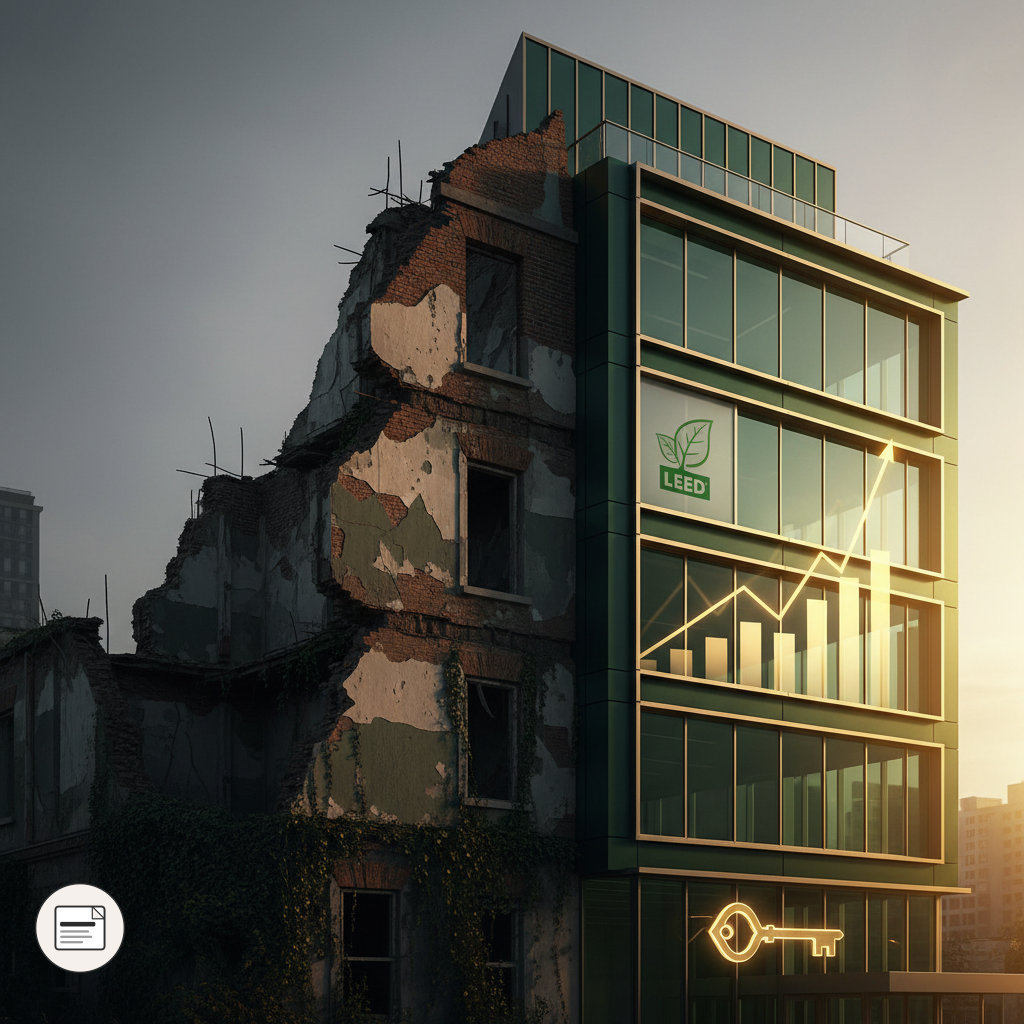
In a market increasingly valuing sustainability, savvy real estate investors are finding new avenues for profit beyond traditional rehabs. The U.S. Green Building Council's (USGBC) LEED Green Rater training, while seemingly niche, signals a broader trend: green building is no longer just for new construction; it's a powerful value-add for existing properties, especially those acquired through foreclosure or pre-foreclosure.
For investors specializing in distressed assets, the opportunity lies in transforming energy-inefficient, often neglected properties into high-performance, desirable homes or commercial spaces. A property acquired at 60-70% of its After-Repair Value (ARV) through a foreclosure auction, and then upgraded to LEED standards, can command a significant premium and attract a wider pool of buyers or tenants.
“We’ve seen a clear uptick in buyer preference for homes with verifiable energy efficiency, even in the mid-range market,” states Brenda Chen, a veteran real estate analyst at Horizon Capital Group. “A LEED-certified flip can sell 10-15% faster and for 3-5% more than a comparable non-certified property, assuming the green upgrades are integrated intelligently into the rehab budget.”
The financial benefits are compelling. For a typical single-family flip with an ARV of $450,000, a 3% premium translates to an additional $13,500 in profit. This often outweighs the incremental cost of green upgrades like high-efficiency HVAC, improved insulation, low-VOC materials, and water-saving fixtures, especially when factoring in potential rebates and tax incentives.
For rental property investors, the advantages extend to lower operating costs and higher Net Operating Income (NOI). Tenants are increasingly willing to pay a premium for properties with lower utility bills. A recent study indicated that green-certified rental units can achieve 2-8% higher rents and experience lower vacancy rates. Consider a multi-family property generating $100,000 in annual gross rents. A 5% increase due to green certification, coupled with a 15% reduction in utility expenses (e.g., $10,000 annual savings), can significantly boost NOI, directly impacting the property’s valuation.
Executing a green rehab on a foreclosure requires strategic planning. It starts with a comprehensive energy audit during due diligence to identify the most impactful and cost-effective upgrades. Prioritize improvements with quick paybacks and high visibility, such as smart thermostats, LED lighting, and efficient windows. The key is to integrate these elements seamlessly into the existing rehab plan, rather than treating them as separate, additive costs.
“Don't just slap on solar panels and call it green,” advises Marcus Thorne, a seasoned investor who has completed over 50 green-certified flips. “True value comes from a holistic approach – optimizing the building envelope, improving indoor air quality, and reducing water usage. It’s about creating a healthier, more efficient asset that appeals to the modern homeowner or tenant.”
While the USGBC's training focuses on the technical aspects of LEED certification, the underlying message for investors is clear: understanding and implementing green building principles can differentiate your portfolio, enhance asset value, and future-proof your investments against evolving market demands. It’s not just about being environmentally responsible; it’s about smart business.
Ready to integrate advanced strategies into your real estate investment playbook? The Wilder Blueprint offers cutting-edge training on market trends and value-add opportunities to maximize your returns.