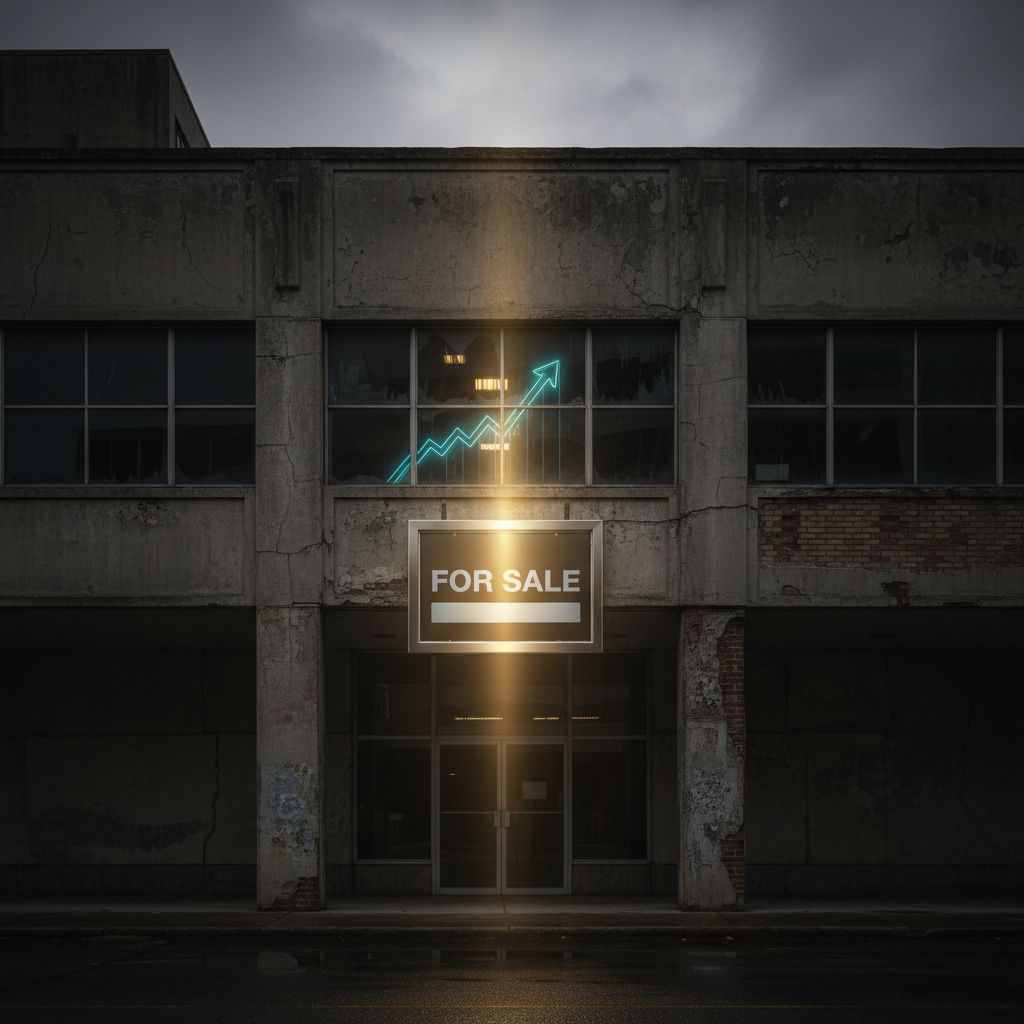
The commercial real estate (CRE) sector is facing unprecedented headwinds, creating a ripe environment for distressed asset investors. With rising interest rates, tightening credit, and sustained shifts in work-from-home policies impacting office and retail spaces, commercial foreclosures are on an upward trajectory, signaling a critical juncture for strategic acquisitions.
Data from ATTOM shows a significant increase in commercial foreclosure filings year-over-year, with some markets seeing triple-digit percentage jumps. This isn't just a blip; it's a systemic correction. Many properties purchased or refinanced during the low-interest rate era are now struggling to service debt with higher rates and lower occupancy, leading to defaults and eventual foreclosure.
"We're seeing a bifurcation in the market," notes Eleanor Vance, a seasoned commercial real estate analyst. "Class A properties in prime locations are holding value, but Class B and C office spaces, particularly in secondary markets, are becoming prime targets for investors with the capital and vision to reposition them. The key is understanding local market demand – what worked five years ago won't necessarily work today."
For investors, this means a meticulous approach to due diligence. Beyond the standard financial analysis, understanding the property's highest and best use in the current economic climate is paramount. Could a struggling office building be converted to multi-family housing? Is a vacant retail strip viable for last-mile logistics or medical offices? These are the questions driving profitable deals.
"The margins on these deals can be substantial if you buy right," states Marcus Thorne, a multi-cycle investor with over 30 years in distressed assets. "We recently acquired a 50,000 sq ft office building at 40% below its 2019 valuation. Our plan is a full conversion to a mixed-use residential/retail space, targeting a 2.5x equity multiple within three years. It requires capital, expertise, and a strong network, but the opportunity is there for those willing to do the work."
Financing these deals often involves creative solutions, including private money, bridge loans, or even seller financing for motivated lenders looking to offload non-performing assets. Investors must be prepared to move quickly and have their capital stack in order.
This isn't a market for the faint of heart, but for those with a deep understanding of market cycles and a robust investment strategy, the current commercial foreclosure landscape offers some of the most compelling opportunities in years.
Ready to dive deeper into the strategies for identifying, analyzing, and acquiring distressed commercial assets? The Wilder Blueprint offers advanced training modules designed to equip you with the tools and insights needed to capitalize on these evolving market conditions.