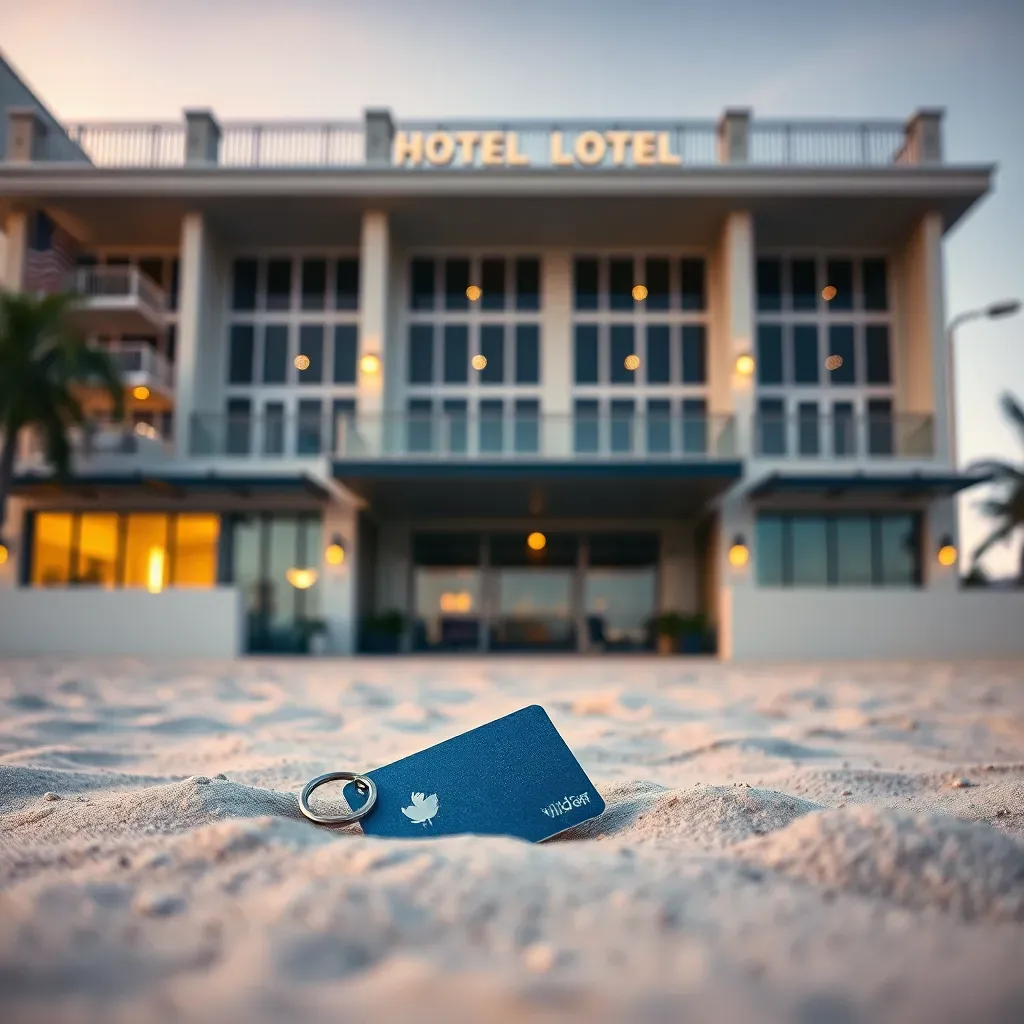
A recent headline about a boutique hotel on St. Pete Beach facing foreclosure might catch your eye. It's a reminder that distress isn't confined to single-family homes. Commercial properties, from hotels to office buildings, can also fall into default, creating significant opportunities for the right kind of operator.
But before you start picturing yourself as a hotelier, understand this: commercial foreclosures operate on a different playing field than residential. The principles of finding value in distress remain, but the execution, due diligence, and capital requirements shift. This isn't about finding a quick flip on a suburban ranch house; it's about understanding complex assets, market cycles, and often, more sophisticated financing structures.
When a commercial property, especially one with an operating business like a hotel, goes into foreclosure, it's rarely a simple case of an owner missing a few payments. There are layers of complexity: operational issues, management problems, market downturns impacting revenue, or even broader economic shifts. The lender, often a larger institution, is typically more focused on recovering their capital than on the property's long-term operational success. This creates a window for operators who can diagnose the core issues and present a viable solution.
"Commercial distressed assets often come with a higher barrier to entry, but that also means less competition from the casual investor," notes Sarah Jenkins, a commercial real estate analyst. "The deals are bigger, the stakes are higher, but the potential returns for a well-executed turnaround can be substantial."
Your first step isn't to jump in with an offer. It's to understand the *why* behind the distress. Is it a poorly managed asset in a good location? Is it a good asset in a declining market? Or is it a solid business model that simply ran into a short-term capital crunch? Just like with residential pre-foreclosures, you're looking for the root cause of the problem, not just the symptom of a missed payment.
For example, a boutique hotel facing foreclosure might have a strong underlying asset – prime beachfront real estate – but a weak operating model. Perhaps the previous owners failed to adapt to new travel trends, or they overleveraged during a boom. An operator who understands hotel management, or can bring in the right team, might see the real value here. They're not just buying a building; they're buying a business opportunity wrapped in real estate.
"The due diligence on a commercial property in distress is exhaustive," says Mark Thompson, a veteran commercial asset manager. "You're looking at financials, occupancy rates, market comps, deferred maintenance, and the local economic outlook. You need to be able to underwrite not just the property, but the business itself."
This requires a different level of analysis than a residential deal. You'll be diving into profit and loss statements, balance sheets, and cash flow projections. The Charlie 6, our framework for quickly qualifying residential deals, gives you a diagnostic lens. For commercial, you're applying similar structured thinking, but with more complex data points. You're still identifying the problem, assessing the asset, and defining your resolution path – Keep, Exit, or Walk – but the variables are multiplied.
While the scale and complexity might seem daunting, the core lesson remains: structured thinking, thorough due diligence, and a clear understanding of your resolution path are paramount. Whether it's a single-family home or a boutique hotel, the operator who fixes the frame first is the one who finds the real opportunities.
See the full system at [The Wilder Blueprint](https://wilderblueprint.com/get-the-blueprint/).