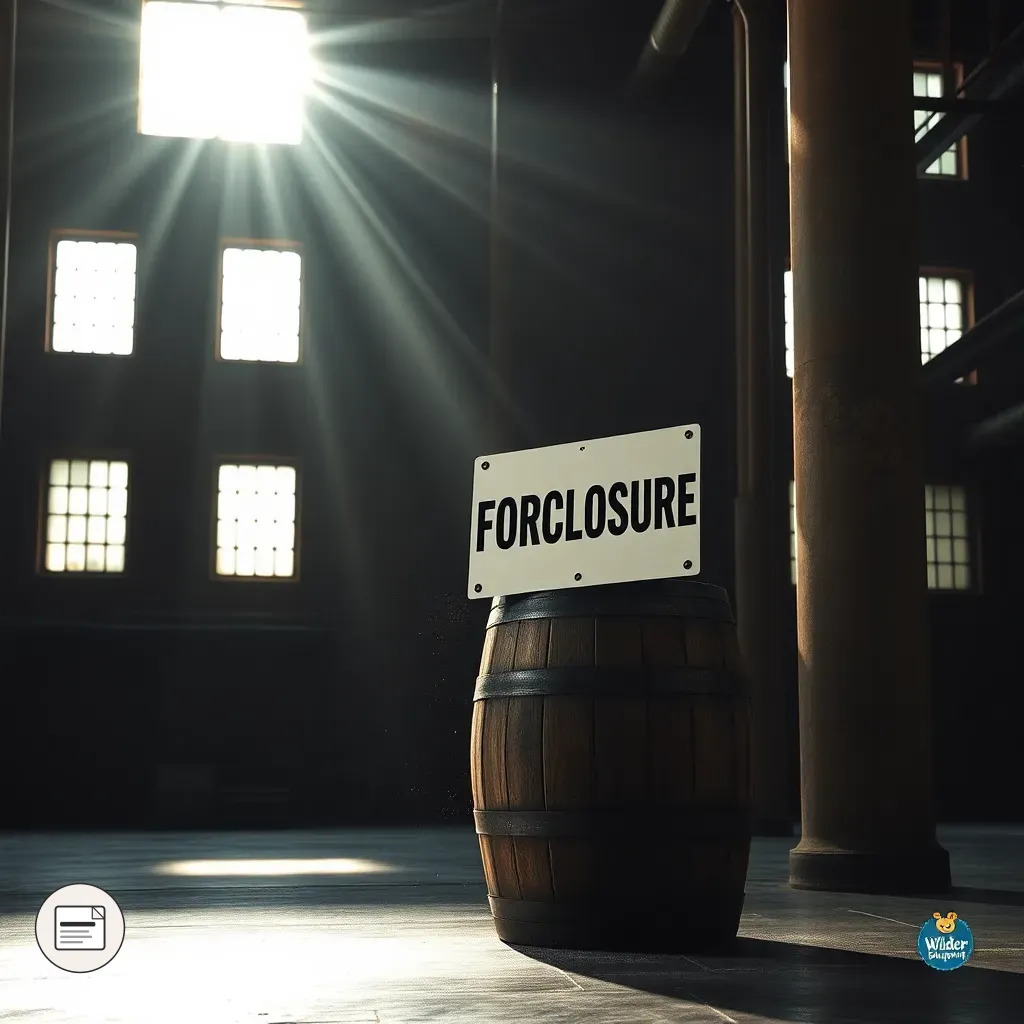
When you hear "foreclosure," most people immediately picture a house. A family home, a rental property, maybe a vacant lot. But the reality is, the distressed asset market is far broader than just residential real estate. Commercial properties — from retail spaces to industrial warehouses, and yes, even distilleries — can and do enter foreclosure.
Recently, news broke about a distillery property in Scott County, Kentucky, facing a foreclosure sale. For many, this might just be an interesting local headline. For the discerning operator, it's a flashing signpost pointing to an often-overlooked segment of the distressed market. While the headlines focus on the specific business, the underlying mechanism is a property owner who couldn't meet their obligations, leading to a forced sale. This isn't just a residential game; it's a property game, and the rules of distress apply universally.
This isn't about pivoting your entire strategy to commercial. It's about expanding your vision. Many operators get laser-focused on single-family homes, and for good reason—it's a massive, relatively liquid market. But that focus can blind them to other opportunities where competition is often lower, and the potential for profit, especially on a per-deal basis, can be significantly higher. "The residential market is crowded with noise," notes Sarah Jenkins, a commercial real estate analyst specializing in distressed assets. "The commercial space, while requiring different due diligence, often offers more room for strategic acquisition and value creation for those who know how to look."
So, how do you, as an operator, start seeing these opportunities? It begins with expanding your data sources. While your residential pre-foreclosure lists are crucial, consider adding commercial property tax default lists, UCC filings (which can indicate distress in business assets tied to real estate), and even local business news feeds. Often, a struggling business will precede a struggling property. You're looking for the same core indicators of distress: missed payments, liens, and public notices of default, just applied to a different asset class.
When you identify a potential commercial distressed asset, the due diligence shifts. You're not just evaluating ARV based on comps of similar houses. You're looking at zoning, potential highest and best use, environmental considerations, and the specific market demand for that type of commercial space. A distillery, for instance, has specialized equipment and infrastructure. Is the value in the land and buildings, or is there a salvageable business component? What are the costs to re-purpose or re-tenant? These are questions that require a different lens, but the underlying principle of solving a problem for a distressed owner remains the same.
Consider the "Three Buckets" framework here: Keep, Exit, Walk. For a commercial property, "Keep" might mean re-tenanting with a new business, converting to a different commercial use, or even a mixed-use development. "Exit" could be selling to another investor or developer. "Walk" means the numbers don't make sense, and you move on. The Charlie 6, our deal qualification system, is designed to be adaptable. While some specific metrics change, the core questions — what's the problem, what's the solution, what's the profit — are universal.
"Many investors shy away from commercial because they perceive it as more complex," says Mark Ellison, a veteran investor with a portfolio spanning residential and light commercial. "But the principles of finding motivated sellers and understanding value remain constant. The complexity often translates directly into higher barriers to entry for competitors, which means better deals for those willing to do the work."
Don't let a narrow focus on residential properties blind you to the broader landscape of distressed assets. The skills you develop in understanding pre-foreclosures, negotiating with owners, and evaluating property value are highly transferable. The market is always presenting new opportunities; the disciplined operator is always looking for them, regardless of the property type.
See the full system at [The Wilder Blueprint](https://wilderblueprint.com/get-the-blueprint/).