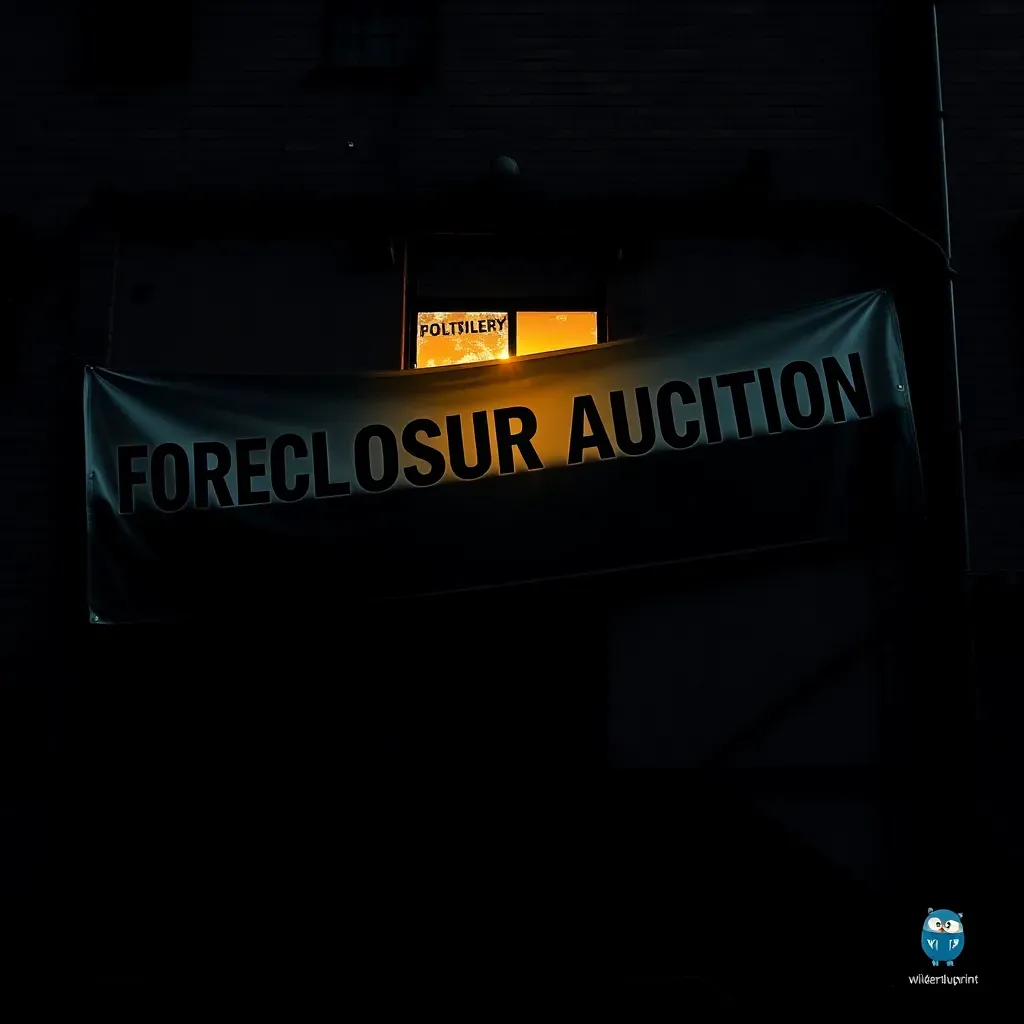
The recent court-ordered foreclosure sale of a commercial property associated with a Georgetown distillery project serves as a potent reminder of the opportunities and inherent risks within the distressed commercial real estate market. While the specifics of the distillery project's financial woes are complex, the outcome underscores a fundamental truth for investors: even seemingly robust commercial ventures can falter, creating openings for those prepared to act.
This particular case, involving a significant commercial asset, moves beyond typical residential foreclosures. It brings into sharp focus the intricate layers of commercial debt, project financing, and the often-lengthy legal processes that precede a trustee or sheriff's sale. For investors, this isn't just about buying a property; it's about acquiring a commercial asset, potentially with existing leases, environmental considerations, or specialized infrastructure, all at a potentially significant discount.
“Commercial foreclosures, especially those tied to specific business ventures like a distillery, require a different level of due diligence,” explains Sarah Jenkins, a commercial real estate analyst with 15 years in distressed asset acquisition. “You're not just evaluating the brick and mortar; you're assessing the viability of a potential new business, the market for the property's original use, or its highest and best alternative use. The capital requirements and risk profiles are often substantially higher than residential deals.”
**Identifying the Opportunity in Distress**
For investors eyeing commercial foreclosure opportunities, several actionable strategies emerge from situations like the Georgetown distillery project:
1. **Deep Dive Due Diligence:** Understand the property's zoning, environmental reports (Phase I and II ESAs are critical), existing liens beyond the foreclosing lender, and any outstanding municipal violations. For a specialized property like a distillery, assess the condition of specialized equipment and infrastructure. 2. **Market Re-Evaluation:** Is the original business model (distillery) still viable for that location, or does the property lend itself better to industrial, warehouse, or mixed-use redevelopment? A thorough market analysis will dictate your ARV and potential exit strategies. 3. **Financing Acumen:** Commercial foreclosures often require significant upfront capital. Traditional bank financing can be challenging for distressed assets, making private lenders, hard money, or equity partnerships common. Expect LTV ratios to be conservative, often in the 50-65% range, reflecting the increased risk. 4. **Legal Expertise:** Commercial foreclosure timelines can be protracted and legally complex. Engaging an attorney experienced in commercial real estate and foreclosure law is non-negotiable to navigate title issues, prior liens, and potential bankruptcy proceedings.
“We’ve seen successful investors acquire commercial assets like this at 40-60% of market value, but that discount comes with the expectation of significant work,” notes Mark Thompson, a seasoned commercial investor who has revitalized several industrial properties. “Your profit is often made in the acquisition price, but it’s secured by your ability to execute a clear value-add strategy and manage the unexpected costs that inevitably arise.”
**The Wilder Blueprint Perspective**
While the human element of foreclosure is always present, the business reality for investors is about identifying undervalued assets and applying strategic capital and expertise to create value. Commercial foreclosures, particularly those involving specialized properties, offer a higher barrier to entry but also the potential for substantial returns for those who approach them with precision and a robust understanding of the market dynamics.
Understanding the nuances of commercial foreclosure timelines, legal frameworks, and financial modeling is paramount. The skills honed in residential distressed properties are transferable but must be scaled and adapted for the complexities of commercial assets.
For investors ready to elevate their game and tackle the lucrative, albeit challenging, world of commercial distressed assets, The Wilder Blueprint offers advanced training and resources to navigate these complex opportunities. Learn how to identify, analyze, and acquire high-value commercial foreclosures and pre-foreclosures with confidence.