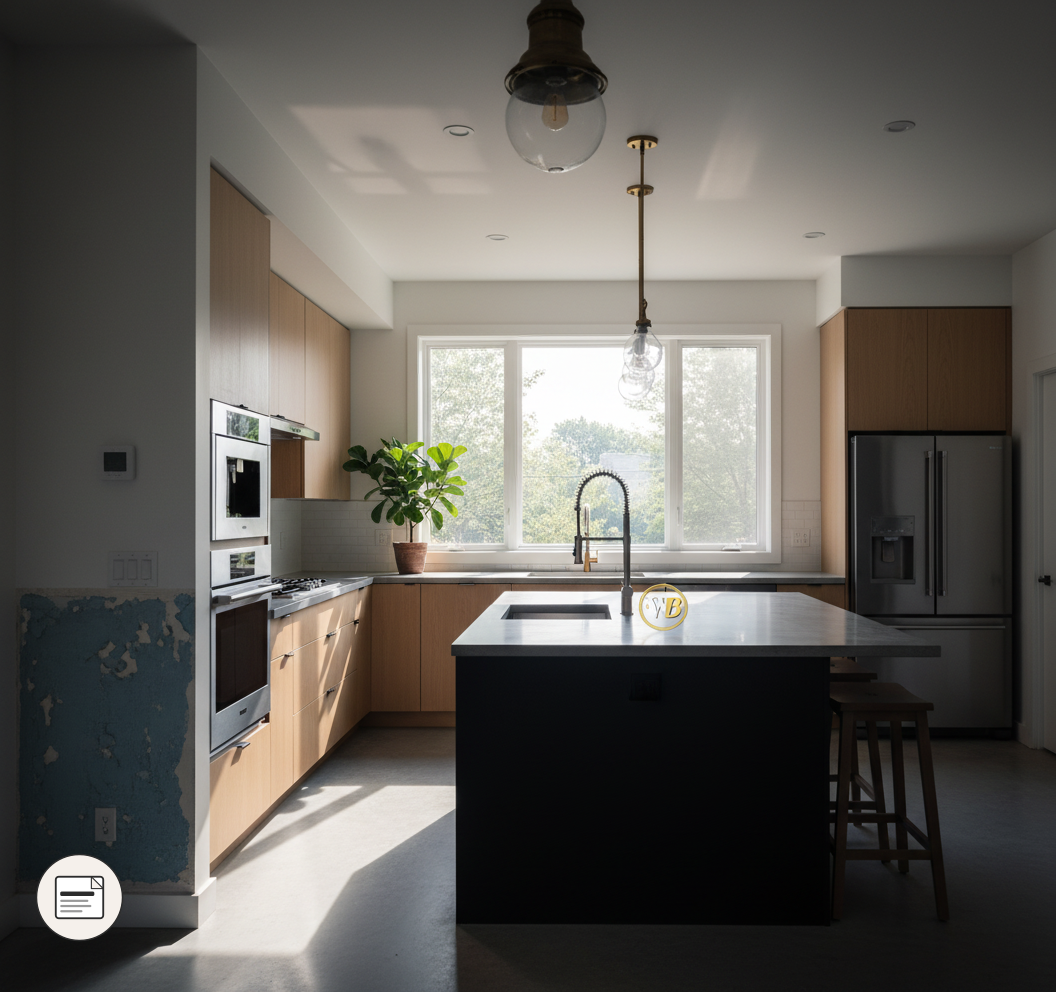
The allure of the Hudson Valley, with its scenic beauty and proximity to New York City, continues to drive a robust real estate market. While many focus on the aesthetic appeal of a finished home, the astute investor sees beyond the soft lighting and sculptural pieces, recognizing the underlying investment strategy that transforms a distressed asset into a high-value property. The recent transformation of a Hudson Valley retreat, detailed in a popular design piece, offers a potent case study for how strategic renovation choices can significantly impact a property's After-Repair Value (ARV).
For investors operating in pre-foreclosure and foreclosure markets, the challenge isn't just acquiring a property at a discount; it's understanding how to efficiently inject value that resonates with the target buyer. A property acquired at 60-70% of its potential ARV, plus repair costs, demands a clear vision for its highest and best use. In the Hudson Valley, that often means catering to buyers seeking a blend of modern comfort and rustic charm, a trend exemplified by the 'serenity' and 'warm wood tones' highlighted in the design piece.
"We're not just fixing leaky pipes; we're crafting an experience," explains Sarah Jenkins, a seasoned investor who has flipped over 50 properties in upstate New York. "In a market like the Hudson Valley, buyers are willing to pay a premium for move-in ready homes that evoke a sense of place and tranquility. Our average renovation budget for a 3-bedroom, 2-bath foreclosure in a desirable zip code is typically 15-20% of the ARV, but we see an average 25-35% return on that renovation spend when done right."
The key lies in understanding which renovations yield the highest ROI. While a full gut rehab might be necessary for some foreclosures, often it's the strategic updates that make the difference. Focusing on kitchen and bathroom remodels, enhancing natural light, and incorporating elements like wide-plank flooring or exposed beams can dramatically elevate perceived value. These aren't just cosmetic fixes; they are market-driven improvements designed to shorten market time and command top dollar.
Consider a property acquired for $250,000 with an estimated ARV of $450,000. A renovation budget of $70,000, strategically allocated to a modern kitchen ($25k), updated bathrooms ($15k), new flooring ($10k), and enhanced lighting/landscaping ($20k), brings the total investment to $320,000. Selling at $450,000 yields a gross profit of $130,000 before holding costs and commissions. The 'soft lighting' and 'sculptural pieces' mentioned in the design piece, while seemingly minor, contribute to the overall narrative and buyer perception, justifying that premium.
"The market is always evolving, but the core principles remain," states Mark Thorne, a real estate analyst specializing in distressed assets. "In competitive markets, the difference between a decent flip and an exceptional one often comes down to the investor's ability to anticipate buyer desires and execute a renovation plan that maximizes appeal without over-improving for the neighborhood. We're seeing a clear trend where thoughtful design, even in a foreclosure, can add an extra 5-10% to the final sale price, directly impacting the bottom line."
For investors targeting the Hudson Valley, whether for flipping or long-term rental income, understanding the interplay between strategic acquisition, efficient renovation, and market-aligned design is paramount. It's about seeing the potential beyond the distressed state and executing a plan that transforms a challenge into a profitable opportunity.
Ready to dive deeper into identifying, acquiring, and transforming distressed properties into high-value assets? The Wilder Blueprint offers comprehensive training designed to equip you with the strategies and tools needed to succeed in today's dynamic real estate market.