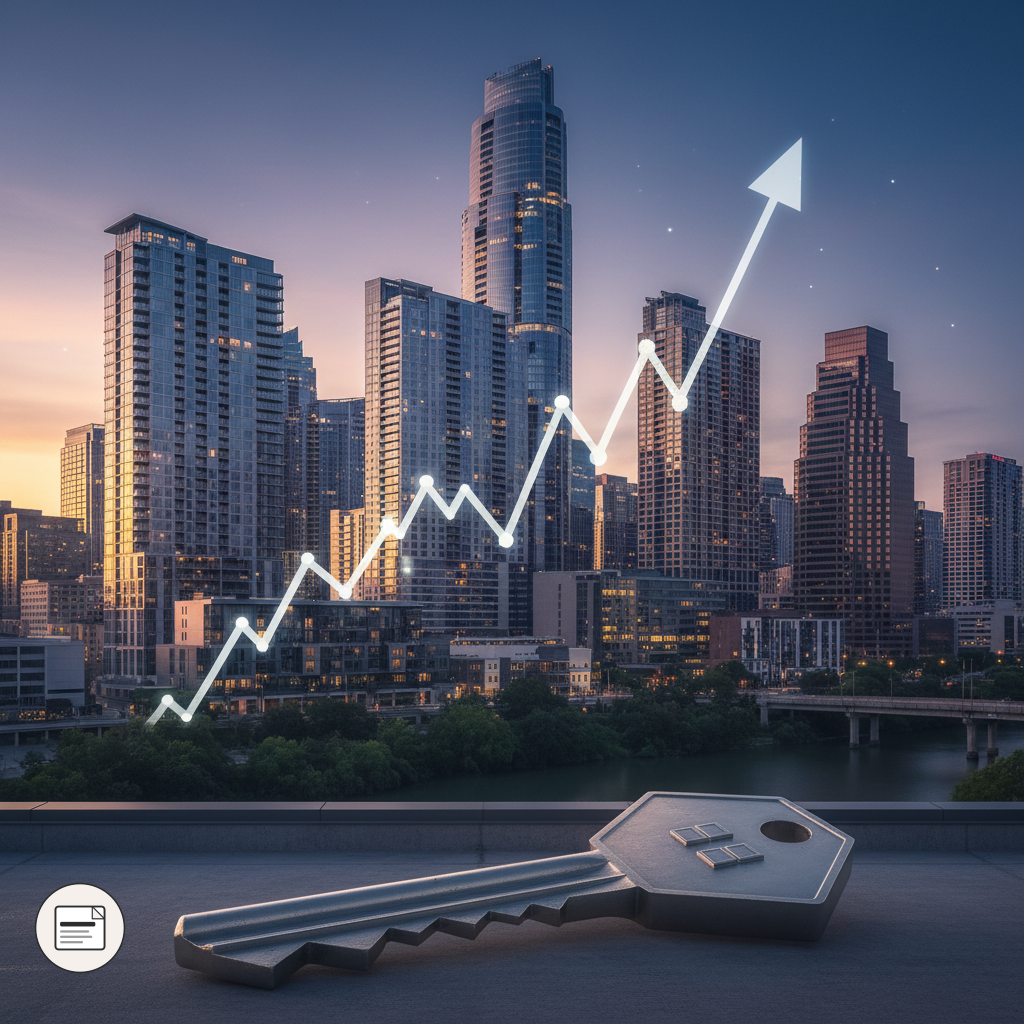
Austin, Texas, has transformed from an affordable state capital into one of the nation's most expensive metropolitan areas. For real estate investors, this rapid appreciation presents both formidable challenges and unique opportunities. Understanding the underlying drivers of this market shift is crucial for crafting effective investment strategies, particularly in the foreclosure and pre-foreclosure space.
Historically, Austin's housing market was characterized by relative affordability, with median home prices well below national averages. The last decade, however, saw an explosion driven by tech industry migration, robust job growth, and a limited housing supply. From 2010 to 2020, Austin's population grew by over 30%, while housing unit growth struggled to keep pace. This demand-supply imbalance, exacerbated by low interest rates post-2020, propelled median home prices to over $500,000, a staggering 150% increase in just over ten years.
“Austin’s trajectory is a textbook case of what happens when high-paying jobs flood a market with restrictive zoning and slow new construction,” explains Sarah Chen, a 15-year veteran real estate analyst at Capital Insights Group. “Investors who bought in early 2015 and held are sitting on 100%+ equity gains. The challenge now is finding that same value proposition without overpaying.”
For foreclosure investors, Austin's high equity environment presents a double-edged sword. On one hand, the substantial equity cushions many homeowners, reducing the likelihood of properties reaching the courthouse steps. Pre-foreclosures, however, remain a viable avenue. Homeowners facing temporary financial distress, even with significant equity, may still be motivated to sell quickly to avoid a public auction and preserve their credit. Savvy investors can offer solutions that benefit both parties, often acquiring properties at 10-15% below market value, even in a competitive landscape.
Consider a pre-foreclosure scenario: a homeowner in South Austin with a property valued at $600,000, an outstanding mortgage of $300,000, and $25,000 in arrears. An investor could offer $510,000 (85% of ARV), cover the arrears, and close quickly. This allows the homeowner to walk away with substantial equity, avoid foreclosure, and the investor gains a property with a built-in equity margin for renovation and resale or rental. After a $50,000 renovation, the property could resell for $650,000, yielding a healthy profit even after holding costs and commissions.
“The days of 30% discounts on the courthouse steps in Austin are largely over,” notes David Rodriguez, a seasoned investor with over 300 deals under his belt across Texas. “Today, it’s about identifying distress early, understanding equity positions, and providing creative solutions. That means focusing on pre-foreclosures, short sales, and even probate properties where motivated sellers prioritize speed and certainty over top dollar.”
Investors must also factor in Austin's high property taxes and rising insurance costs when calculating potential returns. A 2.2% effective property tax rate on a $600,000 property translates to $13,200 annually, significantly impacting cash flow for rental properties or holding costs for flips. Diligent due diligence on all-in costs is paramount.
While Austin's market has matured, opportunities persist for those who adapt their strategies. Focusing on off-market deals, understanding the nuances of pre-foreclosure negotiations, and accurately projecting renovation costs and after-repair values are more critical than ever. The market demands precision, patience, and a deep understanding of local dynamics.
Ready to refine your investment approach in high-growth markets like Austin? The Wilder Blueprint offers advanced strategies for identifying and capitalizing on distressed property opportunities, even in competitive environments. Learn how to leverage equity, navigate pre-foreclosures, and structure deals that deliver consistent returns.