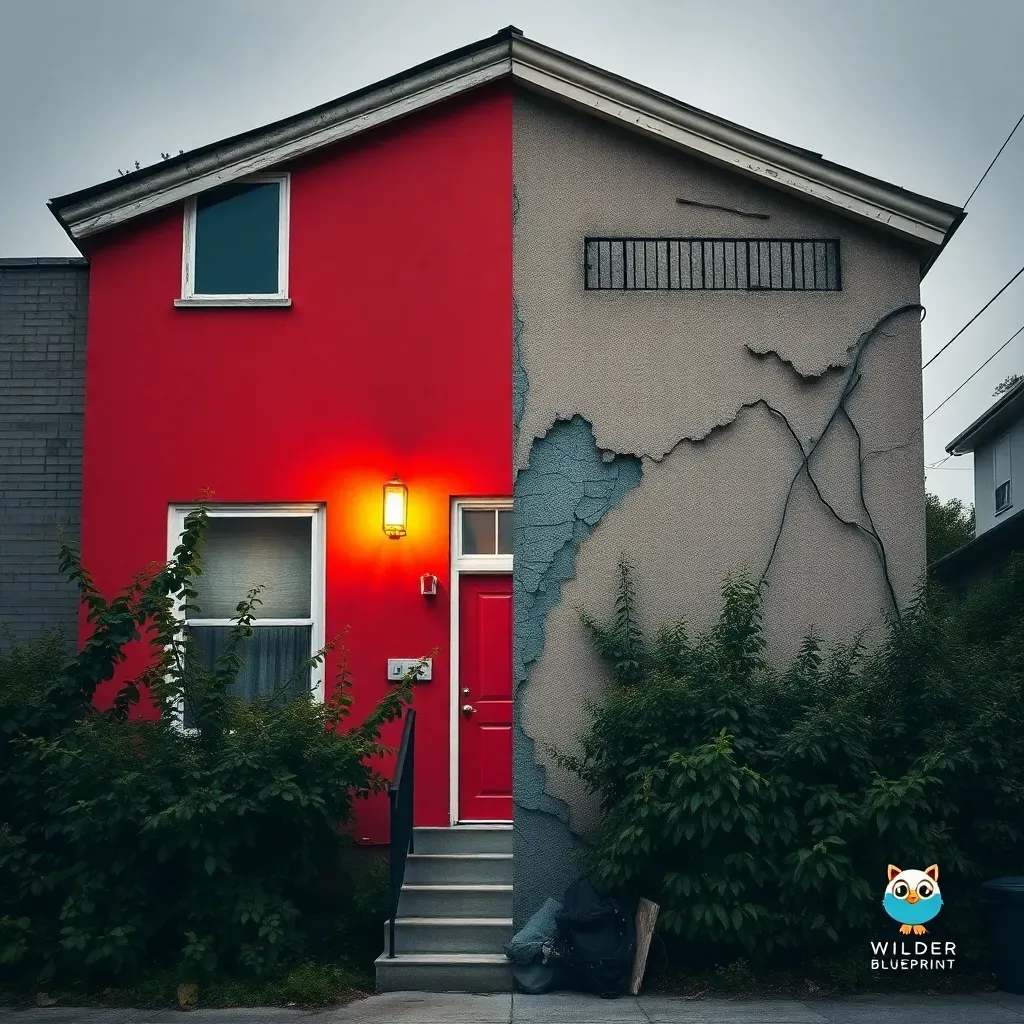
The latest data from Eye On Housing reveals a critical demographic shift in America's residential landscape: almost half of all owner-occupied homes were built before 1980. This isn't just a statistic; it's a flashing neon sign for real estate investors, particularly those operating in the pre-foreclosure and foreclosure markets. While older homes often present deeper discount opportunities, they also carry inherent risks that demand a sophisticated investment strategy.
### The Allure of Vintage Properties in Distress
For investors specializing in foreclosures and distressed assets, older homes frequently surface in auction inventories or pre-foreclosure filings. These properties are often owned by individuals who have lived there for decades, potentially neglecting maintenance as they aged or faced financial hardship. This neglect, coupled with outdated systems and aesthetics, drives down market value, creating the 'distress' that savvy investors seek.
"We're seeing a significant uptick in pre-foreclosure filings on properties built in the '60s and '70s," observes Sarah Jenkins, a seasoned investor with over 300 flips under her belt. "These homes often sit on larger lots in established neighborhoods, making their underlying land value attractive. The key is accurately pricing the renovation scope – it's rarely just cosmetic." A 1970s home, for instance, might require a full electrical rewire, plumbing upgrades from galvanized to PEX, and asbestos abatement, costing tens of thousands more than a purely cosmetic refresh.
### Navigating the Renovation Minefield: Specifics Matter
Investing in pre-1980 homes demands a meticulous due diligence process. Beyond the obvious aesthetic updates like kitchens and bathrooms, investors must budget for critical infrastructure overhauls. Think about the common issues:
* **Electrical Systems:** Many homes built before the 1970s still have knob-and-tube or aluminum wiring, which are fire hazards and often require complete replacement to meet modern codes and insurance standards. Expect $10,000-$25,000 for a full panel and wiring upgrade. * **Plumbing:** Galvanized steel pipes, common in homes built before the 1960s, corrode and restrict water flow. Replacing them with copper or PEX can run $8,000-$15,000. * **HVAC:** Older homes often have inefficient or failing HVAC systems. A full replacement can range from $7,000-$15,000. * **Roofing:** A roof nearing the end of its 20-30 year lifespan is a non-negotiable replacement, costing $6,000-$12,000 depending on size and materials. * **Environmental Hazards:** Lead paint (pre-1978) and asbestos (pre-1980s) are significant concerns. Remediation can be costly and requires specialized contractors. A small lead abatement project might be $2,000-$5,000, while asbestos removal can quickly escalate to $10,000+.
### The ROI Equation: Balancing Risk and Reward
For a successful flip or rental conversion, the After Repair Value (ARV) must comfortably absorb these renovation costs, acquisition costs, holding costs, and still yield a healthy profit margin – typically 15-20% for a flip or a 1% rule for rentals (monthly rent at least 1% of acquisition + renovation costs). A common mistake is underestimating the 'unknowns' in older homes. We advise a 10-15% contingency budget on top of your estimated renovation costs for these properties.
"The market is still strong for move-in ready homes, even with higher interest rates," states Dr. Alex Chen, a real estate economist and investor specializing in urban revitalization. "But buyers are less willing to take on major renovation projects themselves. This creates a clear value-add opportunity for investors who can deliver a fully modernized, code-compliant product. The margin is there, but you have to earn it through diligent project management and accurate cost assessment."
### Actionable Takeaways for Investors
1. **Deep Dive Due Diligence:** Never skip a professional inspection, even on an 'as-is' foreclosure. If possible, get specialized inspections for plumbing, electrical, and HVAC. Factor in worst-case scenarios. 2. **Budget for the Unexpected:** Always add a significant contingency fund (10-15%) for pre-1980 properties. 3. **Understand Local Codes:** Older homes may not meet current building codes. Research what upgrades are mandatory upon renovation in your jurisdiction. 4. **Target Strategic Locations:** Focus on properties in desirable neighborhoods where the ARV can support extensive renovations. The land value often cushions the investment.
The aging housing stock presents a continuous pipeline of investment opportunities for those equipped to handle the unique challenges. By understanding the specific renovation demands and accurately forecasting costs, investors can transform these vintage properties into profitable assets.
Ready to refine your due diligence and renovation budgeting skills for older, distressed properties? The Wilder Blueprint offers advanced training on identifying hidden costs and maximizing ARV in challenging markets.