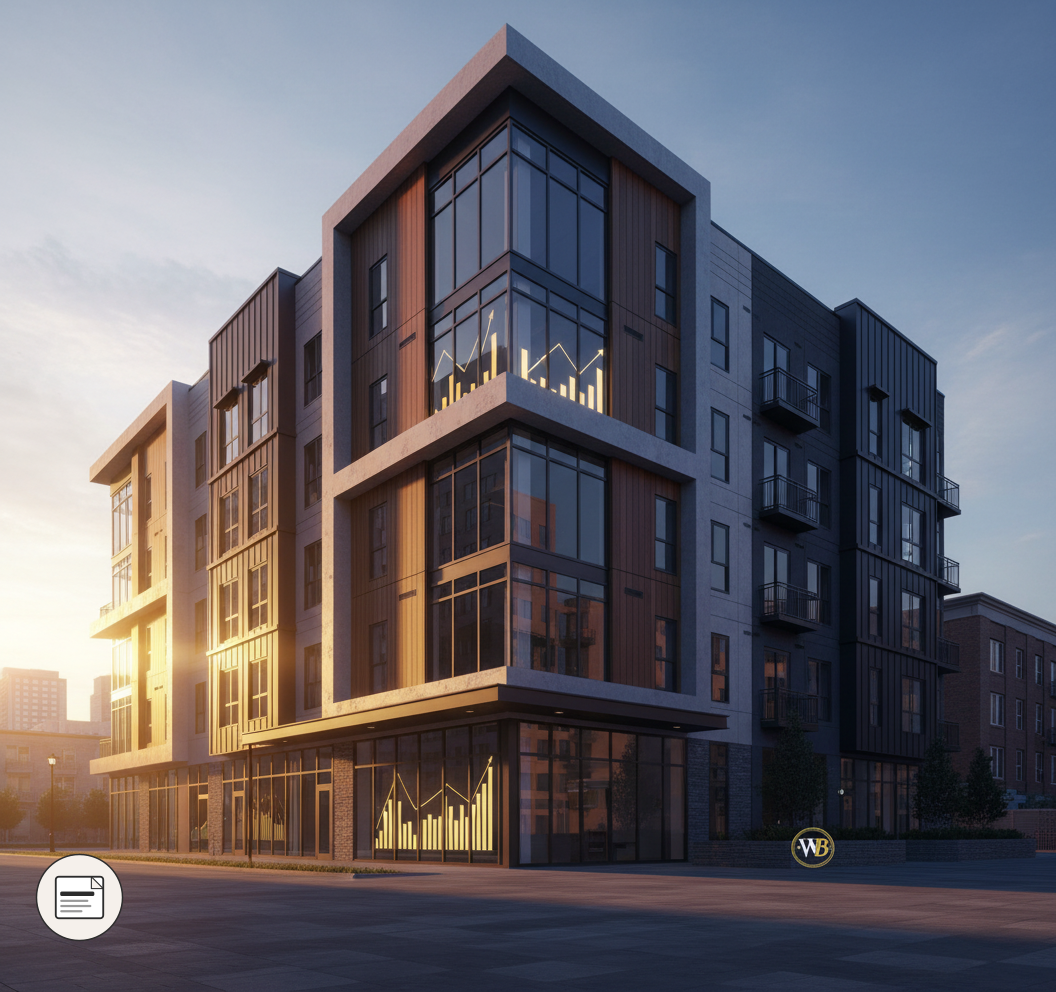
The recent unveiling of a 119-unit deed-restricted affordable housing complex in Redwood City, situated at Broadway and Chestnut Street, is more than just a local news item; it's a potent indicator of shifting market forces that every serious real estate investor must understand. While such projects address critical social needs, they also introduce complexities and potential opportunities into the investment landscape, particularly in high-demand areas like the Bay Area.
For investors focused on market-rate properties, the proliferation of deed-restricted units can impact comparable sales, rental rate ceilings, and even the overall perception of a neighborhood. In areas with aggressive inclusionary zoning or similar mandates, new market-rate developments often face significant hurdles, including higher permit fees, longer approval timelines, and the requirement to contribute to affordable housing funds or set aside a percentage of units as affordable. This directly affects land acquisition costs and development proformas.
Consider a scenario where an investor is evaluating a multifamily flip or a ground-up development in a city with a 15% inclusionary zoning requirement. If the market-rate units in a new build are projected to rent at $3,500/month, but 15% must be rented at 50-80% of Area Median Income (AMI)—potentially $1,800-$2,500/month—the blended cap rate for the entire project will be significantly lower than a purely market-rate development. This necessitates a recalculation of projected Net Operating Income (NOI) and a more conservative valuation.
“The days of ignoring affordable housing mandates are over, especially in supply-constrained markets,” states Marcus Thorne, a veteran multifamily investor with over 30 years in the California market. “You have to bake these costs and restrictions into your initial underwriting. It affects everything from land basis to exit cap rates. The smart money is either avoiding these areas for traditional flips or specializing in the affordable sector itself.”
However, these dynamics also carve out niche opportunities. For investors willing to navigate the complexities, there's a growing market for acquiring and operating existing affordable housing stock, leveraging Low-Income Housing Tax Credits (LIHTC), or even partnering with non-profit developers. These projects often come with stable, albeit lower, cash flows, and can be attractive to institutional investors seeking impact investments or long-term, inflation-hedged assets with government subsidies.
Another angle lies in pre-foreclosure and foreclosure opportunities adjacent to these developments. As cities invest in infrastructure and services around affordable housing projects, surrounding properties can see an uptick in desirability for certain demographics. An investor might acquire a distressed single-family home or small multifamily property in the shadow of a new affordable complex, renovate it, and target a different tenant profile—perhaps essential workers who benefit from proximity to transit and services, but earn above the AMI for deed-restricted units.
“While the headlines focus on the new units, the savvy investor looks at the ripple effect,” advises Dr. Lena Petrova, a real estate economist and analyst. “Does this development alleviate pressure on market-rate rents nearby, or does it signal a city's commitment to densification that will eventually benefit all property owners? The answer dictates your strategy.”
The Redwood City project underscores a broader trend. Investors must adapt by thoroughly researching local zoning, understanding the financial implications of deed restrictions, and identifying where these shifts create new avenues for value creation, whether through specialized development, strategic acquisitions, or a pivot in target demographics. Ignoring these macro trends is no longer an option for sustained success.
Mastering these evolving market dynamics is crucial for long-term real estate investment success. The Wilder Blueprint offers advanced training on identifying and capitalizing on complex market shifts, including the impact of affordable housing policies on your portfolio.