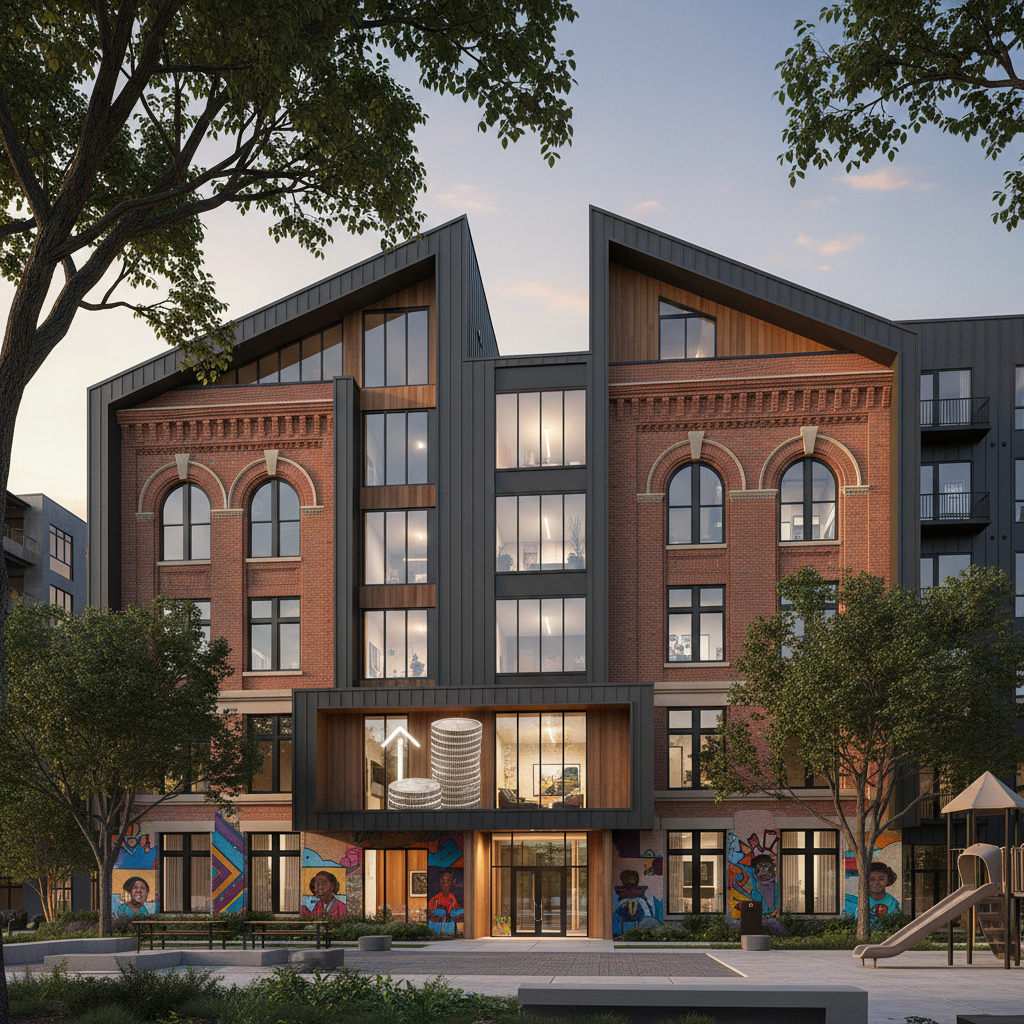
The recent revitalization of the former St. Elizabeth's Hospital into St. Elizabeth’s Place, providing 120 units of affordable housing in Houston's Fifth Ward, offers a compelling case study for real estate investors.
This project, which secured $26 million in financing, including significant tax credits and philanthropic contributions, showcases the immense potential of adaptive reuse – particularly when targeting community-driven needs like affordable housing. While not a typical foreclosure flip, the underlying principles of identifying undervalued assets and leveraging strategic financing are directly applicable to our investment philosophy.
"Adaptive reuse projects, especially those with a social impact component, often benefit from a layered financing approach that includes Low-Income Housing Tax Credits (LIHTC), historic tax credits, and various government grants," notes Sarah Chen, a veteran real estate developer specializing in urban revitalization. "Understanding these capital stacks is crucial for maximizing returns and project viability."
For investors, this strategy isn't just about altruism; it's about smart business. Distressed or underutilized commercial properties – think old schools, factories, or even vacant office buildings – can be acquired at a significant discount, often below replacement cost. The challenge lies in navigating zoning changes, securing entitlements, and structuring complex financing. However, the upside can be substantial, with stable cash flows from long-term tenants and potential for significant appreciation in revitalized neighborhoods.
Consider a similar scenario: an abandoned commercial building acquired for $1.5 million, requiring $3 million in renovation to convert into 30 affordable housing units. With an average rent of $1,200 per unit, that's $432,000 in annual gross income. After operating expenses (35-40%), the Net Operating Income (NOI) could be around $260,000. This translates to an attractive cap rate of 5.7% on a total project cost of $4.5 million, not accounting for potential tax credit equity or grants that could dramatically reduce the investor's out-of-pocket capital.
"The key is due diligence," advises Mark 'The Closer' Johnson, a foreclosure specialist with over 30 years in the field. "You need to understand the structural integrity, environmental concerns, and the local political landscape for zoning and permitting. But for those willing to do the legwork, these projects can offer outsized returns and a lasting legacy."
Identifying these opportunities often starts with monitoring commercial foreclosures, tax lien sales, and municipal surplus property lists. The St. Elizabeth’s Place project underscores that a deep understanding of financing mechanisms, coupled with a vision for repurposing, can turn seemingly insurmountable challenges into profitable, impactful investments.
Ready to dive deeper into identifying and financing complex real estate deals? The Wilder Blueprint offers advanced training on adaptive reuse strategies, navigating tax credits, and structuring multi-layered financing for maximum investor advantage.