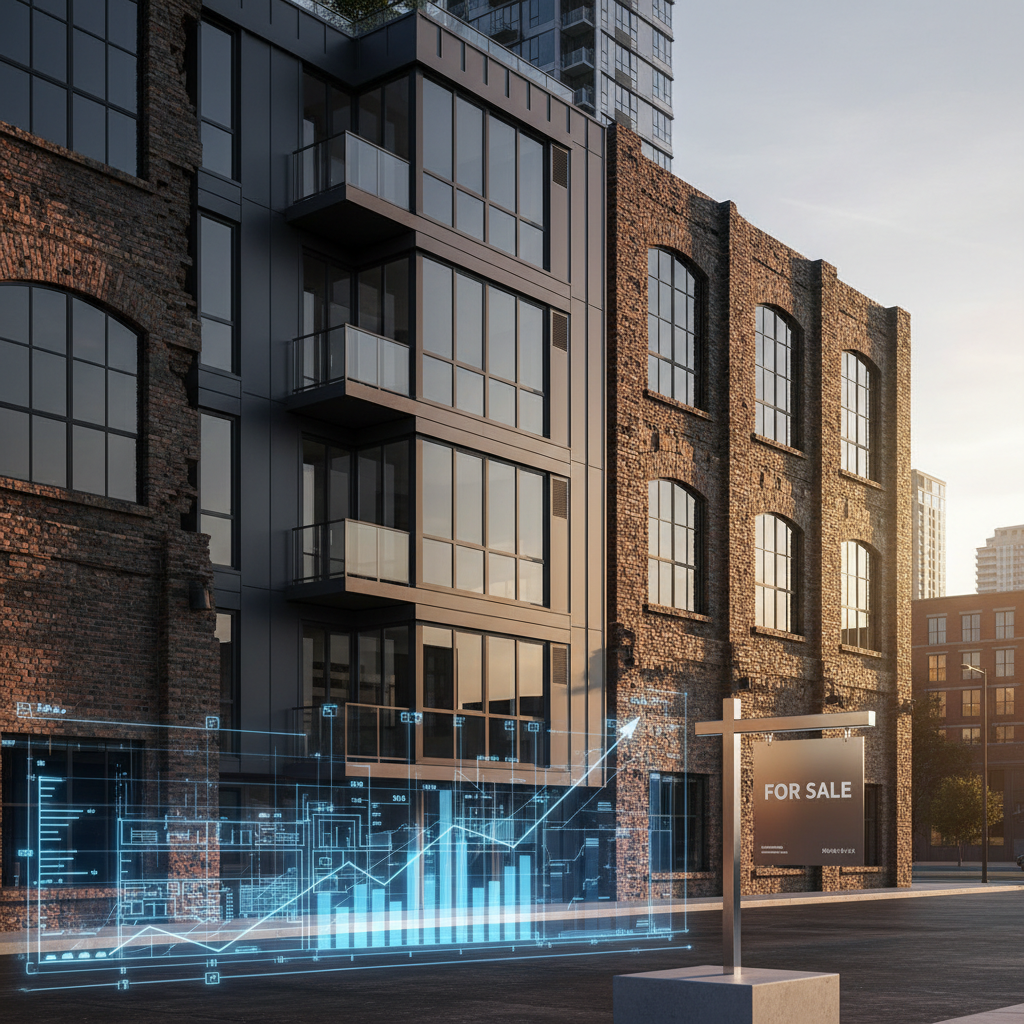
The recent conversion of a former Waldorf School into housing in the Capital Region highlights a burgeoning trend in real estate investing: adaptive reuse. As market dynamics shift, particularly with evolving commercial real estate landscapes, the strategic transformation of non-residential assets into residential properties presents compelling opportunities for substantial returns.
This isn't a simple flip; it's a sophisticated play involving zoning changes, extensive renovations, and a deep understanding of local housing demand. A former school, for instance, often comes with robust infrastructure, ample space, and sometimes even unique architectural features that can be leveraged to create desirable, character-rich living spaces. However, investors must be prepared for the complexities. "Converting a commercial property requires a meticulous due diligence process," advises Marcus Thorne, a veteran developer specializing in urban revitalization. "You're not just renovating; you're often re-engineering, from plumbing and electrical systems designed for institutional use to navigating residential building codes and occupancy permits. It's a different beast than converting a single-family home."
Financing these projects also demands a tailored approach. Traditional residential mortgages are out; investors typically look to commercial loans, bridge financing, or even private equity, often requiring higher LTV ratios and a strong business plan. A typical conversion project might see acquisition costs at $1.5M, with an additional $2M in renovation for 20-30 units, targeting an ARV of $5M-$6M, yielding a healthy NOI once stabilized. The key is identifying properties in areas with strong rental demand and favorable zoning, or where re-zoning is a viable path.
Pre-foreclosure or distressed commercial assets can offer entry points below market value, amplifying potential profits. "We're seeing a lot of opportunity in older office buildings and even some retail spaces that are no longer viable in their original form," notes Sarah Chen, a real estate analyst at Horizon Capital Group. "The investor who can envision a multi-family or mixed-use future for these properties, and has the capital and expertise to execute, stands to capture significant equity and cash flow."
While the human element of displacing former uses, like a school, needs careful consideration, the ultimate goal is to address housing shortages and revitalize communities. Successful adaptive reuse projects are not just profitable; they contribute to sustainable urban development by breathing new life into existing structures.
Mastering these complex conversions requires specialized knowledge and strategic foresight. To learn more about identifying, acquiring, and executing high-value adaptive reuse projects, explore The Wilder Blueprint's advanced training programs.