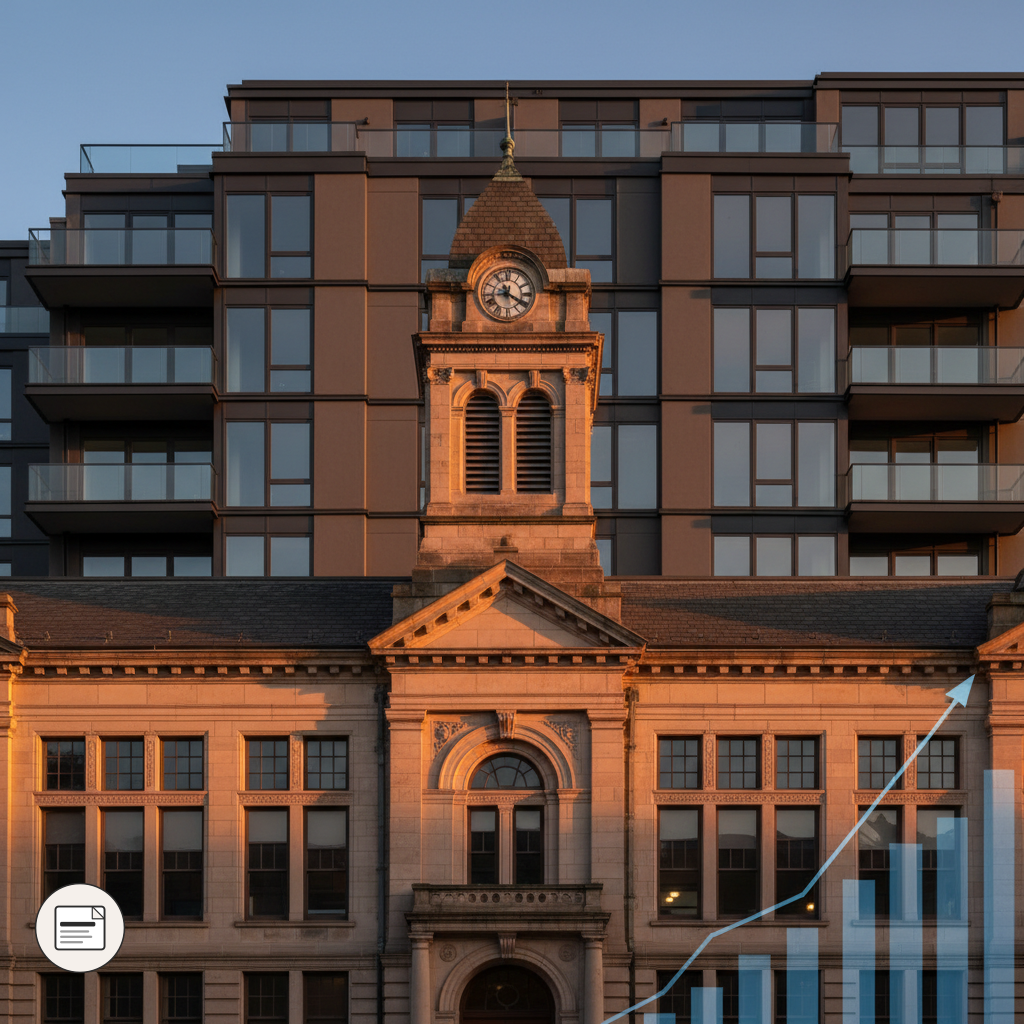
In a market grappling with housing shortages and escalating construction costs, experienced real estate investors are increasingly looking beyond traditional development. The recent acquisition of Gladys Burnham Elementary School in Hayward, California, with plans to transform it into housing, offers a compelling case study in adaptive reuse – a strategy that can yield significant returns for those who understand its nuances.
This isn't just about preserving a building; it's about strategic value creation. Public assets like schools, often centrally located and structurally sound, present unique opportunities. They typically come with robust infrastructure, ample land, and a community history that, when leveraged correctly, can accelerate permitting and tenant acceptance. The key is identifying properties with the right zoning potential or a clear path to rezoning, and then executing a cost-effective conversion plan.
"We're seeing a surge in interest for these types of properties," says Marcus Thorne, a veteran real estate analyst at Horizon Capital Group. "Schools, churches, even old industrial buildings – they often sit on prime parcels in established neighborhoods. The initial acquisition cost might be higher than a distressed residential property, but the development timeline can be shorter, and the final product often commands a premium due to its unique character and location."
For investors eyeing such opportunities, due diligence is paramount. Understanding the local municipality's appetite for adaptive reuse and the specific zoning codes is the first hurdle. A former school, for instance, might require a conditional use permit or a full rezoning to residential. This process can add months, even a year, to the project timeline, impacting holding costs and projected returns. Investors must factor in these variables, along with potential environmental assessments for older buildings, which can uncover asbestos or lead paint – significant remediation expenses.
Financially, these projects often require a blend of acquisition and construction financing. Lenders typically look for a strong development team with a proven track record in similar conversions. A conservative loan-to-value (LTV) ratio, perhaps 65-70% for the acquisition and 75-80% of the project cost for construction, is common. The after-repair value (ARV) must justify the extensive renovation, which can involve reconfiguring classrooms into apartments, upgrading plumbing and electrical systems, and ensuring ADA compliance.
"The beauty of adaptive reuse is that you're often working with solid bones," explains Sarah Jenkins, a developer specializing in historic conversions. "While the interior demolition and build-out are significant, you're not starting from scratch with foundations and framing. This can shave 15-20% off a new construction budget in some cases, provided you manage the specific challenges of an older structure, like unexpected structural issues or outdated utility lines."
For the Gladys Burnham Elementary project, the success will hinge on the developer's ability to navigate local planning, manage construction costs effectively, and market the unique appeal of a former schoolhouse as modern housing. This strategy isn't for the faint of heart, but for seasoned investors with a keen eye for value and a robust development plan, former public assets represent a powerful avenue for significant returns and community revitalization.
Ready to uncover unconventional real estate opportunities and master complex deal structures? The Wilder Blueprint offers advanced training on adaptive reuse, distressed asset acquisition, and maximizing returns in today's dynamic market.